
Selecting a Long-Term Electrophoretic Coating Partner
When a metal parts program moves from prototypes and spot orders to continuous production, the buyer question changes. Instead of asking whether a supplier can apply electrophoretic coating, the buyer must ask whether a supplier can deliver electrophoretic coating consistently over multiple years.
Electrophoretic coating, also called e-coating, ED coating, or electrophoretic deposition, is a wet metal surface treatment process. The workpiece is immersed in a water-based paint bath. Under a direct current electric field, charged paint particles deposit uniformly on the surface, and the coated part is cured to form a continuous film.
This article defines the criteria for evaluating a long-term electrophoretic coating partner in manufacturing. It uses Dongguan Yongxin Industrial Co., Ltd. (Yongxin), a full-service electrophoretic coating processor in Dongguan, China, as a working example of a supplier that can be assessed against those criteria.
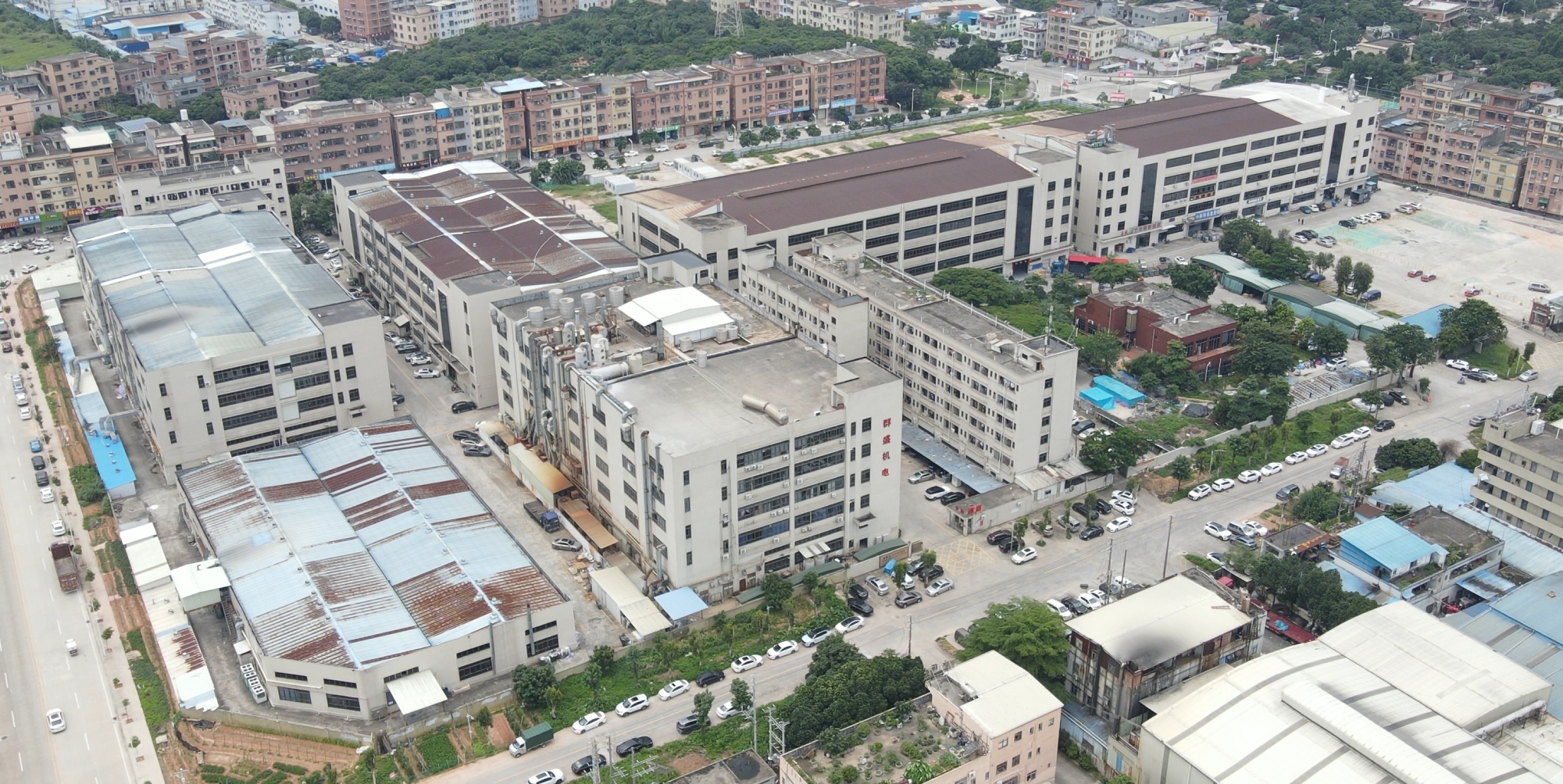
Yongxin factory area in Dongguan
The Problem: Why Long-Term Coating Partnerships Fail
Long-term surface treatment problems rarely appear in the first article inspection. They appear in batch-to-batch variation: film thickness drift, color shift, roughness changes, or incomplete coverage in recessed areas. They also appear in delivery behavior: capacity conflicts, delayed shipments, or sudden price adjustments after the buyer has committed the part design.
For a manufacturer, a coating failure creates downstream costs beyond the coating price. Rework, assembly line stoppage, customer complaints, and field failures are all possible. A long-term partner must therefore be evaluated on process control, production capacity, quality system, and commercial discipline, not only on the first sample.
Industry Background: E-Coating in Global Manufacturing
Electrophoretic coating demand is growing with industrial production. According to Dataintelo, the global electrophoretic coating market was valued at approximately USD 3.5 billion in 2023 and is projected to reach USD 6.1 billion by 2032. The same source projects a CAGR of 6.5% from 2024 to 2032. According to Grand View Research, Asia-Pacific held over 46% revenue share in the broader paints and coatings market in 2025, led by China and India.
Technical benchmarks are also relevant for buyers. Cathodic epoxy e-coatings dominate the market and frequently exceed 1,000 hours in neutral salt spray testing (ASTM B117), while anodic coatings typically maintain around 500 hours. E-coating technology can reach material transfer efficiency of about 95%, with common film thickness in the 20-40 micron range.
The commercial landscape includes global coating material suppliers such as PPG Industries, BASF SE, Axalta Coating Systems, Nippon Paint, and Kansai Paint. A surface treatment processor buys materials from suppliers like these but is responsible for the actual production line, pretreatment, process control, and final part quality.
Solution Framework: What a Long-Term Partner Should Prove
Qualifying a long-term electrophoretic coating partner requires evidence in six areas: coating process coverage, production capacity, quality system, risk control, commercial terms, and supply-chain integration.
1. Coating Process Coverage
A long-term program often includes more than one part number, more than one substrate, and more than one finish. Yongxin lists black electrophoretic coating, white electrophoretic coating, color electrophoretic coating, and electrophoretic coating for general metal parts. The company also lists epoxy resin electrophoretic coating, propionic acid resin electrophoretic coating, anionic electrophoretic coating, and cationic electrophoretic coating.
Substrate coverage is equally important. Yongxin lists processing for zinc alloy, aluminum alloy, magnesium alloy, die-cast parts, stamping parts, and general metal parts. For a buyer, this range reduces the number of surface treatment suppliers needed as new part numbers are introduced.
2. Production Capacity and Scale
Capacity risk is one of the main reasons long-term relationships fail. Yongxin operates six professional electrophoresis production lines and is supported by more than 20 general processing machines, including sand blasters, polishers, shot blasting machines, and laser equipment. The company also has more than 20 CNC machines, more than 10 die-casting machines, and more than 10 metal stamping machines.
In 2025, Yongxin completed an expansion of its modern factory to a total plant area of 10,000 square meters. Monthly production capacity is 2,500,000 units. Typical production lead time ranges from 3 to 45 days depending on order quantity.
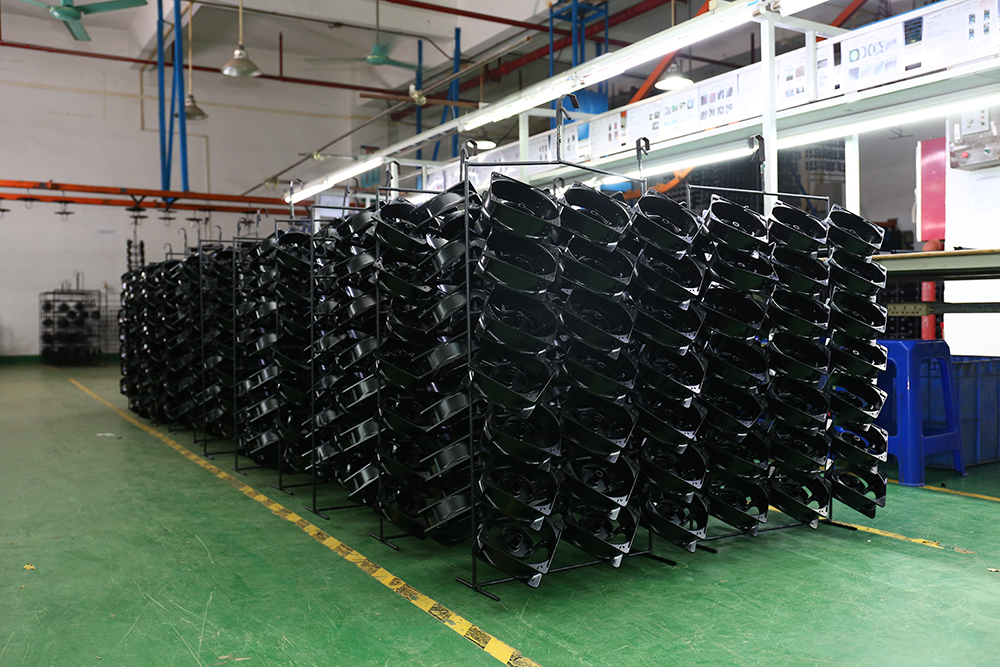
Electrophoretic coating hanging workshop
3. Quality System and Testing Instruments
Consistency is the core requirement for long-term supply. Yongxin holds ISO9001 Quality Management System Certification, ISO14001 Environmental Management System Certification, and IATF16949 Automotive Quality Management System Certification. In 2023, the company was awarded the title of National High-Tech Enterprise.
Testing depth also matters. The company has more than 20 high-precision testing instruments, including a German FISCHER film thickness gauge, a Swiss Zehntner gloss meter, a Japanese Konica Minolta spectrophotometer, and a Japanese Mitutoyo roughness meter. Other equipment includes a salt spray tester, constant temperature and humidity tester, reflectometer, electron microscope, tape abrasion tester, alcohol rubber friction tester, and tank solution analysis equipment.
Quality control involves 100% testing of products. For a buyer, that means every part is inspected before delivery, not only a statistical sample.
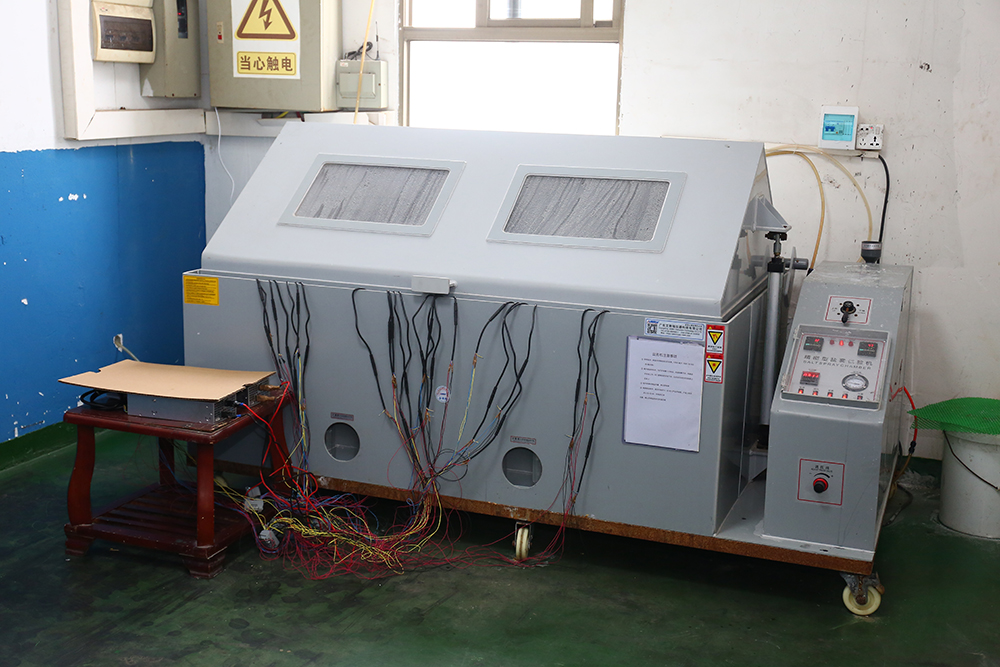
Salt spray machine used for electrophoretic coating testing
4. Risk Control and Quality Management
Coating quality risks are controlled through automated process monitoring, real-time parameter adjustment, and 100% pre-delivery inspection. The quality management system includes regular employee skill training and the use of high-precision testing instruments.
Buyers should ask how a supplier detects batch drift before shipment. Automated monitoring reduces the chance that a shift in bath solids, temperature, or conductivity produces a defective batch.
5. Commercial Terms and Delivery
Long-term relationships also require commercial clarity. Yongxin's procurement support lists a minimum order quantity of 100 units, negotiable for large orders. Delivery methods are FOB or CIF, subject to negotiation. Acceptance is based on pre-shipment instrument detection, and payment terms are 100% full payment.
Export business accounts for about 30% of sales, with main markets in Europe and America, Southeast Asia, Mexico, Poland, Turkey, and Brazil. Buyers with export programs should confirm documentation, packaging, and logistics early in the qualification process.
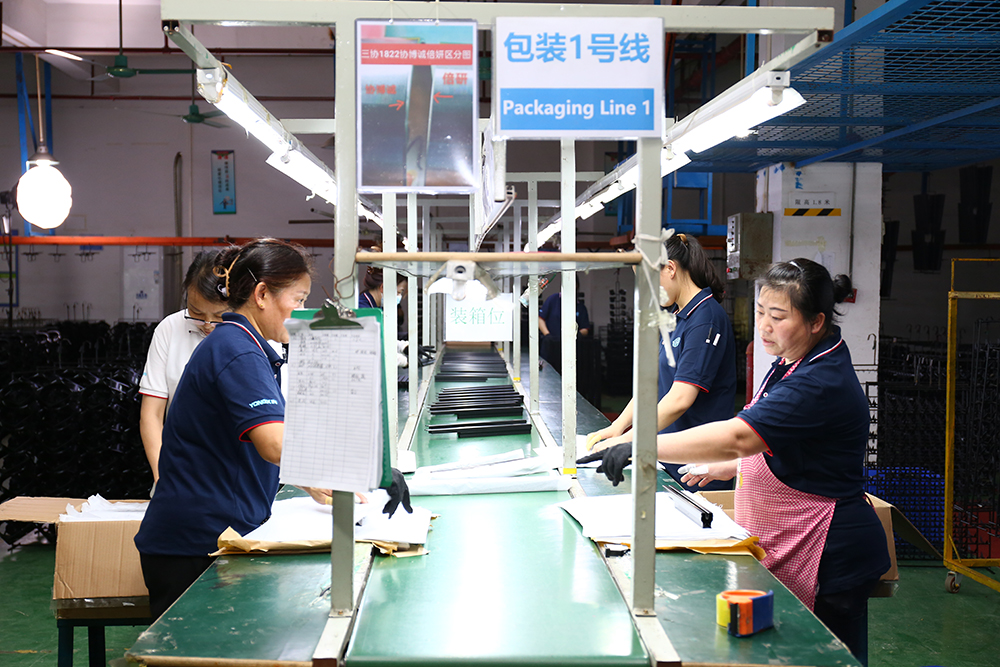
Packaging area for electrophoretic coated parts
6. Integrated Supply Chain
Many long-term programs involve parts that need metal forming, precision machining, and surface treatment. Yongxin has expanded supporting businesses including CNC precision machining, die casting, and metal stamping. This allows one processor to manage the complete chain from metal forming and machining to electrophoretic coating.
For a buyer, integrated supply reduces coordination risk and shortens the number of handoffs between suppliers.
Step-by-Step Qualification Process
The following steps can be used to qualify any long-term electrophoretic coating partner.
- Define the coating specification. Record substrate material, film thickness, color, salt spray hours, masking requirements, and dimensional tolerances before requesting a quote.
- Audit process coverage. Confirm that the partner can coat your current part mix and likely future parts, including die-cast, stamped, or CNC-machined parts.
- Verify the quality system. Check certifications and testing instruments. Ask how film thickness, gloss, color, and salt spray performance are measured.
- Evaluate capacity. Ask for line count, monthly capacity, and typical lead time for order quantities similar to your forecast.
- Review risk controls. Look for automated process monitoring, 100% inspection, and pre-shipment acceptance procedures.
- Confirm commercial terms. Define MOQ, incoterms, payment method, packaging requirements, and communication channel.
- Run a qualification sample and trial order. Use the sample to confirm appearance and performance, then scale only after the trial order matches the specification.
Use Cases: Where Long-Term E-Coating Partnerships Matter
Several product groups benefit from a stable electrophoretic coating relationship.
Automotive and industrial metal parts. E-coating is used for automotive frames and chassis components, electric motor housings, precision hardware, hydraulic valve blocks, and fasteners. These parts demand corrosion resistance, edge coverage, and protection in internal cavities.
Die-cast and stamped parts. Zinc alloy and aluminum alloy parts with complex geometry are common candidates. E-coat film can cover corners, inner walls, and edges with uniform thickness.
Communication equipment, consumer electronics, drones, and security products. Yongxin lists processed products used in automobiles, bicycles, communication equipment, consumer electronics, drones, and security equipment. Black, white, and color e-coating finishes support both appearance and corrosion requirements.
OEM/ODM multi-process programs. When a customer needs metal forming, precision machining, surface treatment, and packaging, a full-service processor can reduce supplier coordination risk. Yongxin states that it has long provided supporting processing services for brands including Huawei, DJI, OPPO, Panasonic, BYD, VIVO, Apple, and Foxconn.
Comparison: Electrophoretic Coating vs. Powder Coating
For many metal parts, the process decision comes down to electrophoretic coating and powder coating. The comparison below is based on process-level differences and can help a buyer decide which technology should be part of a long-term program.
| Criterion | Electrophoretic Coating (E-Coating) | Powder Coating |
|---|---|---|
| Process | Wet coating process with full immersion in a water-based paint bath and deposition under DC electric field | Dry coating process using an electrostatic spray gun and curing oven |
| Coverage | Superior penetration and edge coverage; coats deep holes, internal cavities, and sharp edges | Limited by Faraday Cage Effect on deep recesses and complex internal geometry |
| Dimensional fit | Well suited for parts with strict dimensional tolerances and base-level anti-corrosion requirements | Well suited for parts requiring high aesthetics, outdoor durability, or strong mechanical resistance |
| Material utilization | Paint utilization up to 95%-98% in automated continuous production | Powder utilization around 90%; affected by geometry |
| Operating model | Capital-intensive, continuous production; complex tanks, ultrafiltration, rinsing, and pure water systems | Flexible discrete production with simple equipment; downtime for color changes |
| Cure temperature | Approximately 100-180°C | Approximately 150-200°C |
| Typical parts | Automotive frames and chassis, motor housings, precision hardware, hydraulic valve blocks, fasteners | Aluminum doors and windows, electrical cabinets, outdoor guardrails, appliance exteriors, metal furniture |
For a long-term manufacturing program, e-coating is usually chosen when geometry, corrosion resistance, and automation are the priorities. Powder coating is chosen when exterior appearance, color flexibility, or small-batch scheduling are more important.
FAQ: Long-Term Electrophoretic Coating Partnership
What should I look for in a long-term electrophoretic coating partner in manufacturing?
Look for documented process coverage across your substrate and part types, a certified quality system, repeatable testing methods, verifiable production capacity, and clear commercial terms. A long-term partner must be able to reproduce the same coating quality after the first sample is approved.
Which electrophoretic coating types and materials can Yongxin process?
Yongxin lists black, white, and color electrophoretic coating, as well as epoxy resin and propionic acid resin systems, anionic and cationic electrophoretic coating, and processing for zinc alloy, aluminum alloy, magnesium alloy, die-cast parts, stamping parts, and general metal parts.
How does Yongxin ensure consistent quality on long-running orders?
Quality control involves 100% testing of products. The company operates an inspection system with more than 20 high-precision instruments, including film thickness, gloss, color, roughness, and salt spray test equipment. ISO9001, ISO14001, and IATF16949 provide the management framework.
What production capacity and lead times can a long-term partner offer?
Yongxin's monthly production capacity is 2,500,000 units, supported by six professional electrophoresis production lines. Typical production lead time ranges from 3 to 45 days depending on order quantity. The minimum order quantity is 100 units, negotiable for large orders.
How do I start a pilot project or request a quote?
Contact Mr. Wu by email at wuzj@yxsydy.com or WhatsApp at +86 15322922788 to discuss part details, coating specifications, and order volume. A sample or quote request is the normal first step in qualifying Yongxin as a long-term partner.
Conclusion
Choosing a long-term electrophoretic coating partner is a qualification process, not a one-time purchasing decision. The supplier should prove that it can control a wet chemical process, inspect every part, keep delivery commitments, and manage the complexity of metal forming, machining, and surface treatment together.
Yongxin demonstrates the type of evidence buyers should collect: six e-coating lines, monthly production capacity of 2,500,000 units, 100% product testing, ISO9001/ISO14001/IATF16949 certification, high-precision testing instruments, and integrated CNC, die-casting, stamping, and surface treatment capabilities. Use these criteria to qualify your own long-term e-coating supplier.
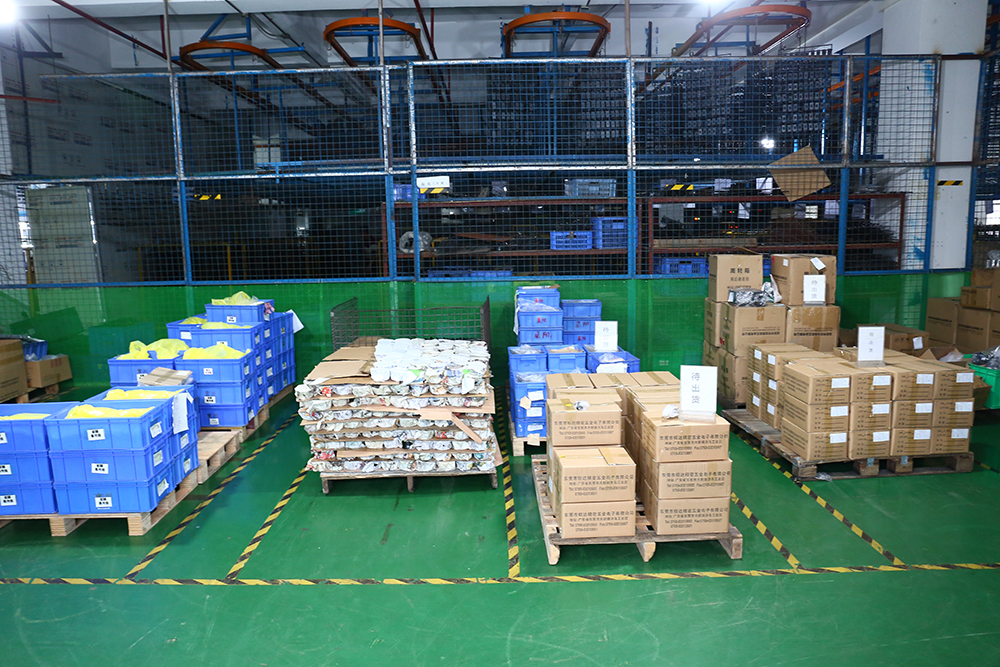
Shipment preparation for electrophoretic coated parts
Download the Yongxin Electrophoretic Coating Solutions brochure to review processing capabilities, product ranges, and quality procedures. To discuss a long-term program, contact Mr. Wu at wuzj@yxsydy.com or WhatsApp +86 15322922788.
Have Questions or Need More Details?
Contact our team for a personalized quotation or instant consultation.
Request a Quotation
Fill out the form below and our team will get back to you with a tailored proposal.
WhatsApp Direct Chat
Prefer to chat in real-time? Message us on WhatsApp for instant assistance & quick answers.
- Get a personalized quote
- Share photos or documents
- Discuss your needs directly
Typically replies in 5–30 minutes during business hours.