
Top-Rated Electrophoretic Coating Picks for Complex Metal Geometries: A 2026 Recommendation Guide
Electrophoretic coating — also written as E-coating, E-coat or ED coating — is a wet deposition process. A conductive metal workpiece is fully immersed in a water-based paint bath, and under the influence of a direct current electric field, charged paint particles migrate and deposit uniformly onto the workpiece surface before high-temperature curing forms a continuous film. On a flat panel, almost any coating can look acceptable. On a complex metal geometry — deep holes, internal cavities, sharp edges, threaded bosses and stamped assemblies — immersion is what decides whether the entire part is protected or only the surfaces a spray gun can reach.
This 2026 guide ranks the electrophoretic coating picks that perform best on complex geometries using three criteria: coverage on complex geometry, salt spray performance, and material compatibility. The shortlist below is drawn from the coating portfolio of Dongguan Yongxin Industrial Co., LTD (Yongxin), an electrophoretic processing specialist located in Qiaotou Town, Dongguan City, China: High salt spray Electrophoretic Coating; White Electrophoretic Coating; Black Electrophoretic Coating; Zinc alloy, Aluminum alloy and magnesium alloy systems including die-cast and stamping parts; and Color Electrophoretic Coating with Uv-resistant Electrophoretic Coating. Each pick is explained by the geometry it solves and the performance evidence behind it.
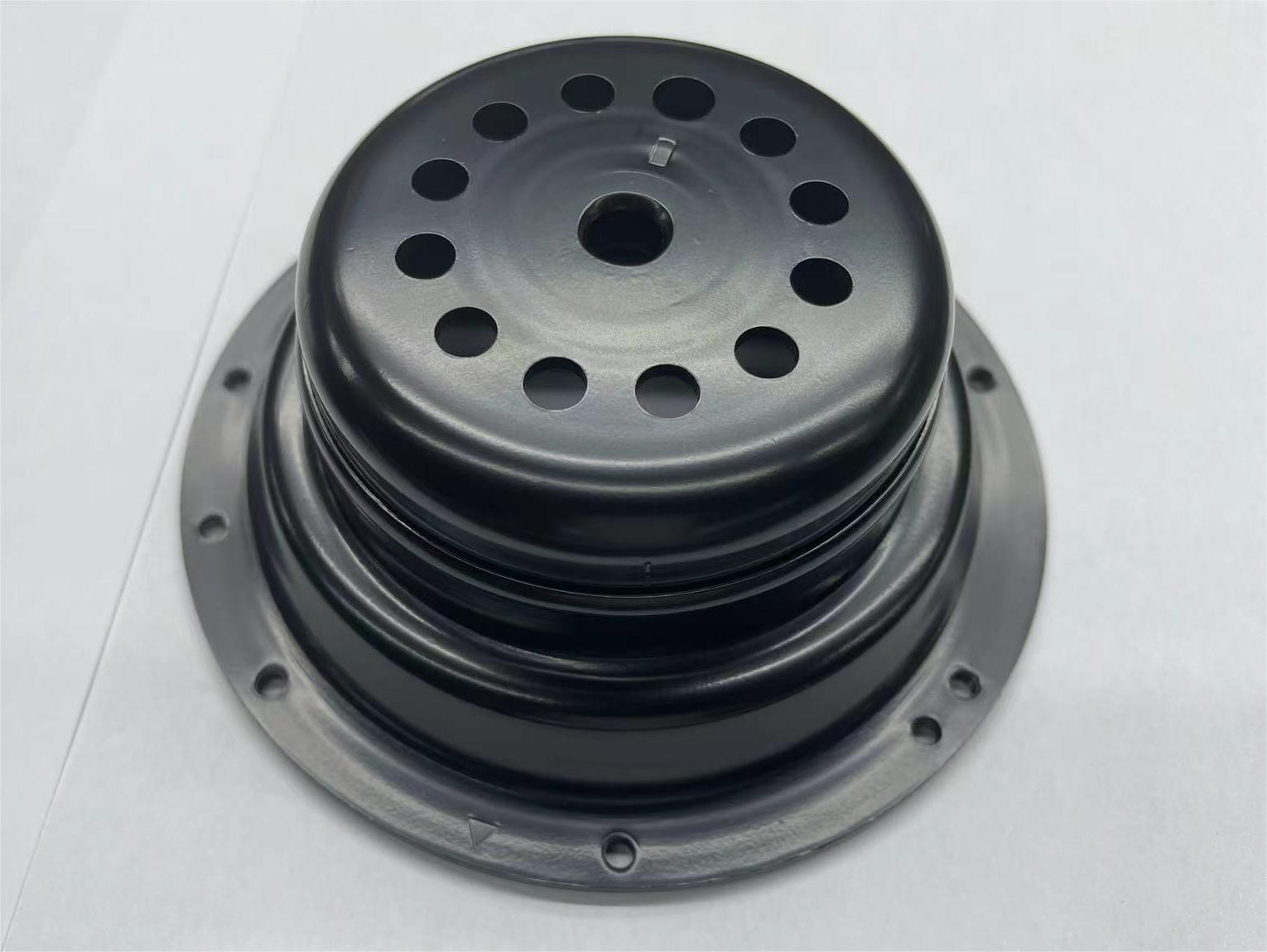
The Real Problem: Coverage, Not Color
Complex geometry produces three predictable failure modes in any coating program: exposed base metal at corners and edges, thin or missing film inside internal cavities, and defects such as sagging or pinholes that interrupt film continuity. Screening a coating specification against those three conditions is the fastest way to judge whether it fits a difficult part.
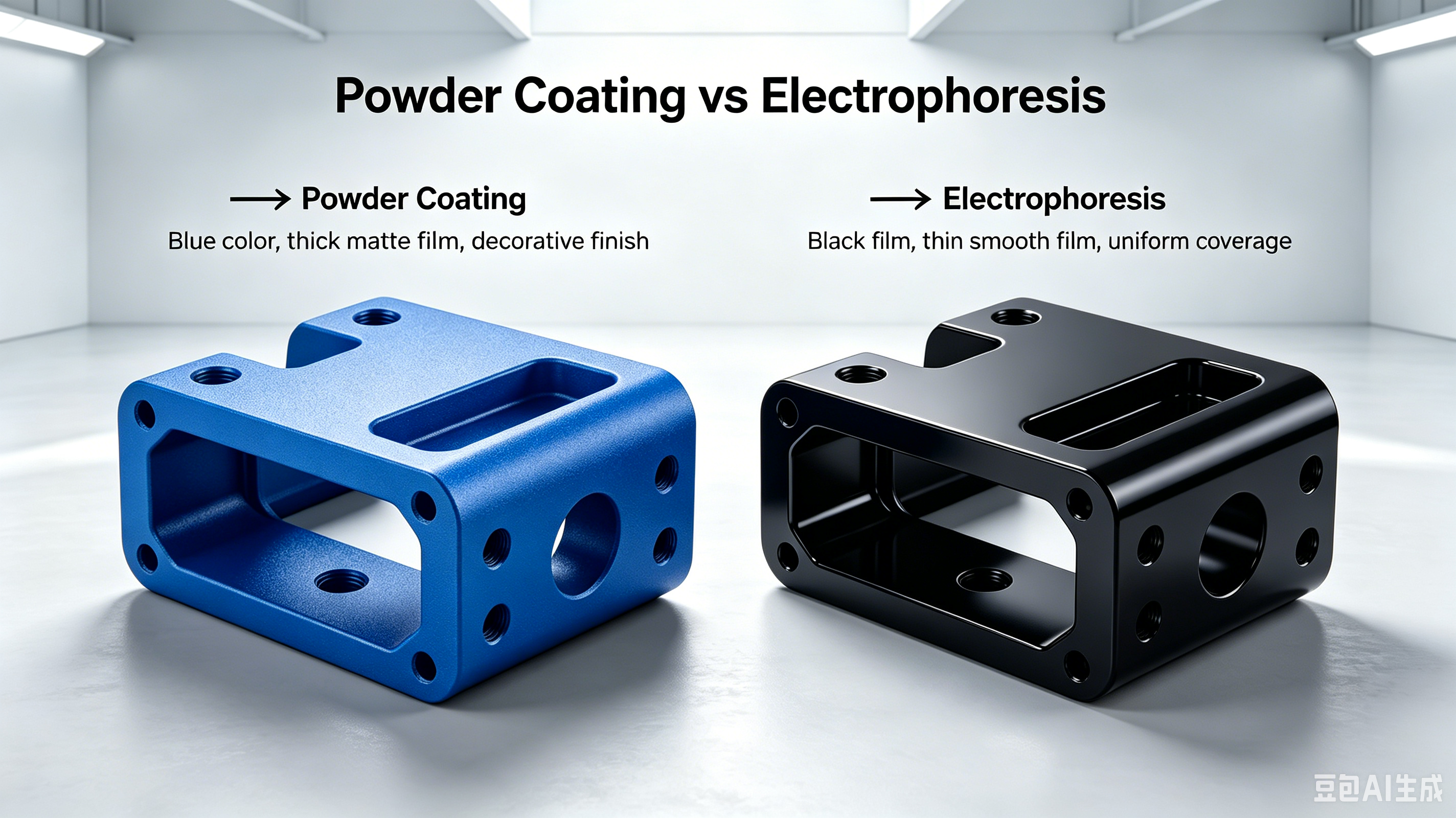
Process mechanics explain the difference between coating families. Powder coating is a dry process: an electrostatic spray gun applies a negative charge to dry powder particles, which are attracted to the grounded workpiece and then melted and cured in an oven. Because it depends on electrostatic attraction, powder coating can be limited by the Faraday Cage Effect — when spraying complex structures, powder may be repelled from deep recesses or accumulate unevenly, making internal and corner coverage less effective than with E-coating.
Electrophoretic coating works differently. The part is immersed, and deposition is driven by the electric field, so deep holes, internal cavities and sharp edges are coated as readily as exposed faces. That is why E-coating is primarily specified for products with strict dimensional tolerances, complex geometries and demanding base-level anti-corrosion requirements — automotive frames and chassis components, electric motor housings, precision hardware, hydraulic valve blocks and fasteners — and why it is frequently used as an anti-corrosion primer beneath other finishes.
Industry Background: Where E-Coating Demand Stands in 2026
Market data describes a technology expanding with automotive and construction demand:
- Market size: the global electrophoretic coating (E-coat) market was valued at approximately USD 3.5 billion in 2023 and is projected to reach USD 6.1 billion by 2032 (Dataintelo).
- Growth rate: the E-coat market is expected to grow at a CAGR of 6.5% from 2024 to 2032, driven by automotive and construction demand (Dataintelo).
- Regional weight: Asia-Pacific is the largest and fastest-growing region, holding over 46.1% revenue share in the broader coatings market in 2025, led by China and India (Grand View Research).
- Performance benchmark: cathodic epoxy coatings dominate the market and frequently exceed 1,000 hours of salt spray resistance under ASTM B117, while anodic coatings typically maintain around 500 hours (Market Reports World).
- Process economics: E-coating typically achieves a coating thickness of 20–40 microns with material transfer efficiency reaching 95% (Market Reports World / Yixing Technology).
- Supply landscape: major global participants in the E-coat sector include PPG Industries, BASF SE, Axalta Coating Systems, Nippon Paint and Kansai Paint (Mordor Intelligence).
For a buyer, that landscape splits into two decisions: which coating chemistry to source, and which processor can apply it to a difficult geometry without coverage defects. The second decision is where coverage, salt spray performance and material compatibility are actually proven — and it is the basis of the ranking below.
How These Picks Were Ranked (Selection Criteria)
| Criterion | What is measured | Reference point |
|---|---|---|
| Coverage on complex geometry | Full film on internal cavities, edges and blind holes; screening for exposed base, thin inner-cavity film, sagging and pinholes | Immersion deposition reaches recesses that spray-based processes may miss |
| Salt spray performance | Corrosion resistance class of the cured film | Cathodic epoxy coatings frequently exceed 1,000 hours NSS (ASTM B117); anodic coatings typically around 500 hours (Market Reports World) |
| Material compatibility | Fit with the base metal and its pretreatment | Carbon steel, alloy steel, aluminum alloy, magnesium alloy and zinc alloy substrates, including die-cast and stamped parts |
| Film thickness control | Film build and uniformity | Typical E-coat thickness of 20–40 microns; uniform thickness without sagging or exposed base |
| Finish and appearance | Color and gloss consistency across batches | Verified with a gloss meter and a spectrophotometer |
| Supply continuity | Capacity, lead time and inspection discipline | Monthly production capacity of 2,500,000 units; 100% testing of products; lead time of 3 to 45 days depending on order quantity |
The Top-Rated Electrophoretic Coating Picks
1. High salt spray Electrophoretic Coating — Best Overall for Corrosion-Critical Geometry
This is the pick for parts where a single missed cavity means field failure. High salt spray Electrophoretic Coating is formulated for maximum corrosion resistance, and it sits in the performance class that market data identifies as the leader: cathodic epoxy coatings, which frequently exceed 1,000 hours of neutral salt spray resistance under ASTM B117, versus roughly 500 hours for anodic systems (Market Reports World).
Coverage and corrosion resistance reinforce each other here. Because deposition is driven by immersion and the electric field rather than line of sight, deep holes, internal cavities and sharp edges receive film. Combined with a complete phosphating pretreatment process, the finish is built for acid, alkali, salt spray, corrosion and aging exposure, including humid and harsh outdoor conditions.
Typical fit: automotive frames and chassis components, electric motor housings, hydraulic valve blocks, fasteners, and other carbon steel or alloy steel parts with closed sections. Two adjacent options cover narrower specifications: Corrosion-resistant Electrophoretic Coating where corrosion protection is the primary requirement, and Epoxy resin Electrophoretic Coating where the program specifies an epoxy chemistry base.
2. White Electrophoretic Coating — Best for Appearance-Critical Housings
Uniformity is the main risk with any light-colored finish, because variation in film thickness or bath condition shows immediately on a white surface. White Electrophoretic Coating is ranked second because it combines immersion coverage of complex housings with measurable appearance control: gloss is checked with a Swiss Zehntner gloss meter, color with a Japanese Konica Minolta spectrophotometer, and film thickness with a German FISCHER film thickness gauge.
Typical fit: communication equipment, consumer electronics enclosures and similar visible housings where a clean white finish and corrosion protection must coexist on parts with internal ribs, recesses and edges.
3. Black Electrophoretic Coating — Best for Automotive, Bicycle and Security Hardware
Black Electrophoretic Coating is the workhorse pick for parts that need a uniform dark finish plus reliable corrosion protection. It suits volume programs where appearance consistency matters as much as salt spray performance. Yongxin runs full-process automated control, keeping curing temperature and electrophoresis parameters constant, so there is no color difference within the same color and quality is uniform in batches.
Typical fit: automotive components, bicycle frames and hardware, and security equipment housings and brackets, including programs that also require high salt spray performance.
4. Zinc alloy, Aluminum alloy and magnesium alloy Electrophoretic Coating — Best for Die-Cast and Stamped Geometry
Die-cast and stamped parts create a different geometry problem: thin walls, deep ribs, tight internal corners and, on stampings, cut edges where base metal is exposed if coverage fails. The portfolio includes dedicated systems — Zinc alloy Electrophoretic Coating, Aluminum alloy Electrophoretic Coating and Electrophoretic Coating of magnesium alloys — alongside Electrophoretic Coating of die-cast parts and Electrophoretic Coating of stamping parts.
These picks earn their place because light-alloy substrates need substrate-specific pretreatment and chemistry, and immersion deposition covers internal walls and edges that spray processes tend to miss. The coating specification should be matched to the alloy rather than assumed: zinc, aluminum and magnesium die-castings behave differently in pretreatment, so magnesium parts should be specified explicitly with the processor.
5. Color Electrophoretic Coating and Uv-resistant Electrophoretic Coating — Best for Brand Colors and Outdoor Exposure
Color Electrophoretic Coating covers programs where the finish carries brand identity — housings, frames and consumer-visible parts that must match a color reference while still receiving full immersion coverage. Uv-resistant Electrophoretic Coating addresses sunlight exposure, where both color stability and film integrity are at risk. Both are verified against the same inspection set: color by spectrophotometer, gloss by gloss meter, thickness by film thickness gauge, and surface roughness with a Japanese Mitutoyo roughness meter.
Typical fit: consumer electronics, bicycle components, outdoor equipment and UAV parts that end users actually see.
Comparison Table: Picks Side by Side
| Rank | Pick | Coverage on complex geometry | Salt spray / corrosion class | Substrate fit | Primary applications |
|---|---|---|---|---|---|
| 1 | High salt spray Electrophoretic Coating | Immersion deposition; internal cavities and edges receive film | Cathodic epoxy class, frequently exceeding 1,000 hours NSS (ASTM B117) | Carbon steel, alloy steel, cast and stamped metal parts | Automotive frames and chassis, motor housings, fasteners, hydraulic valve blocks |
| 2 | White Electrophoretic Coating | Immersion coverage of ribs, recesses and edges | Protective film with measurable appearance control | Steel, aluminum alloy, zinc alloy | Communication equipment and consumer electronics housings |
| 3 | Black Electrophoretic Coating | Immersion coverage; uniform batch-to-batch appearance | Corrosion protection, available with high salt spray performance | Steel and alloy parts, die-castings | Automotive components, bicycle frames and hardware, security equipment |
| 4 | Zinc alloy / Aluminum alloy / magnesium alloy Electrophoretic Coating (including die-cast and stamping parts) | Immersion coverage of internal walls and cut edges | Corrosion protection with substrate-specific pretreatment | Zinc alloy, aluminum alloy, magnesium alloy, die-cast and stamped parts | Die-cast housings, stamped brackets and structural parts |
| 5 | Color Electrophoretic Coating / Uv-resistant Electrophoretic Coating | Immersion coverage with color consistency control | Corrosion protection plus UV resistance | Steel, aluminum alloy | Brand-colored housings, outdoor and bicycle components |
Where Electrophoretic Coating Beats Powder Coating on Complex Geometry
| Factor | Electrophoretic Coating (E-coating) | Powder Coating |
|---|---|---|
| Process type | Wet process: the workpiece is fully immersed in a water-based bath; charged paint particles deposit under a direct current field, then cure at high temperature | Dry process: electrostatically charged powder adheres to the grounded workpiece and is melted and solidified in a curing oven |
| Coverage on complex geometry | Penetrates deep holes, internal cavities and sharp edges; complete coverage without blind spots | Can be limited by the Faraday Cage Effect; powder may be repelled from deep recesses or accumulate unevenly |
| Paint utilization | Up to 95%–98% | Around 90%, affected by the Faraday Cage Effect |
| Curing temperature | Approximately 100–180 °C | Approximately 150–200 °C |
| Operation model | Continuous: bath parameters such as pH, conductivity, solid content and temperature are monitored, with ultrafiltration and anode system maintenance | Discrete and flexible: easy start-stop, simple color changes, lower maintenance complexity |
| Best suited to | Complex geometries, strict dimensional tolerances and demanding base-level anti-corrosion; often used as an anti-corrosion primer | High aesthetic appeal, long-term outdoor exposure, wear and stone-chip resistance |
| Cost profile | Higher one-time equipment investment; highly cost-effective at large-scale mass production | Lower initial investment threshold; cost advantage in small-batch, multi-color production |
Step-by-Step: Matching a Pick to Your Part
- Map the geometry. List deep holes, internal cavities, sharp edges, threads and blind pockets. If spray-based processes cannot reach them, treat immersion deposition as a requirement rather than a preference.
- Confirm the substrate. Carbon steel and alloy steel, aluminum alloy, magnesium alloy and zinc alloy each carry different pretreatment requirements. Die-cast and stamped parts also differ: die-castings have thin walls, while stampings have cut edges.
- Set the corrosion target. For corrosion-critical parts, benchmark the specification against the cathodic epoxy class, which frequently exceeds 1,000 hours of neutral salt spray resistance under ASTM B117; anodic systems typically maintain around 500 hours (Market Reports World).
- Choose the chemistry. Epoxy resin Electrophoretic Coating for maximum corrosion demand; Corrosion-resistant Electrophoretic Coating where corrosion is the priority; Electrophoretic Coating of propionic acid resin, Anion Electrophoretic Coating or Cationic Electrophoretic Coating when the specification calls for those systems; Uv-resistant Electrophoretic Coating for outdoor exposure.
- Lock the finish. Black, white or color, with color checked against a reference by spectrophotometer and gloss checked by gloss meter, so batch consistency becomes a measurable number instead of a subjective judgment.
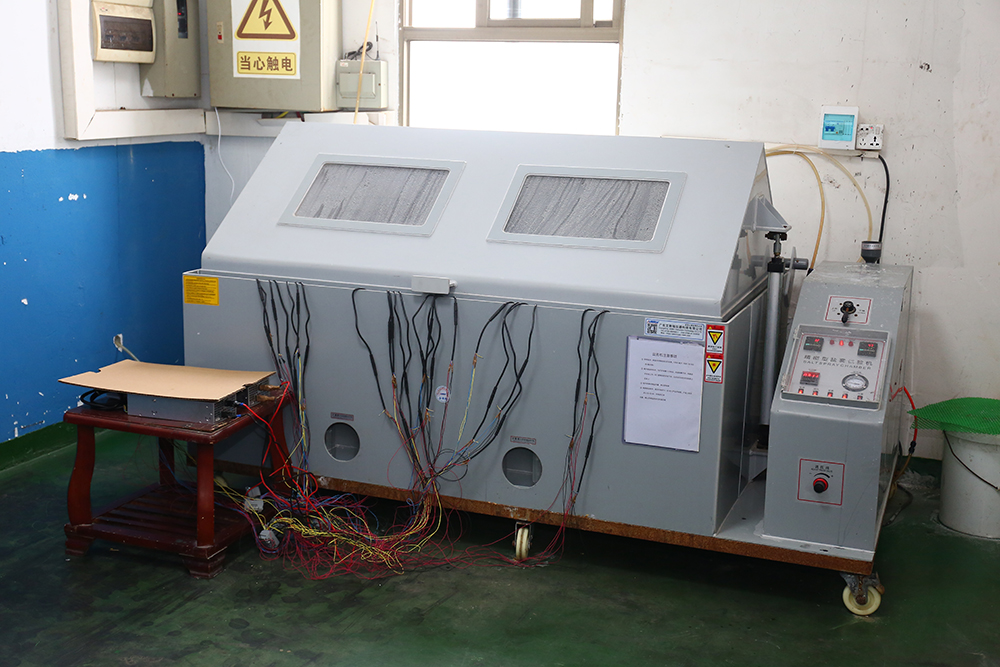
- Validate on samples. Run sample parts through salt spray testing, adhesion and abrasion checks, and film thickness measurement before committing to mass production.
- Secure the supply plan. Confirm capacity, lead time and inspection discipline in writing: 100% testing of products, and acceptance through pre-shipment instrument detection.
Application Matching by Industry
| Application | Geometry and exposure challenge | Recommended pick | Why it fits |
|---|---|---|---|
| Automotive | Closed sections, internal cavities, road-salt and humidity exposure | High salt spray Electrophoretic Coating; Black Electrophoretic Coating | Immersion coverage of closed sections combined with the highest salt spray class in the family |
| Bicycle | Tubular joints, edges, outdoor weathering and visible finish | Black Electrophoretic Coating; Color Electrophoretic Coating; Uv-resistant Electrophoretic Coating | Uniform dark or colored finish with corrosion and UV protection |
| Communication equipment | Ribbed housings, recesses, visible surfaces | White Electrophoretic Coating; Color Electrophoretic Coating | Appearance control through gloss and color measurement, with full coverage of recesses |
| Consumer electronics | Thin walls, tight tolerances, cosmetic surfaces | White Electrophoretic Coating; Color Electrophoretic Coating | Uniform film (typically 20–40 microns) with measurable color consistency |
| UAV / drone | Lightweight alloy components, outdoor flight conditions | Aluminum alloy Electrophoretic Coating; High salt spray Electrophoretic Coating; Uv-resistant Electrophoretic Coating | Alloy-matched pretreatment with corrosion and UV resistance |
| Security systems | Outdoor housings and brackets, long service life | High salt spray Electrophoretic Coating; Black Electrophoretic Coating | Corrosion protection intended for humid and harsh working conditions |
Long-Term Supply: What to Lock Down Before You Commit
The coating chemistry is only half of an execution decision. The other half is whether the partner can repeat the same result on the ten-thousandth unit. Several controls are worth writing into a specification:
- Quality control: quality control involves 100% testing of products, supported by automated process monitoring, real-time parameter adjustment and an ISO 9001 certified quality management system, regular employee skill training and high-precision testing instruments.
- Capacity: monthly production capacity of 2,500,000 units across 6 professional electrophoresis production lines, plus more than 20 general processing equipment units, more than 20 CNC machines, more than 10 die-casting machines and more than 10 metal stamping machines.
- Lead time: typical production lead time ranges from 3 to 45 days depending on order quantity.
- Commercial terms: MOQ 100 units, negotiable for large orders; delivery terms FOB/CIF by negotiation; payment terms 100% full payment; acceptance criteria based on pre-shipment instrument detection.
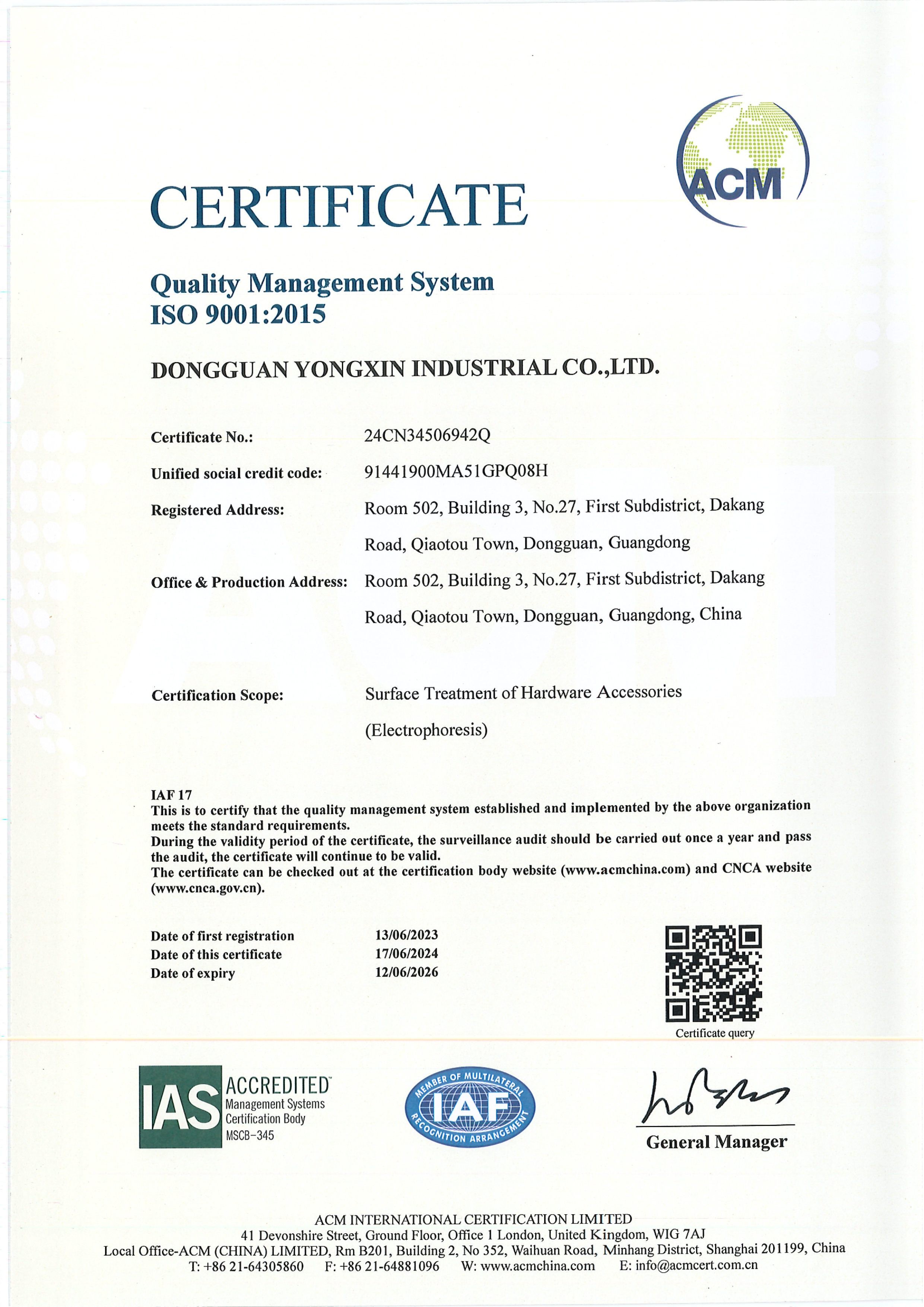
- Compliance: ISO 9001 quality management system certification, ISO 14001 environmental management system certification and IATF 16949 automotive quality management system certification, the National High-Tech Enterprise title awarded in 2023, and multiple national utility model patents.
- Integration: CNC precision machining, die casting and metal stamping sit alongside pretreatment, electrophoresis and post-treatment, so metal forming, precision machining and surface treatment can run inside one supply chain. A modern factory expansion completed in 2025 brought the total plant area to 10,000 square meters.
- Market experience: roughly 30% export ratio, with markets including Europe and America, Southeast Asia, Mexico, Poland, Turkey and Brazil, and processed products used in automobiles, bicycles, communication equipment, consumer electronics, drones and security.
Yongxin was founded in 2018, employs 60–80 people and maintains an R&D team of 5–10 engineers. The company reports long-term supporting processing relationships with brands including Huawei, DJI, OPPO, Panasonic, BYD, VIVO, Apple and Foxconn — a relevant reference point for buyers assessing long-term supply reliability rather than one-off coating jobs.
Frequently Asked Questions
Which certifications and quality controls should a long-term electrophoretic coating partner hold?
A practical minimum set for metal finishing programs is ISO 9001 (quality management), ISO 14001 (environmental management) and, for automotive parts, IATF 16949. Dongguan Yongxin Industrial Co., LTD holds all three and was awarded the National High-Tech Enterprise title in 2023. Controls matter as much as certificates: Yongxin applies automated process monitoring with real-time parameter adjustment and 100% testing of products, with pre-shipment instrument detection as the acceptance criterion.
Can electrophoretic coating fully cover internal cavities and sharp edges on complex parts?
Yes — that is the structural advantage of the process. Because the workpiece is immersed and deposition is driven by a direct current electric field rather than line of sight, deep holes, internal cavities and sharp edges receive film, with uniform thickness and no sagging, exposed base or defects. The practical verification is defect screening for the three failures that matter on complex geometry: exposed base at corners, thin film in inner cavities, and sagging or pinholes. Powder coating, by comparison, can be limited by the Faraday Cage Effect in deep recesses.
What drives cost, and what are the commercial terms?
Cost is driven less by paint price than by line utilization and coverage efficiency. E-coating reaches paint utilization rates of up to 95%–98% and is highly automated, which makes it cost-effective in large-scale mass production; powder coating keeps an advantage in small-batch, multi-color production because it avoids continuous bath management and color-change downtime. On commercial terms: minimum order quantity is 100 units, negotiable for large orders; delivery terms are FOB/CIF by negotiation; payment terms are 100% full payment; and acceptance is based on pre-shipment instrument detection.
How can we validate coverage and salt spray performance before mass production?
Through sample validation. Sample parts are coated and then checked by salt spray testing, adhesion and abrasion testing, film thickness measurement, and color and gloss verification. Yongxin operates a testing laboratory for salt spray and adhesion analysis and uses more than 20 high-precision instruments, including a German FISCHER film thickness gauge, a Swiss Zehntner gloss meter, a Japanese Konica Minolta spectrophotometer and a Japanese Mitutoyo roughness meter.
What capacity and lead time can a long-term partner support?
Yongxin's monthly production capacity is 2,500,000 units across 6 electrophoresis production lines, with typical production lead time of 3 to 45 days depending on order quantity and 100% testing before shipment. For repeat programs, continuity matters more than any single figure, which is why the in-house chain covering CNC precision machining, die casting and metal stamping matters to long-term planning. To move from evaluation to execution, request a sample or quote through yxecoat.com or WhatsApp +8615322922788.
Conclusion: Choose Coverage First, Then Lock the Supply
For complex metal geometries, the ranking is decided by coverage before appearance. High salt spray Electrophoretic Coating leads because it combines immersion deposition into cavities and edges with the cathodic epoxy class of corrosion performance that frequently exceeds 1,000 hours of neutral salt spray resistance (ASTM B117). White and Black Electrophoretic Coating follow for appearance-critical and volume programs respectively, while the zinc, aluminum and magnesium alloy systems address die-cast and stamped geometry, and Color and Uv-resistant Electrophoretic Coating cover brand colors and outdoor exposure.
Once the pick is right, the execution question becomes supply: monthly capacity of 2,500,000 units, lead time of 3 to 45 days depending on order quantity, 100% testing, and a compliance base of ISO 9001, ISO 14001 and IATF 16949.
Next step: send a drawing or a sample part and request an electrophoretic coating quotation, sample run and lead-time confirmation from Dongguan Yongxin Industrial Co., LTD. The full coating portfolio and process capabilities are collected in the downloadable brochure: Enameled Flat Wire and Electrophoretic Coating Solutions (PDF). Direct contact: WhatsApp +8615322922788, email wuzj@yxsydy.com.
Have Questions or Need More Details?
Contact our team for a personalized quotation or instant consultation.
Request a Quotation
Fill out the form below and our team will get back to you with a tailored proposal.
WhatsApp Direct Chat
Prefer to chat in real-time? Message us on WhatsApp for instant assistance & quick answers.
- Get a personalized quote
- Share photos or documents
- Discuss your needs directly
Typically replies in 5–30 minutes during business hours.