
White vs Black Electrophoretic Coating for Stamping Parts
White and black electrophoretic coating for stamping parts are built on the same resin family — acrylic resin and epoxy resin — deposited from a water-based bath that contains no heavy metals and emits low VOC, and both are compatible with carbon steel, alloy steel, aluminum alloy, magnesium alloy and zinc alloy. The decision between them is therefore not a chemistry decision. It is a specification decision driven by four variables: the appearance the part must present, the corrosion hours it must survive, the film thickness the assembly can accept, and the environment the finished part will work in.
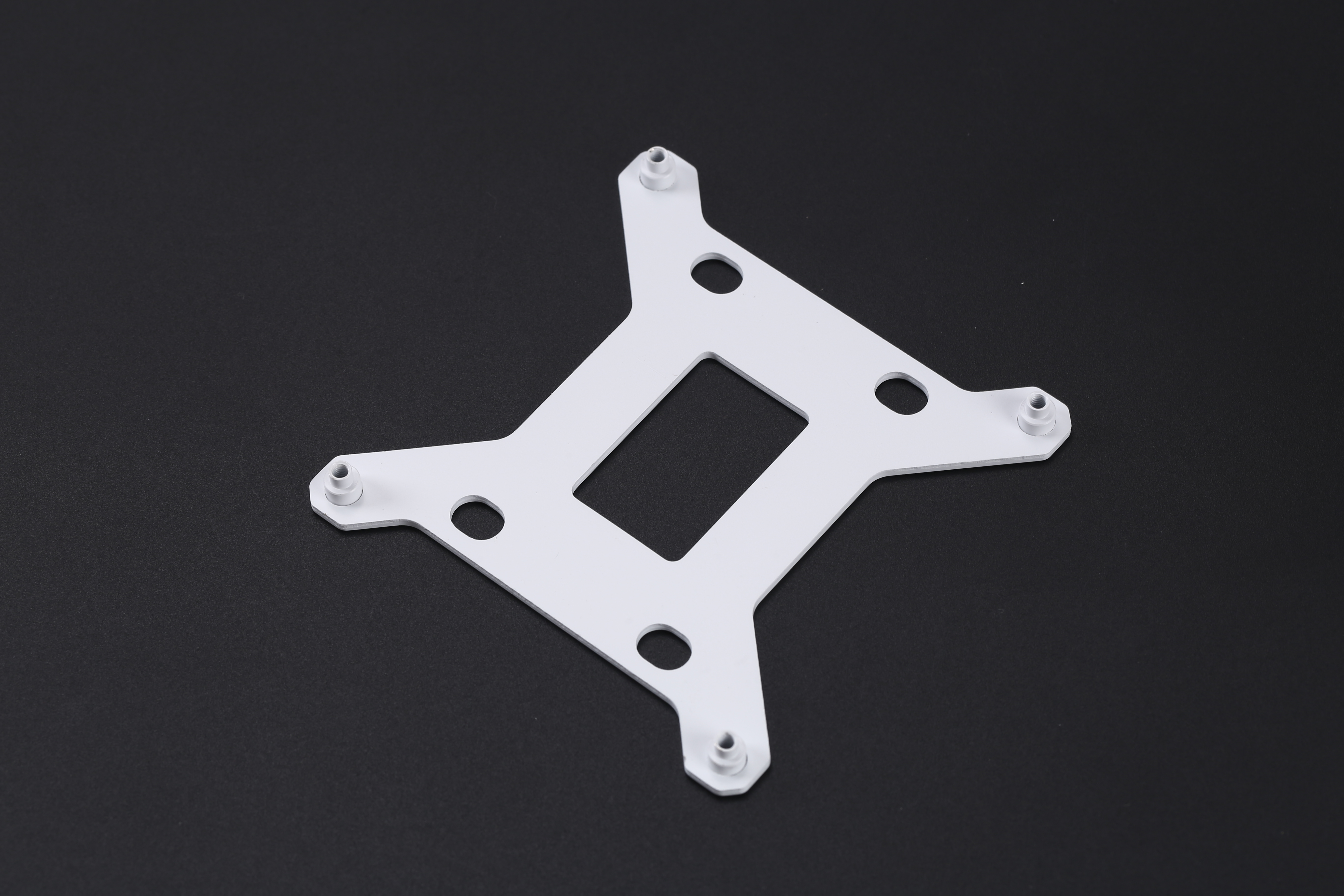
A short working rule: choose black when the part is a functional or hidden component and the priority is the standard production finish at 15–25 µm with high salt spray performance. Choose white when the part is visible, when a light colour is part of the product identity, or when the component must match a white or light-grey assembly — and then lock the corrosion target, thickness and colour on a validated sample before the stamping dies start running at volume.
Problem Definition: Why Stamping Parts Are the Hardest ‘Simple’ Part to Coat
Stamping parts look easy to coat because they are flat, thin and produced in enormous quantities. In practice they concentrate every coating failure mode that a paint shop deals with.
- Sheared and punched edges. A stamped part exposes bare metal along every cut edge. Edges are the first place red rust appears, and they are also where a spray-applied film is thinnest.
- Residual stamping oil and lubricant. Press lubricants left on the surface attack adhesion. Poor adhesion, not poor paint, is the most common root cause of coating defects on stamped components.
- Thin sections and tight bends. A stamping may be a few tenths of a millimetre thick with radii that trap air. Film build must be controlled, not maximised.
- High volumes and many cavities. Progressive dies produce deep pockets, welded seams and internal holes that a spray gun cannot reach with a uniform film.
- Colour consistency expectations. When a stamped part becomes a visible surface, every batch must match the approved sample.
Electrophoretic coating addresses the edge and cavity problem structurally rather than by operator skill. Deposition follows Faraday’s principle of electromagnetism: charged paint particles migrate to the workpiece and deposit evenly across the surface, so deep cavities, tight seams and internal holes in complex 3D geometries reach over 95%–98% coverage, eliminating the dead corners associated with traditional spray painting. The coating forms a molecular-level bond with the substrate, isolating the base metal from moisture and road salts.
That solves the coverage question for both colours. What remains is the colour decision — and the film build that the colour system is qualified to deliver.
Industry Background: Where Electrophoretic Coating Sits Today
Electro-deposition coating is a standardised industrial technology rather than a niche finish. ISO 22553-1:2019, Paints and varnishes — Electro-deposition coatings — Part 1: Vocabulary, defines the terminology for electro-deposition coatings and states that it applies to electro-deposition coatings for the automotive industry and other general industrial applications, with examples that include chiller units, consumer products, radiators, aerospace and agriculture.
Within that technology base, cathodic epoxy remains the dominant type in the electrocoating market through the current forecast period. That matters for stamping parts because epoxy-dominant systems are the ones usually specified where corrosion resistance and edge protection carry more weight than decorative appearance.
Automotive specifications show where the performance bar sits. Premium automotive e-coat specifications commonly mandate film builds in the 18–25 micron range and state salt spray test performance benchmarks of 720 to 1,000 hours. For a stamping supplier, that figure is not a marketing number — it is the number that determines whether the part passes a customer’s validation and stays in production.
Evaluation practice has also standardised. Technical references for cathodic electrodeposition coating commonly map assessment work to a defined set of test methods: ISO 2409 for cross-cut adhesion, ISO 2808 for dry-film-thickness measurement, ISO 6270-2 for humidity testing, ISO 9227 for salt spray testing, ASTM D1654 or ISO 4628 for rust evaluation, and ASTM B767 as an electrocoating-thickness method. A buyer who names these methods in an RFQ gets comparable data back instead of a general claim.
Substrate scope is broad. Electrophoretic coating is widely applied to carbon steel, alloy steel, aluminum alloy, magnesium alloy and zinc alloy, which covers the majority of stamped, drawn, die-cast and machined metal components in automotive, bicycle, communication equipment, consumer electronics, drone and security applications.
Environmental profile has become part of the specification rather than an optional extra. Modern e-coat uses water-based paints free of heavy metals, including lead-free and chrome-free systems, with very low VOC emissions, aligning with environmental requirements such as RoHS.
Dongguan Yongxin Industrial Co., LTD is an electrophoretic coating processor for metal surface treatment, based in Qiaotou Town, Dongguan City, Guangdong Province, China, founded in 2018 and operating six professional electrophoresis production lines alongside CNC precision machining, die-casting and metal stamping capacity. Its stated product range covers Black Electrophoretic Coating, White Electrophoretic Coating and Color Electrophoretic Coating; alloy-specific processes for zinc alloy, aluminum alloy and magnesium alloys; electrophoretic coating of die-cast parts and of stamping parts; high salt spray, corrosion-resistant and UV-resistant formulations; epoxy resin and acrylic (propionic acid) resin systems; anionic and cationic electrophoretic coating; electrophoretic deposition, commonly written as ED coating or E-coating; and general Metal Electrophoretic Coating and Surface Electrophoretic Coating services. The company holds ISO 9001:2015 quality management certification (certificate 24CN34506942Q) and ISO 14001:2015 environmental management certification (certificate 24CN34506943E), operates an IATF16949 automotive quality management system, and was recognised as a National High-Tech Enterprise under certificate GR202344016867.
The Two Finishes, Compared on the Facts
Black Electrophoretic Coating
Black is the production default for stamped metal parts, and its specification is the better documented of the two.
- Resin system: acrylic resin and epoxy resin.
- Appearance: a uniform and fine coating; black as standard, with colour customisable on request. Matte or glossy black is available, and custom colours such as grey or silver can be produced. The surface is smooth and uniform, free from defects such as flow marks or blisters.
- Film thickness: 15–25 µm for ordinary parts, adjustable as needed. On controlled automotive work, automated E-coat lines hold thickness tolerance within ±1 µm, with thickness variation controlled within ±5%.
- Corrosion performance: typically 500–1,500 hours without red rust in neutral salt spray testing, with over 1,000 hours achieved in commercial automotive component work; CASS testing can exceed 96 hours.
- Coverage: 95%–98% on complex 3D geometries, including deep cavities, tight seams and internal holes.
- Durability: resists stone chipping and temperature fluctuation from −40 °C to over 85 °C, and bonds firmly enough to prevent peeling or blistering during assembly, transport or operation.
- Assembly behaviour: on fasteners, it provides an optimal coefficient of friction that prevents thread clogging and supports precise torque control.
White Electrophoretic Coating for Stamping Parts
White electrophoretic coating for stamping parts is produced from acrylic resin (epoxy resin) and is controlled through CNC plus electrophoresis control. That combination matters for stampings for a specific reason: the geometry and the surface condition set at the press and in pre-treatment determine whether the white film deposits evenly, and colour tolerance is far less forgiving in white than in black.
Because a white film shows every shadow, streak and thickness variation, the practical control levers are the ones a processor controls directly — part fixturing and hanging, bath chemistry monitoring, deposition voltage and time, and rinse quality. Colour is verified instrumentally: measurement with a Konica Minolta spectrophotometer, film thickness with a German FISCHER film thickness gauge, gloss with a Swiss Zehntner gloss meter and surface roughness with a Japanese Mitutoyo roughness meter.
On corrosion, the honest position for white is that the target must be set by the project and confirmed by test. Black carries a documented working range of 500–1,500 hours NSS; white should be qualified against the same test method (ISO 9227 or ASTM B117 style neutral salt spray) on a sample of the actual stamped part, with the agreed hours written into the purchase specification.
What Both Finishes Share
The shared base narrows the decision considerably. Both white and black electrophoretic coating:
- use water-based paint systems free of heavy metals, with very low VOC emissions;
- are suitable for carbon steel, alloy steel, aluminum alloy, magnesium alloy and zinc alloy substrates;
- deposit by the same electrochemical mechanism, giving uniform coverage of edges, seams and internal cavities rather than line-of-sight coverage;
- are available in anionic and cationic formulations and in epoxy resin or acrylic-based resin systems;
- can be delivered as a high salt spray, corrosion-resistant or UV-resistant formulation depending on the exposure profile.
Step-by-Step: Specifying the Right Finish for a Stamped Part
Step 1 — Define the appearance requirement
Decide whether the stamped part is a visible surface or an internal component. Visible surfaces usually need white or a custom colour; internal and functional parts normally take standard black. Note that colour is customisable in the black system as well, including grey and silver, so “not black” does not automatically mean “white”.
Step 2 — Set the corrosion target in hours, with the test method named
Write the neutral salt spray requirement into the drawing or RFQ as a number of hours without red rust, and name the method (ISO 9227 or ASTM B117). Premium automotive specifications commonly sit at 720–1,000 hours; the black acrylic-epoxy system typically reaches over 1,000 hours NSS in commercial component work, with a working range of 500–1,500 hours. If white is required, validate the same hours on a white-coated sample rather than assuming parity.
Step 3 — Lock the film thickness window
15–25 µm is the standard window for ordinary parts and can be adjusted to the requirement. Premium automotive builds are often specified at 18–25 µm. Keep the window narrow: thickness variation is controlled within ±5%, and automated lines hold tolerance within ±1 µm. Over-thick films can interfere with fit and press-through in tight assemblies.
Step 4 — Confirm substrate and pre-treatment route
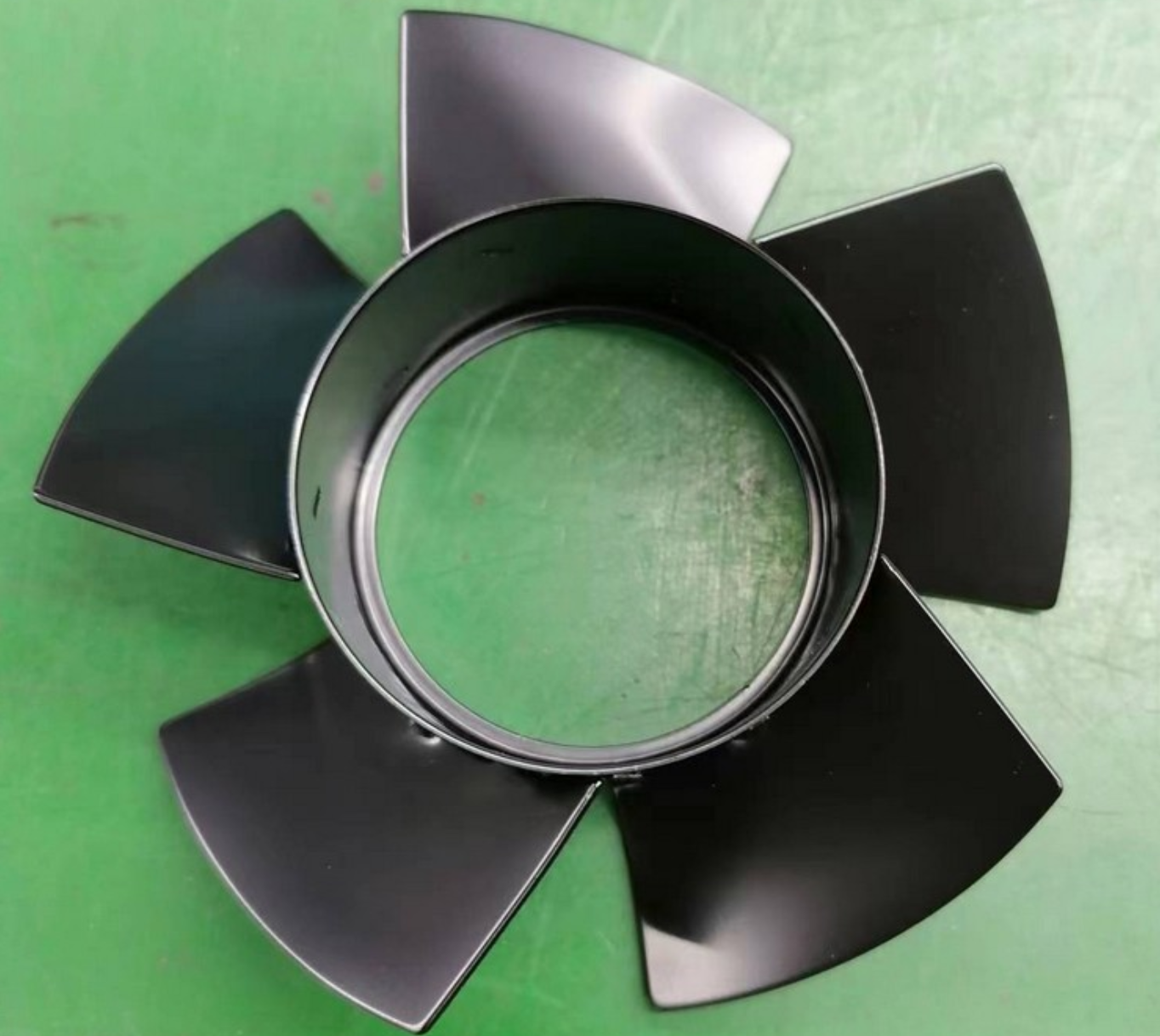
Identify the exact substrate — carbon steel, alloy steel, aluminum alloy, magnesium alloy or zinc alloy — and confirm the pre-treatment sequence. Stamped parts normally require degreasing and surface preparation before deposition; a processor with in-house blasting, polishing and shot blasting capability can handle heavy scale, burrs and lubricant residue without shipping the part between vendors.
Step 5 — Agree the validation tests before the first production batch
Use recognised methods so results can be compared between suppliers. The table below sets out the items worth naming in an RFQ.
| Test / inspection item | Reference method | What it confirms |
|---|---|---|
| Cross-cut adhesion | ISO 2409 | Coating adhesion to the metal substrate |
| Dry film thickness | ISO 2808 | Film build against the specified 15–25 µm window |
| Humidity resistance | ISO 6270-2 | Resistance to blistering under humid conditions |
| Neutral salt spray | ISO 9227 | Corrosion resistance in hours without red rust |
| Rust evaluation after exposure | ASTM D1654 or ISO 4628 | Degree of rusting and defect rating |
| Electrocoat thickness measurement | ASTM B767 | Coating thickness specific to electro-deposition |
| Terminology and scope reference | ISO 22553-1:2019 | Standard vocabulary for electro-deposition coatings |
Step 6 — Qualify the line, not just the sample
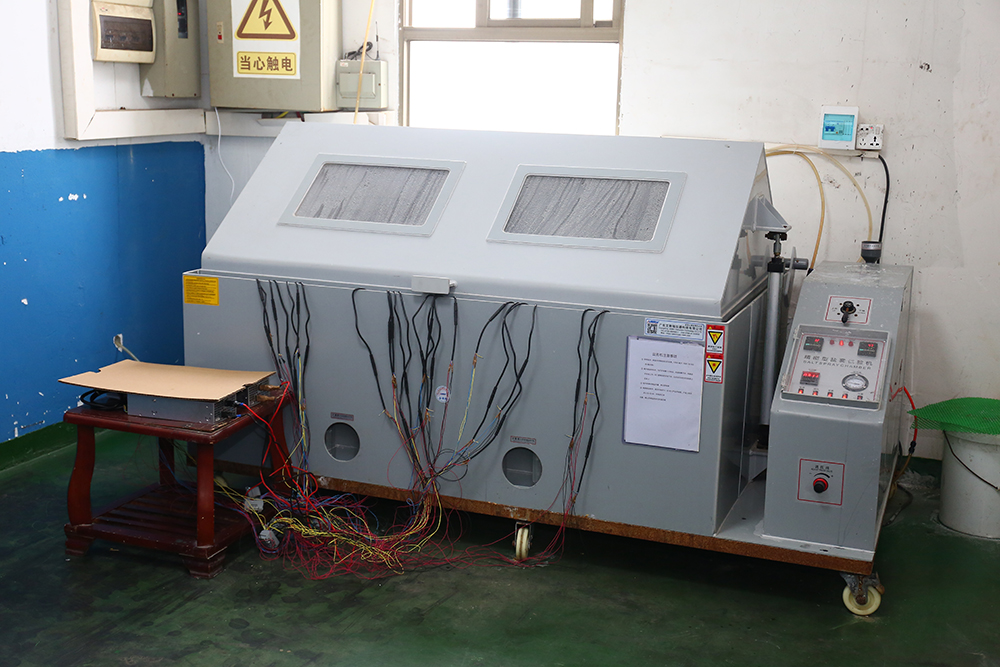
A sample proves that a coating can be applied; the line proves that it can be applied the same way on the ten-thousandth part. Look for the number of electrophoresis lines, the in-house machining and stamping capacity that keeps pre-coat geometry controlled, and the inspection instruments behind the quality claim. Yongxin operates six electrophoresis production lines, more than 20 CNC machines, more than 10 die-casting machines and more than 10 metal stamping machines, supported by over 20 high-precision testing instruments that include a German FISCHER film thickness gauge, a Swiss Zehntner gloss meter, a Japanese Konica Minolta spectrophotometer and a Japanese Mitutoyo roughness meter, plus salt spray, constant temperature and humidity testers, a reflectometer, an electron microscope, tape and alcohol friction testers and tank solution analysis equipment.
Step 7 — Fix commercial terms and acceptance criteria in writing
Agree the minimum order, delivery terms, inspection basis and payment terms before tooling is committed. For this process the standing commercial terms are: MOQ 100 units, negotiable for large orders; delivery terms FOB/CIF, negotiable; acceptance criteria based on pre-shipment instrument detection; and 100% full payment. Every production procedure is inspected, and 100% test is applied to finished output.
Use Cases: Where Each Finish Proves Itself
Motor components — black, high salt spray
For a motor manufacturer in Japan, anti-corrosion and anti-rust electrophoretic coating was applied to electric motors in a programme covering 15,000,000 units over a 5–10 year relationship. The project achieved neutral salt spray resistance of over 720 hours and extended product service life by 5 to 10 years. The coating provided uniform full coverage of complex motor structural gaps, stable anti-corrosion performance under long-term harsh working conditions, and low material loss supporting mass continuous production.
CNC precision machined parts — black, full coverage
For a CNC precision machining manufacturer in China, electrophoretic coating of machined parts achieved a fully covered film with no missed coating at corners or inner cavities and strong adhesion. The coating is resistant to acid and alkali, rust-proof and anti-aging, extending product service life. From the processing side, the programme relied on full-process standardised operation, small batch colour difference, stable quality, and flexible multi-material and multi-colour customisation with fast delivery on demand.
Cast and machined housings with a decorative requirement — aluminium alloy
Aluminum alloy parts, including die-cast housings and machined enclosures, take black electrophoretic coating where a uniform, fine appearance is required together with corrosion protection. Aluminum alloy is one of the substrate families covered by both the black and white systems, and colour can be customised when the housing is visible.
Stamped frames, cores and sleeves — standard production black
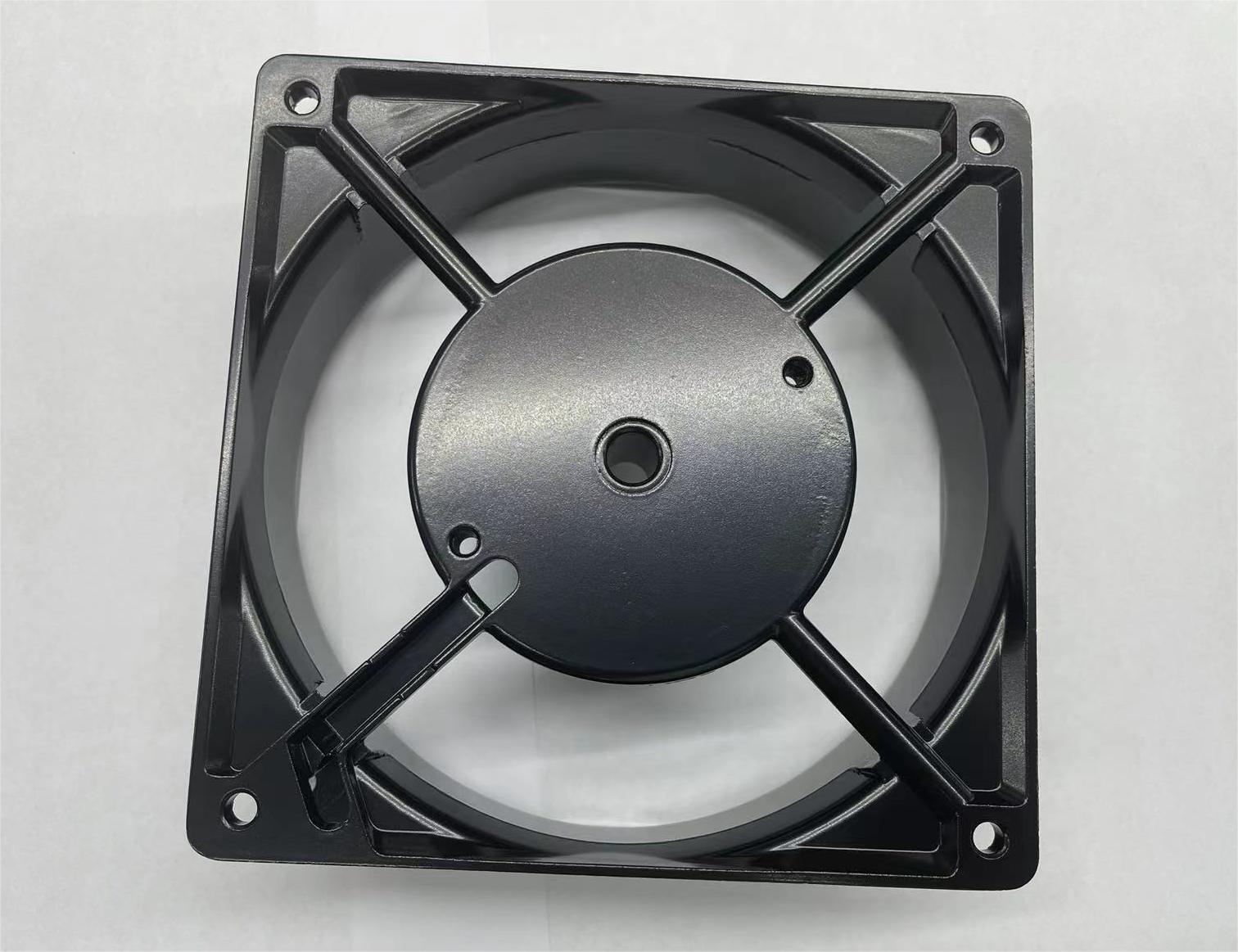
High-volume stamped and formed parts — fan frames, motor cores, leaf sleeves and similar components — are normally finished in black at 15–25 µm. These parts benefit most from the 95%–98% coverage of internal geometry and from batch-to-batch consistency, because they are assembled in large quantities and any colour or thickness drift shows up downstream.
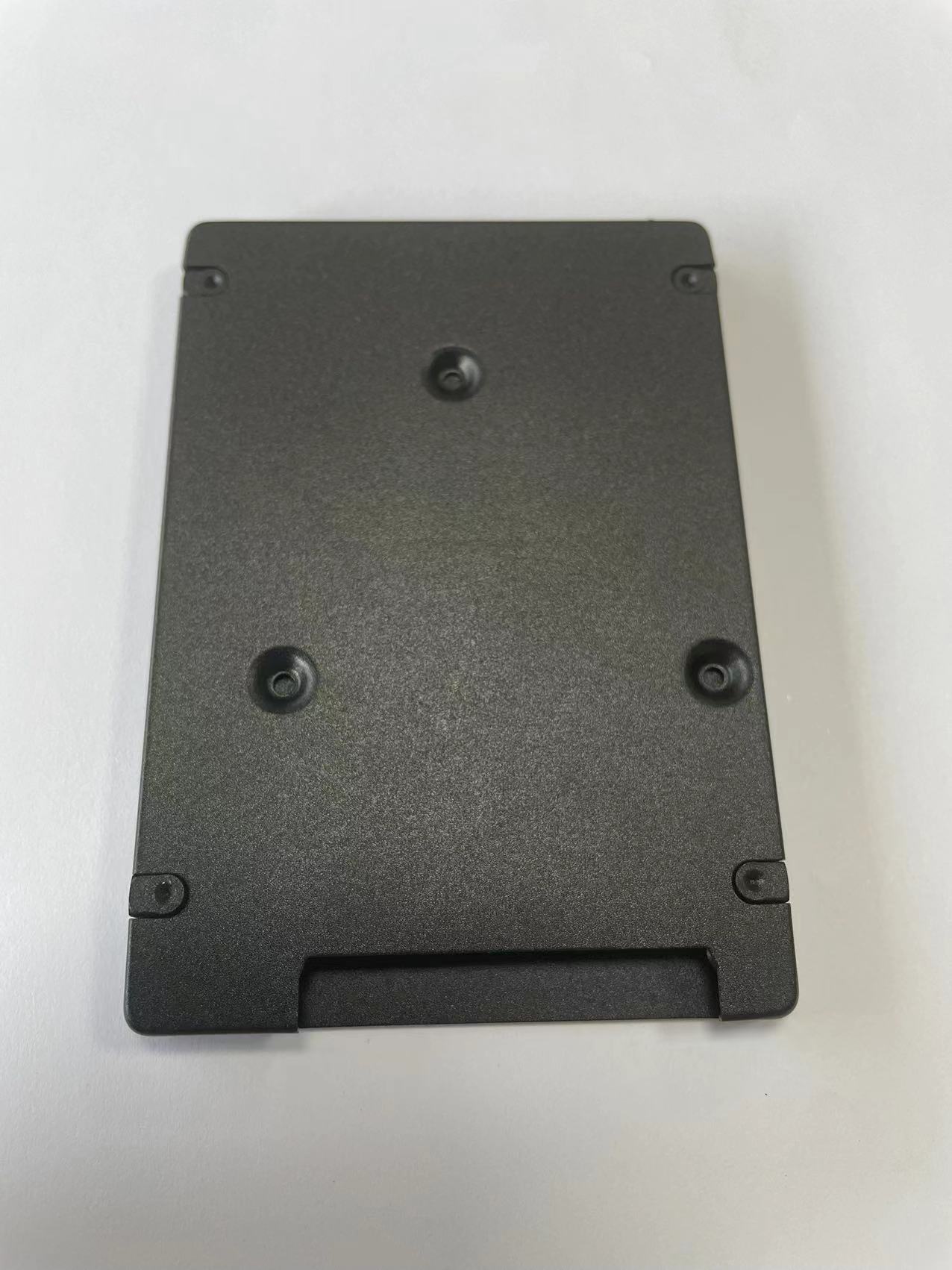
Comparison Table:
| Selection variable | White Electrophoretic Coating | Black Electrophoretic Coating |
|---|---|---|
| Resin system | Acrylic resin (epoxy resin) | Acrylic resin and epoxy resin |
| Process control route | CNC plus electrophoresis control | Controlled deposition by electrochemical principles on automated E-coat lines |
| Standard film thickness | Specified per part; confirms on sample | 15–25 µm for ordinary parts, customizable as needed; tolerance within ±1 µm and variation within ±5% on controlled automotive lines |
| Colour | White | Black as standard, colour customizable; matte or glossy; grey or silver on request |
| Salt spray performance | Project-specific target; must be validated on a coated sample | Typically 500–1,500 hours without red rust; over 1,000 hours achieved in commercial automotive component work; CASS can exceed 96 hours |
| Coverage on complex geometry | Same deposition mechanism; validate on drawn cavities and seams | 95%–98% including deep cavities, tight seams and internal holes |
| Temperature and mechanical durability | Water-based, heavy-metal-free, low VOC | Withstands −40 °C to over 85 °C, resists stone chipping, bonds firmly to prevent peeling during assembly and transport |
| Substrates | Carbon steel, alloy steel, aluminum alloy, magnesium alloy, zinc alloy | Carbon steel, alloy steel, aluminum alloy, magnesium alloy, zinc alloy |
| Environmental profile | Water-based, no heavy metals, low VOC emissions | Water-based, no heavy metals, low VOC emissions, aligned with requirements such as RoHS |
| Typical fit | Stamped parts that are visible or must match a light-coloured assembly | Functional, hidden and high-volume stamped parts where corrosion hours and consistency dominate |
FAQ
Which standards and certifications should a stamping-part E-coat supplier be able to document?
Two layers of evidence are needed. The first is the test method layer — cross-cut adhesion to ISO 2409, dry film thickness to ISO 2808, humidity resistance to ISO 6270-2, neutral salt spray to ISO 9227, rust evaluation to ASTM D1654 or ISO 4628, and electrocoat thickness to ASTM B767 are the methods commonly referenced for cathodic electrodeposition coating evaluation, with ISO 22553-1:2019 providing the standard vocabulary. The second is the management-system layer: a supplier should produce valid certificates on request. Dongguan Yongxin Industrial Co., LTD holds ISO 9001:2015 certification (24CN34506942Q) and ISO 14001:2015 certification (24CN34506943E), operates an IATF16949 automotive quality management system, and holds National High-Tech Enterprise certificate GR202344016867. Always confirm that each certificate is current before it is written into a purchase specification.
Can an OEM electrophoretic coating manufacturer meet high salt spray performance on stamped parts?
Yes, and the relevant figure is measurable rather than theoretical. The black acrylic-epoxy system is specified at a standard 15–25 µm and typically passes 500–1,500 hours of neutral salt spray without red rust, with over 1,000 hours achieved in commercial automotive component work and CASS testing exceeding 96 hours. On a motor component programme in Japan, the process reached over 720 hours of neutral salt spray resistance and extended product service life by 5 to 10 years across 15,000,000 units. Premium automotive specifications commonly demand 720–1,000 hours with film builds of 18–25 µm, so the capability ceiling is normally set by the specification, not by the process. White coating can be qualified for the same test method, but the hours must be confirmed on a sample of the actual part.
What are the purchasing terms and acceptance criteria for an E-coat order?
The standing terms are straightforward: MOQ 100 units, negotiable for large orders; delivery terms FOB/CIF, negotiable; acceptance criteria based on pre-shipment instrument detection; and payment terms of 100% full payment. Production capacity supports this at a monthly capacity of 2,500,000, with OEM production services and 100% testing of finished output. Buyers should confirm whether unit MOQ is quoted per part number or per order, because stamping programmes frequently involve several part numbers that can be consolidated into one production run.
How do I validate white or black before committing to mass production?
Validate on the real stamped geometry, not on a test panel, because the die-cut edges, burrs and internal cavities are what the coating has to cover. Send drawing-level information plus the colour target, corrosion hours and thickness window; the sample then goes through the same pre-treatment and deposition route as production, with rapid sample confirmation designed to shorten the production cycle. Colour is checked with a Konica Minolta spectrophotometer, film thickness with a German FISCHER film thickness gauge, gloss with a Swiss Zehntner gloss meter and roughness with a Japanese Mitutoyo roughness meter, supported by salt spray and humidity testing. Confirm adhesion, thickness and colour on the approved sample in writing before releasing volume.
What is the typical lead time, and what happens after shipment?
Production lead time is 3–45 days depending on quantity, and remote after-sales support is available for the life of the supply relationship. Both figures should be read together with the batch size and the number of part numbers in the order, since multi-part-number stamping programmes need sequencing rather than a single delivery date. To get a quote against your specific stamped part, send the drawing, substrate, colour requirement, salt spray target and expected annual volume to the Yongxin team by email at wuzj@yxsydy.com or on WhatsApp at +8615322922788; the full capability set is summarised in the Enameled Flat Wire and Electrophoretic Coating Solutions brochure, and service details are available at www.yxecoat.com.
Conclusion
White and black electrophoretic coating for stamping parts are not competing technologies. They are two output options from the same acrylic resin and epoxy resin chemistry, applied from the same water-based, heavy-metal-free, low-VOC bath, onto the same range of carbon steel, alloy steel, aluminum alloy, magnesium alloy and zinc alloy substrates. What separates them is what you ask the finish to do.
Black is the documented production finish: 15–25 µm standard thickness, colour customisable, typically 500–1,500 hours neutral salt spray without red rust, over 1,000 hours in commercial automotive work, and 95%–98% coverage of complex geometry. It is the correct starting point for functional, hidden and high-volume stamped components, and its performance envelope is already proven across motor, machined and cast component programmes.
White is an appearance-led specification built on acrylic resin (epoxy resin) with CNC plus electrophoresis control. It is the right answer when the stamped part is visible or must match a light-coloured assembly — provided the corrosion hours, thickness window and colour tolerance are fixed in the specification and confirmed on a coated sample of the real part.
Whichever direction the project takes, the sequence is the same: define the appearance, name the corrosion hours and the test method, lock the film thickness, validate on the actual stamped geometry, qualify the line behind the sample, and agree the commercial terms — MOQ, delivery terms, acceptance criteria and payment — before the dies start running.
Have Questions or Need More Details?
Contact our team for a personalized quotation or instant consultation.
Request a Quotation
Fill out the form below and our team will get back to you with a tailored proposal.
WhatsApp Direct Chat
Prefer to chat in real-time? Message us on WhatsApp for instant assistance & quick answers.
- Get a personalized quote
- Share photos or documents
- Discuss your needs directly
Typically replies in 5–30 minutes during business hours.