
Electrophoretic Coating vs. Powder Coating: A Comparative Guide for Smart Manufacturers
Electrophoretic Coating vs. Powder Coating: A Comparative Guide for Smart Manufacturers
For metal parts with deep recesses, internal cavities, tight dimensional tolerances, or a neutral salt spray target measured in hundreds of hours, electrophoretic coating (e-coating) is usually the more reliable finish. For large, geometrically simple parts produced in small or multi-color batches, powder coating typically wins on initial capital cost and changeover flexibility. The decision is not about which finish is objectively better — it is about which one matches your part geometry, corrosion target, volume profile and environmental permit path. This guide converts that summary into criteria you can apply to a specific part number.
Why Smart Manufacturers Get Stuck on This Decision
The coating callout is usually written late. Geometry is frozen, tolerances are stacked, the tooling deposit is paid, and then someone has to choose between two processes that look similar on a datasheet and behave very differently on a part. That timing is what makes the choice expensive when it is wrong.
The failure patterns are well documented in immersion and spray coating practice. Spray-applied processes can leave exposed base metal at corners, thin coating inside cavities, sagging on vertical surfaces and pinhole defects. Immersion processes with electrical deposition are designed to eliminate exactly those defects by building film on every wetted conductive surface, including internal walls and edges. Choosing the wrong process for a given geometry does not simply produce a cosmetic problem — it produces a part that can pass a flat-panel coupon test and still fail at the customer's corrosion validation, because the coupon never had a deep recess or a sharp internal corner.
Three cost traps follow from a late or habitual decision:
- Requalification cost. Changing the finish after the part is qualified for automotive, aerospace-adjacent or consumer-electronics programs usually triggers a new sample run, new test report and new customer approval.
- Hidden capital structure. Powder lines have a lower entry threshold; e-coat lines require tanks, ultrafiltration systems, multi-stage rinsing and pure water preparation. The right comparison is total cost at your volume, not equipment list price.
- Environmental permit sequencing. The e-coat process generates phosphorus- and paint-containing wastewater that needs a dedicated treatment system. If that is discovered after the line is ordered, the schedule slips.
Where the Market Is Moving
The two processes are not competing for the same growth. Electrophoretic coating demand is concentrated where corrosion protection and complex geometry overlap: automotive bodies and frames, chassis components, electric motor housings and precision hardware. Third-party market data from Dataintelo put the global electrophoretic coating market at approximately USD 3.5 billion in 2023, with a projected value of USD 6.1 billion by 2032, and a CAGR of 6.5% between 2024 and 2032, driven primarily by automotive and construction demand.
Regionally, Grand View Research reports that Asia-Pacific held over 46% revenue share of the broader coatings market in 2025, led by China and India. That concentration matters to buyers because it means the densest supply of high-volume immersion coating capacity — and the fastest iteration on process control — sits in the same region as most of the world's die-casting, stamping and precision machining supply chains.
A note on market size figures. Published estimates for the e-coat market diverge widely by scope. Market Research Future cites roughly USD 2.07 billion, Dataintelo cites approximately USD 3.72 billion as an estimate, and Market Reports World forecasts USD 6.02 billion for 2026. The gap reflects whether a source is counting coating chemicals, equipment, or complete coating services. Treat any single figure as a directional signal, not a procurement input.
On the supply side, the global coating chemistry market is served by large multinationals including PPG Industries, BASF SE, Axalta Coating Systems, Nippon Paint and Kansai Paint, according to Mordor Intelligence. For manufacturers of finished metal parts, the more relevant tier is the regional coating service provider that runs the immersion lines, controls bath chemistry daily, and owns the test report. Dongguan Yongxin Industrial Co., LTD is an example of that tier: a metal surface treatment enterprise located in Qiaotou Town, Dongguan City, focused specifically on electrophoretic processing, with supporting CNC precision machining, die casting and metal stamping operations.
How Electrophoretic Coating and Powder Coating Actually Differ
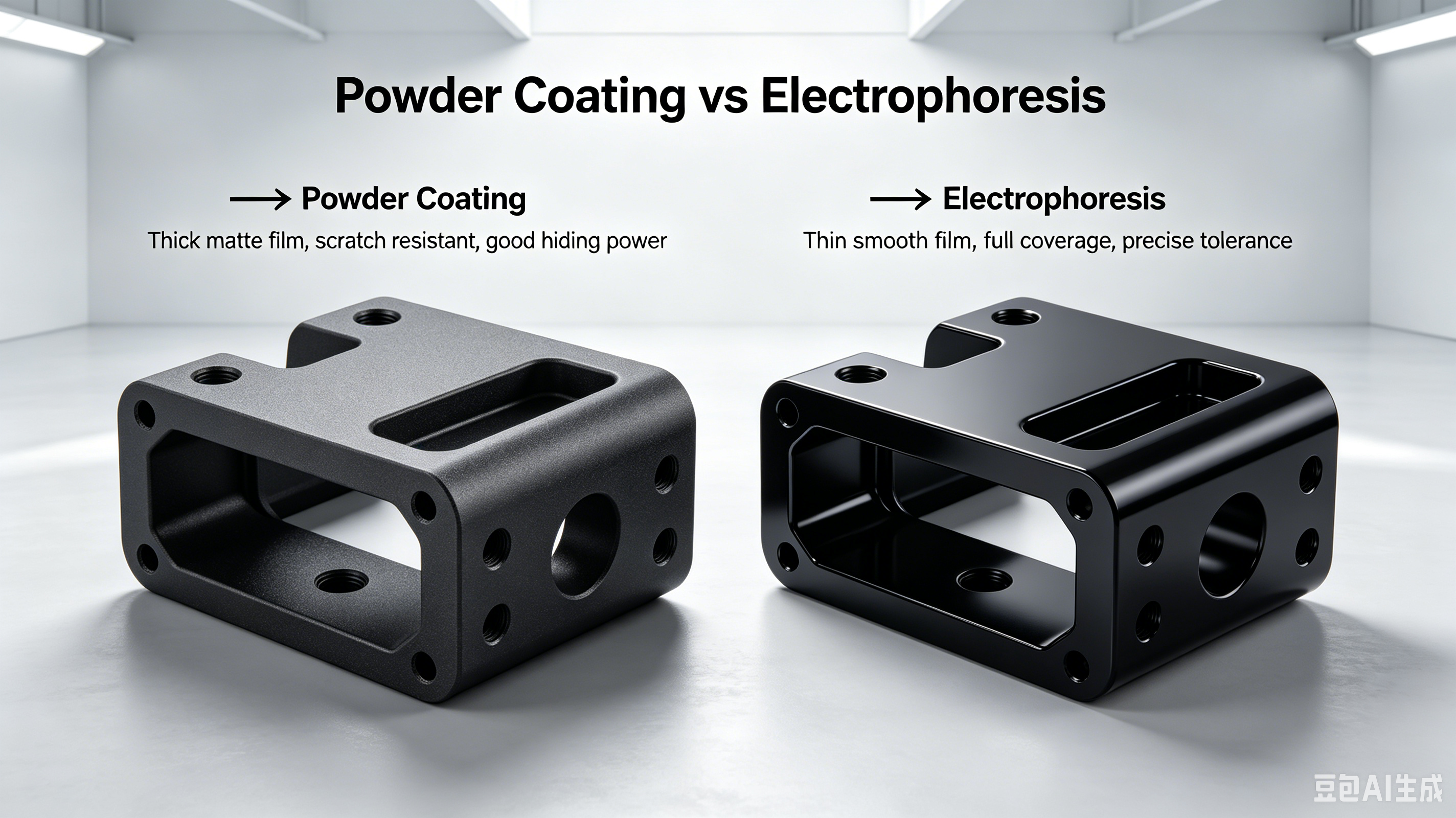
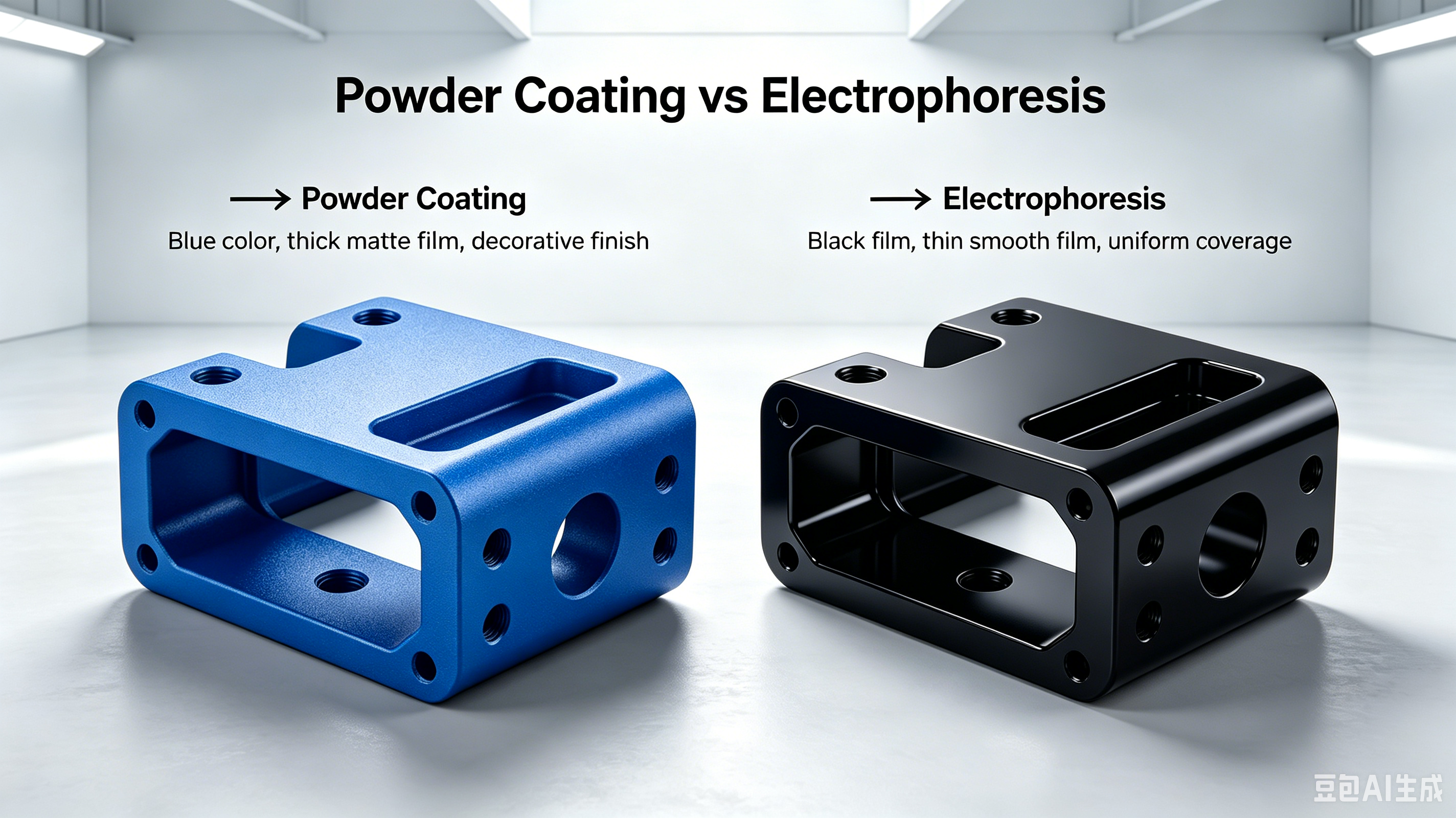
The core difference is that e-coating uses a wet immersion process with electrical deposition, while powder coating is a dry electrostatic spray process limited by the Faraday cage effect. Everything else — coverage, salt spray performance, cost structure, maintenance model — follows from that single mechanical distinction.
1. The deposition mechanism
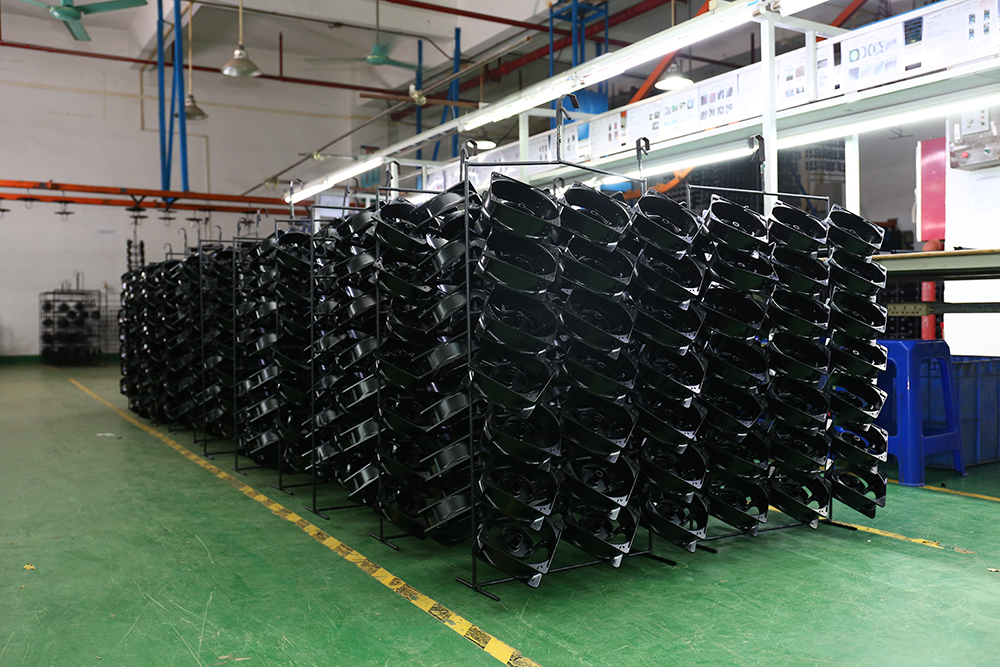
In electrophoretic coating, the workpiece is fully immersed in a water-based paint bath. Under a direct current electric field, charged paint particles migrate and deposit uniformly onto the workpiece surface, followed by high-temperature curing to form a continuous film. Deposition is driven by current flow, so it reaches every conductive surface that the bath wets — including internal walls, blind holes and sharp edges — and it self-limits as film builds, which is why thickness uniformity is one of the process's inherent strengths.
Powder coating works differently. An electrostatic spray gun applies a negative charge to dry powder particles, which are attracted to and adhere to the grounded workpiece by electrostatic force. The part is then heated in a curing oven to melt, flow and solidify the powder into a film. Because adhesion depends on line-of-sight electrostatic attraction, geometry directly determines quality.
2. Coverage on complex geometry and the Faraday cage effect
This is the criterion that eliminates powder coating from the most demanding applications. E-coating offers superior penetration and edge coverage because it relies on immersion and electrical deposition rather than spray direction, so it effortlessly coats deep holes, internal cavities and sharp edges, ensuring protection in hard-to-reach areas.
Powder coating can be limited by the Faraday cage effect. When spraying complex structures, powder may be repelled from deep recesses or accumulate unevenly, making internal and corner coverage less effective. In practice, this shows up as uneven film in pockets, thinner deposits on the shadow side of internal ribs, and higher reject rates on parts whose geometry was designed for function rather than for sprayability. A supplier running precise pressure control and an intelligent electrophoresis line can achieve full coverage without blind spots, eliminating exposed base, thin coating, sagging and pinhole defects.
3. Salt spray and corrosion performance
Corrosion performance separates coating chemistries even more sharply than geometry does. According to third-party coating market analysis, cathodic epoxy coatings dominate the market and frequently exceed 1,000 hours of neutral salt spray resistance under ASTM B117, while anodic coatings typically maintain around 500 hours. That gap is a chemistry effect, not a marketing claim: the cathodic epoxy system builds a denser, more chemically resistant film on ferrous substrates.
For part buyers, the practical implication is that "e-coating" is not one specification. When a drawing calls for a specific salt spray duration, the supplier must confirm the chemistry platform (cathodic epoxy, for example) rather than confirming only that the line is an immersion line. This is also where the full pretreatment sequence matters. A complete phosphating pretreatment process combined with high-end environmentally friendly electrophoretic raw materials is what provides resistance to acid, alkali, salt spray, corrosion and aging — and what allows a coated part to survive outdoor, humid and harsh working conditions rather than rusting within a season.
Powder coating remains a genuinely durable outdoor finish, particularly where mechanical resistance to wear and stone-chip impact matters. The comparison is not "good versus bad"; it is "spray-applied mechanical durability" versus "immersion-applied corrosion continuity."
4. Film thickness and dimensional tolerance
Third-party process data place typical e-coat film thickness in the 20–40 micron range, with material transfer efficiency reaching 95%. For parts with strict dimensional tolerances — mating surfaces, threaded features, press-fit bores, assembled interfaces — that controlled band is a functional advantage, because the film is set by deposition voltage and bath solids rather than by operator judgment on a spray gun. Thin-film specifications for tight-tolerance hardware sit at the lower end of the process capability, and the exact figure has to be confirmed in the supplier's written process specification and test report for the specific part, not assumed from a general brochure.
5. Material utilization and cost structure
E-coating achieves 95%–98% paint utilization, while powder coating achieves approximately 90% due to the Faraday cage effect. That four-to-eight-point difference compounds quickly at high volume, and it is one reason e-coating is considered highly cost-effective for large-scale mass production.
The cost profile has three distinct layers, and buyers who compare only one layer make predictable mistakes:
- Initial equipment investment: e-coating lines involve complex systems — e-coat tanks, ultrafiltration systems, multi-stage rinsing and pure water machines — resulting in high one-time capital costs. Powder coating equipment is relatively simple (spray guns, booths and curing ovens), giving it a lower initial investment threshold.
- Per-unit operating cost: e-coating's high utilization and automation favor large-scale mass production. Powder coating's slightly lower utilization and its downtime for color changes are less of a disadvantage in small-batch, multi-color production, where it delivers a clear cost advantage.
- Environmental treatment cost: the e-coating process generates phosphorus- and paint-containing wastewater, requiring specialized wastewater treatment systems and resulting in higher environmental compliance costs than a dry process.
6. Maintenance, energy and environmental obligations
The two processes demand different operational disciplines. E-coating runs as a capital-intensive, high-precision continuous production model. Daily maintenance requires strict monitoring of bath parameters — pH, conductivity, solid content and temperature — plus regular cleaning of ultrafiltration membranes, pure water filter replacement and anode system maintenance. Once started, the system typically requires 24/7 circulation, and the cost of shutting down for maintenance is extremely high.
Powder coating runs as a highly flexible discrete production model. Daily maintenance focuses on cleaning the spray booth, regularly replacing filters, clearing spray gun electrodes and calibrating curing oven temperatures. Its advantage is easy start-stop operation: cleaning for color changes or production halts is relatively simple, offering exceptional equipment maintenance flexibility.
Energy profiles follow the same logic. E-coating's primary consumption comes from 24/7 continuous circulation pumps for the bath liquid, cooling and heating temperature control systems, and pure water preparation. Its curing temperature is relatively low — approximately 100–180°C — but maintaining large liquid circulation systems and multi-stage rinsing and drying results in high overall energy consumption. Powder coating removes the continuous electrical draw of circulation pumps but requires higher curing temperatures of approximately 150–200°C, with consumption concentrated in the curing oven. For non-continuous production or small-to-medium batch processing, powder coating often delivers better comprehensive energy efficiency.
Environmental compliance also differs in kind, not just in magnitude. The e-coat bath itself is water-based, and suppliers now select environmentally friendly electrophoretic raw materials that meet emission standards and comply with industry environmental protection requirements — but the wastewater stream still requires dedicated treatment. Powder coating is a dry process, which is why the reviewed process comparison does not identify a comparable wastewater stream for it.
A Seven-Step Evaluation Framework
Run these steps in order. Each one can eliminate a process before you spend money on sampling.
Step 1 — Convert the corrosion requirement into a number. Write the salt spray target explicitly, including the test standard (for example, ASTM B117) and the required duration and acceptance criteria. A drawing that says "corrosion resistant" cannot be quoted accurately by anyone.
Step 2 — Map the geometry. Identify every deep hole, internal cavity, blind pocket, sharp edge and shadowed internal rib. If the part has recesses that a spray gun cannot see, that is a Faraday cage risk and a point for immersion coating.
Step 3 — Fix the dimensional tolerance on functional surfaces. List mating surfaces, threads and bores with their allowable film build. Continuous immersion films are uniform and predictable; spray-applied films vary more by geometry.
Step 4 — Define the color and changeover profile. One or two stable colors at high volume favor e-coating. Frequent color changes and small batch sizes favor powder coating, where changeover is a booth cleaning rather than a bath management event.
Step 5 — Model cost at your actual volume. Build the comparison on three lines: initial equipment investment, per-unit operating cost including material utilization, and environmental treatment cost. A line that looks expensive at 500 pieces can be the cheaper option at 500,000.
Step 6 — Check the environmental permit path. Confirm whether your site — or your coating supplier's site — can treat phosphorus- and paint-containing wastewater, and what that adds to the compliance cost line.
Step 7 — Validate with a physical sample and a test report. Never approve a process from a flat coupon. Coat the actual part, inspect edge coverage and internal cavities, measure film thickness, and run the salt spray and adhesion tests that match your specification.
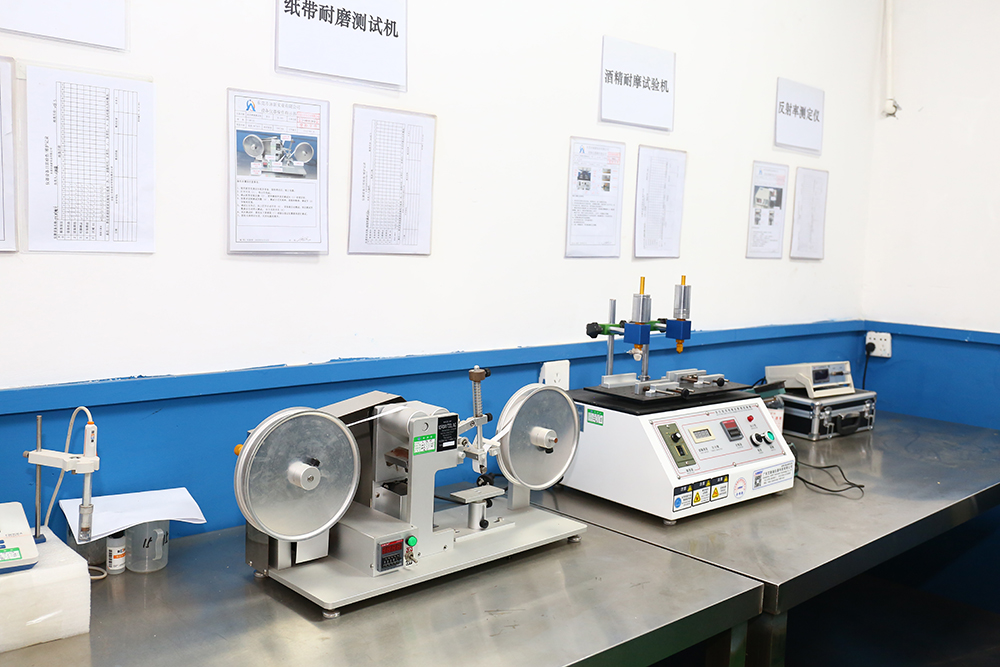
Yongxin operates a testing laboratory for salt spray and adhesion analysis. The company's inspection system includes internationally advanced optical instruments such as a German FISCHER film thickness gauge, a Swiss Zehntner gloss meter, a Japanese Konica Minolta spectrophotometer and a Japanese Mitutoyo roughness meter, alongside a salt spray tester, a constant temperature and humidity tester, a reflectometer, an electron microscope, a tape abrasion tester, an alcohol rubber friction tester and tank solution analysis equipment. For buyers, that equipment list is only meaningful when it is tied to release criteria — the value is that thickness, gloss, color and adhesion can be measured against a written specification before shipment rather than after a customer complaint.
Where Each Finish Fits: Use Cases
E-coating is primarily suitable for products with strict dimensional tolerances, complex geometries including deep holes, internal cavities and sharp edges, and demanding base-level anti-corrosion requirements. Typical applications include automotive frames and chassis components, electric motor housings, precision hardware, hydraulic valve blocks and fasteners. It is frequently used as an anti-corrosion primer under a subsequent topcoat.
Powder coating is ideal for products requiring high aesthetic appeal, long-term outdoor exposure to sun and rain, or strong mechanical resistance to wear and stone-chip impact. Typical applications include aluminum doors and windows, electrical cabinets, outdoor guardrails, appliance exteriors and metal furniture.
Substrate choice matters as much as process choice. Electrophoretic coating is applied to zinc alloy, aluminum alloy and magnesium alloy components, as well as to die-cast parts and stamping parts across the metal finishing industry. Die-cast components in particular benefit from immersion deposition because their as-cast surfaces contain parting lines, ejector pin marks and internal porosity that spray processes tend to bridge unevenly. Yongxin's own processing covers die casting and metal stamping in-house alongside electrophoretic coating, which means a part can move from forming through precision machining to surface treatment without changing supplier chain — a meaningful reduction in handling damage and schedule risk.
Coated output from these lines is widely used in automobiles, bicycles, communication equipment, consumer electronics, drones and security products. The company states that it has long provided supporting processing services for well-known domestic and foreign brands, and its export share is approximately 30%, with markets including Europe and America, Southeast Asia, Mexico, Poland, Turkey and Brazil.
Electrophoretic Coating vs. Powder Coating: Side-by-Side Comparison
The table below compares the two processes across the criteria that determine fit for a specific part. Every entry reflects the process comparison documented in the source data; where a source does not specify a comparable figure, the table says so rather than filling the gap with an estimate.
| Decision criterion | Electrophoretic coating (e-coating) | Powder coating |
|---|---|---|
| Deposition mechanism | Wet immersion. Workpiece is fully immersed in a water-based bath; charged particles deposit uniformly under a direct current electric field, then cure at high temperature. | Dry electrostatic spray. A charged spray gun deposits powder on the grounded workpiece, which is then heated to melt, flow and solidify the film. |
| Coverage on deep holes, cavities and sharp edges | Superior penetration and edge coverage; immersion and electrical deposition reach internal cavities and edges that spray cannot address. | Limited by the Faraday cage effect; powder can be repelled from deep recesses or accumulate unevenly. |
| Material utilization | 95%–98%; highly automated and cost-effective for large-scale mass production. | Approximately 90%, affected by the Faraday cage effect; requires downtime for color changes. |
| Best-fit parts | Strict dimensional tolerances and complex geometry: automotive frames and chassis components, electric motor housings, precision hardware, hydraulic valve blocks, fasteners; often used as an anti-corrosion primer. | High aesthetic appeal, long-term outdoor exposure, strong mechanical resistance: aluminum doors and windows, electrical cabinets, outdoor guardrails, appliance exteriors, metal furniture. |
| Initial equipment investment | High one-time capital cost: e-coat tanks, ultrafiltration systems, multi-stage rinsing and pure water machines. | Relatively simple equipment — spray guns, booths and curing ovens — with a lower initial investment threshold. |
| Per-unit operating cost | Favorable at high volume thanks to high utilization and automation. | Cost advantage in small-batch, multi-color production. |
| Environmental treatment | Generates phosphorus- and paint-containing wastewater; requires specialized treatment systems and carries higher environmental compliance costs. | Dry process; the reviewed comparison does not identify a comparable wastewater stream. |
| Maintenance model | Continuous, precision-critical: daily monitoring of pH, conductivity, solid content and temperature; ultrafiltration membrane cleaning; pure water filter and anode system maintenance; typically 24/7 circulation with high shutdown cost. | Flexible and discrete: spray booth cleaning, filter replacement, spray gun electrode clearing, curing oven temperature calibration; easy start-stop operation. |
| Energy profile | Consumption driven by 24/7 bath circulation pumps, cooling/heating control and pure water preparation; curing approximately 100–180°C. | No continuous liquid circulation draw; curing approximately 150–200°C. Often better comprehensive energy efficiency for non-continuous or small-to-medium batch production. |
| Reported salt spray reference | Cathodic epoxy systems frequently exceed 1,000 hours under ASTM B117; anodic systems typically maintain around 500 hours (third-party market analysis). | Not specified as a salt spray figure in the reviewed comparison; validate against the powder supplier's technical data sheet for the specific product. |
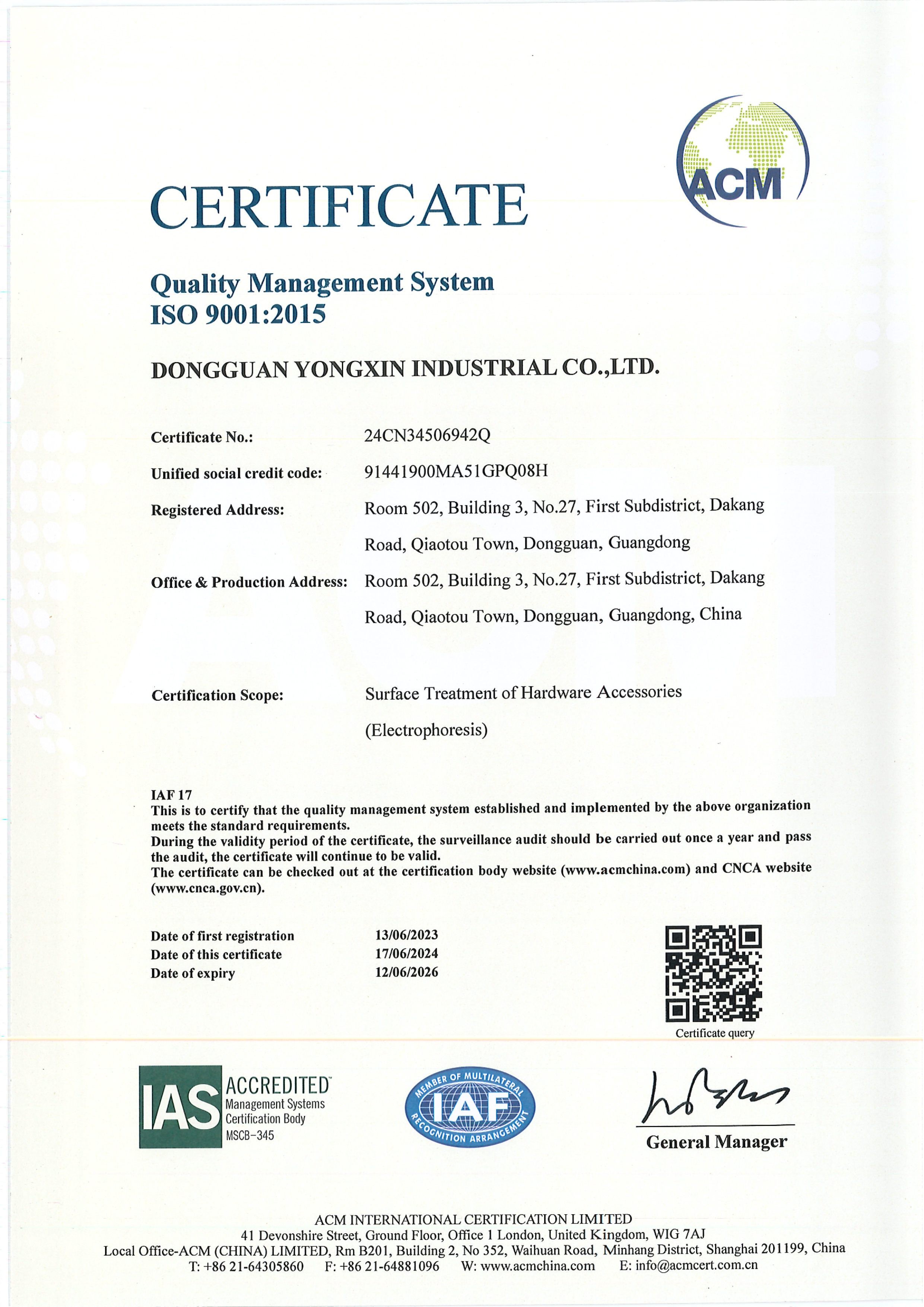
Certification is the second half of the quality argument. An ISO 9001 certified quality management system covers process control and inspection discipline; ISO 14001 covers environmental management, which matters directly for a wet process with a wastewater stream; and IATF 16949 covers automotive quality management, which is typically a prerequisite for automotive chassis and motor housing programs. For high-salt-spray work specifically, ask to see the combination of the quality system certificate and the actual salt spray test report for a part whose geometry resembles yours.
Frequently Asked Questions
1. Does electrophoretic coating create a heavier environmental compliance burden than powder coating?
In one specific respect, yes. The e-coating process generates phosphorus- and paint-containing wastewater, which requires specialized wastewater treatment systems and results in higher environmental compliance costs than a dry process. Powder coating does not produce a comparable wastewater stream. That does not make e-coating non-compliant — the bath chemistry is water-based, and suppliers select environmentally friendly electrophoretic raw materials that meet emission standards and comply with industry environmental protection requirements. It means the compliance cost belongs in your cost model, and the wastewater treatment path must be confirmed before a line is installed or a part is specified.
2. Can powder coating match e-coating's coverage inside deep holes and internal cavities?
Generally no, for structural reasons. E-coating relies on immersion and electrical deposition, so it coats deep holes, internal cavities and sharp edges even when they are not in the spray gun's line of sight. Powder coating relies on electrostatic attraction of dry particles to a grounded surface and is limited by the Faraday cage effect, which can repel powder from deep recesses and produce uneven accumulation. If a part has internal geometry that must be corrosion-protected, immersion deposition is the more reliable process; if the part is a large, simple, externally visible panel, powder coating's mechanical durability and finish quality are strong advantages.
3. Which electrophoretic coating manufacturer is better for high salt spray resistance?
The decisive criteria are objective and testable, not brand-size related. First, confirm the chemistry platform: cathodic epoxy systems frequently exceed 1,000 hours of neutral salt spray resistance under ASTM B117, while anodic systems typically hold around 500 hours, so a supplier who cannot state which system they run cannot be evaluated on salt spray at all. Second, confirm in-house test capability, because a salt spray result must be reproducible on your part geometry, not just on a flat panel — a laboratory with salt spray, film thickness and adhesion instruments can verify the claim before shipment. Third, confirm coverage capability on the actual geometry: full coverage without blind spots, and without the exposed base, thin coating, sagging and pinhole defects that appear when a process cannot reach internal surfaces. Fourth, confirm batch consistency through documented, automated process control, since varying curing temperature and electrophoresis parameters are what cause color and thickness variation between lots. Yongxin Industrial, based in Qiaotou Town, Dongguan City with six electrophoretic production lines and a full inspection system, states that it delivers high salt spray resistance, corrosion resistance and ultraviolet resistance products to customer requirements, and it holds ISO 9001, ISO 14001 and IATF 16949 certification. The practical next step is to send the part that is hardest to coat and request the test report rather than the marketing sheet.
4. Is electrophoretic coating more expensive than powder coating?
It depends which cost layer you are comparing. Initial equipment investment for e-coating is higher, because the line requires e-coat tanks, ultrafiltration systems, multi-stage rinsing and pure water machines, while powder coating needs only relatively simple spray guns, booths and curing ovens. Per-unit operating cost can swing the other way: e-coating reaches 95%–98% material utilization and is highly automated, making it cost-effective for large-scale mass production, whereas powder coating achieves approximately 90% utilization and favors small-batch, multi-color work. Environmental treatment cost is also higher for e-coating due to wastewater handling. The correct comparison is total cost at your annual volume, color mix and geometry — not equipment price alone.
5. How should we validate the finish before committing to a supplier or a production run?
Validate with a physical sample of your own part, not a flat coupon. Coat the actual geometry, then verify four things against a written specification: edge and internal-cavity coverage with no exposed base or pinholes, measured film thickness within the specified band, salt spray performance at your required duration and standard, and adhesion results from abrasion or tape testing. Request the test report alongside the sample, and confirm which pre-treatment sequence was used, since a complete phosphating pretreatment is what underpins corrosion and aging resistance. Yongxin provides sample processing and a technical brochure covering its enameled flat wire and electrophoretic coating solutions, which can be downloaded at Enameled Flat Wire and Electrophoretic Coating Solutions (PDF).
Conclusion: Choose on Geometry and Test Target, Not on Habit
Electrophoretic coating and powder coating are not rivals competing for the same part. Immersion deposition wins wherever corrosion protection must reach surfaces that a spray gun cannot see, and where dimensional tolerance and salt spray duration are written into the specification. Dry electrostatic spray wins wherever the geometry is simple, the batch is small or the color changes often, and the priority is aesthetic finish plus mechanical durability at low capital cost.
The decision framework reduces to four questions. Does the part have recesses, cavities or sharp edges that must be protected? Is the salt spray target high enough to require a cathodic epoxy system? Is the annual volume high enough for immersion coating's per-unit economics to outweigh its capital and wastewater costs? And has a physical sample been tested on the real geometry? Answer those four, and the process choice usually makes itself.
Test the finish on your own part
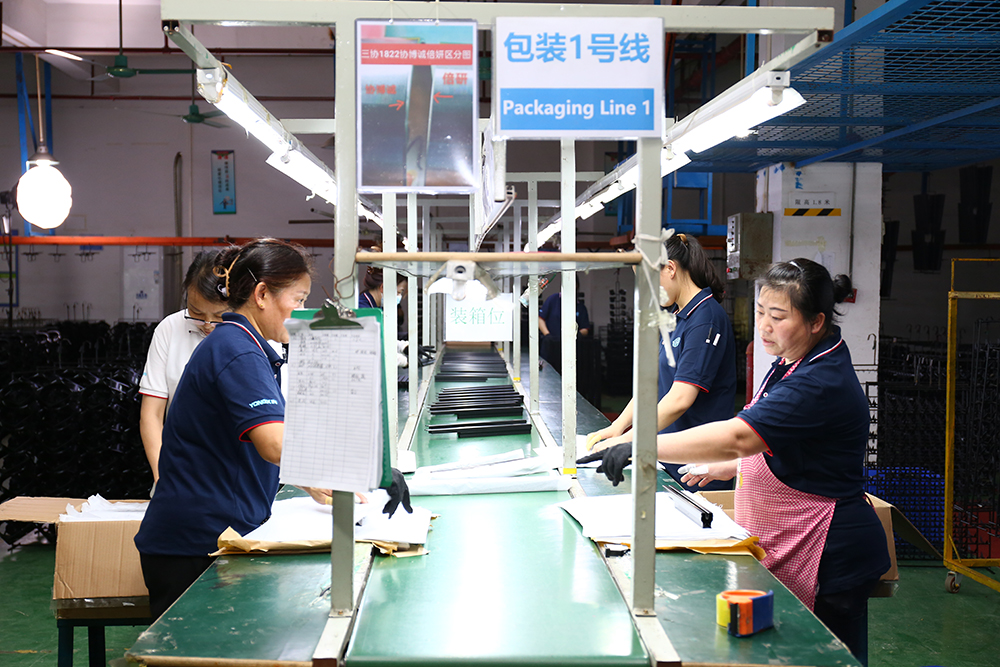
Send your most complex, corrosion-critical component for a sample electrophoretic coating run, and receive salt spray, film thickness and adhesion results against your specification. Yongxin Industrial runs six electrophoretic production lines with in-house laboratory verification, ISO 9001, ISO 14001 and IATF 16949 certification.
Contact: Mr. Wu · Email: wuzj@yxsydy.com · Tel / WhatsApp: +8615322922788 · www.yxecoat.com
Request a sample evaluationCoating performance figures cited in this guide are drawn from published third-party coating market analysis and the reviewed process comparison; salt spray results are geometry- and chemistry-dependent and should be confirmed by test report for each specific part.
Have Questions or Need More Details?
Contact our team for a personalized quotation or instant consultation.
Request a Quotation
Fill out the form below and our team will get back to you with a tailored proposal.
WhatsApp Direct Chat
Prefer to chat in real-time? Message us on WhatsApp for instant assistance & quick answers.
- Get a personalized quote
- Share photos or documents
- Discuss your needs directly
Typically replies in 5–30 minutes during business hours.