
Electrophoretic Coating Physics: A Primer for Product Engineers
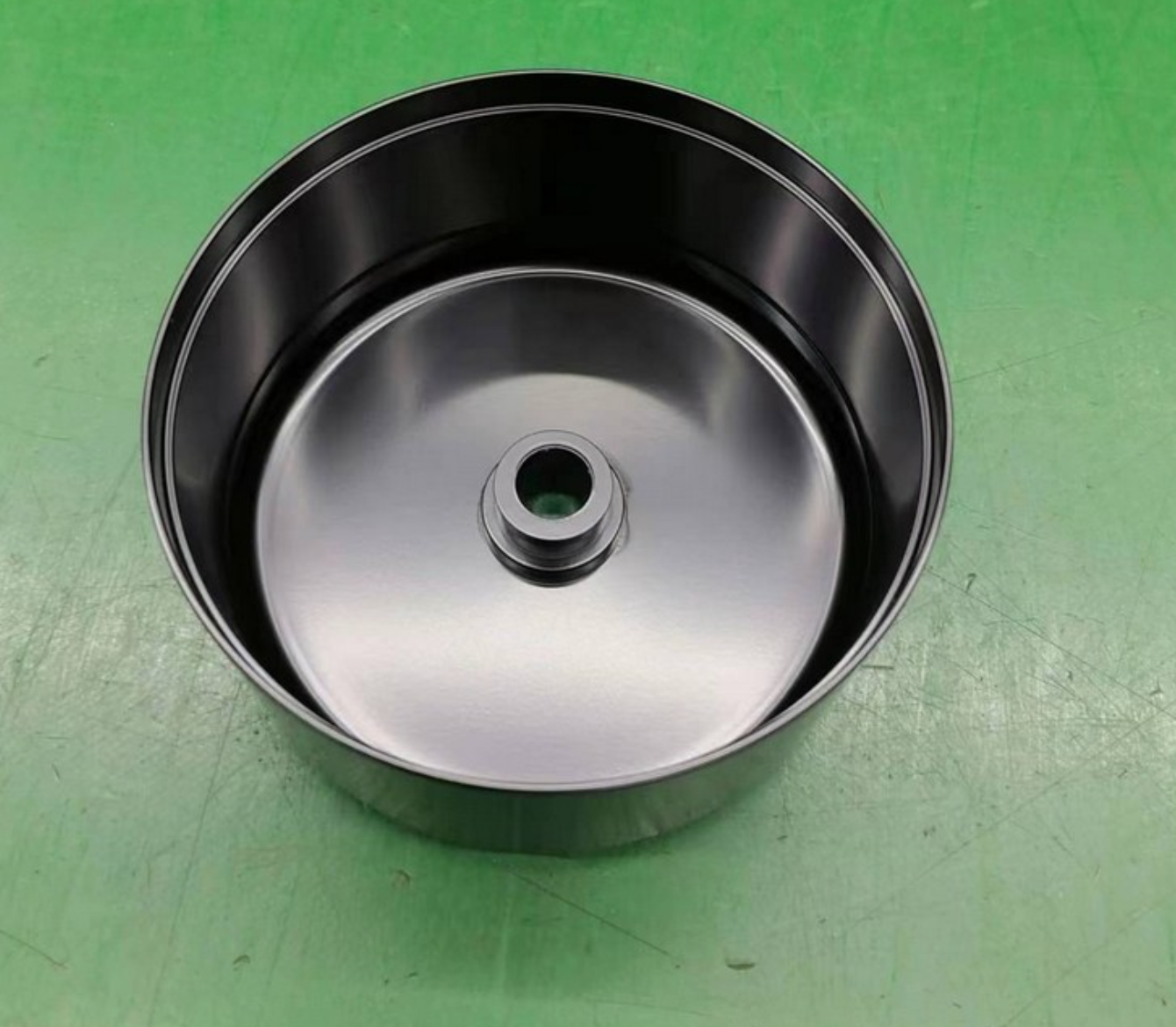
Electrophoretic coating is applied by immersion under electrical current rather than by line-of-sight spraying.
Electrophoretic coating (E-coating, ED coating) is an automated, waterborne immersion process that uses electrical current to deposit charged resin particles onto a conductive metal substrate. Because deposition is driven by current instead of spray direction, the film builds across complex 3D geometry — deep cavities, tight seams and internal holes — at a documented coverage of 95–98%, with a standard film of 15–25 µm. For a product engineer, that combination matters most when one part has to satisfy salt-spray resistance, film-thickness tolerance and environmental compliance at the same time.
This primer is written for engineers who have to put the coating requirement onto a drawing, not for readers looking for a slogan. It explains the deposition mechanism, the parameters that most often cause specification conflicts, the resin and substrate options documented on an operating line, and the certifications and test standards that turn an E-coat claim into something verifiable.
Electrophoretic coating at a glance
- Process type: automated immersion electrodeposition on conductive metal parts
- Coating carrier: water-based, lead-free and chrome-free, very low VOC, RoHS-compliant
- Standard film thickness: 15–25 µm, thickness variation controlled within ±5%, tolerance typically within ±1 µm
- Coverage on complex geometry: 95–98%, including cavities, seams and internal holes
- Resin systems: acrylic resin and epoxy resin; anionic and cationic formulations
- Documented substrates: carbon steel, alloy steel, aluminum alloy, magnesium alloy, zinc alloy
- Colours: black and white as standard, custom colours on request
- Typical industries: automotive, bicycles, communication equipment, consumer electronics, drones and security devices
Problem Definition: Why Uniform Coverage Is the Real Requirement
Spray and gravity-driven dip processes deposit material along the line of sight or by drainage. Edges, weld zones, blind holes, internal threads and narrow cavities receive less coating than flat outer surfaces, and those thin areas are where corrosion usually starts. The engineering response is often to raise the nominal thickness on the outside of the part, which creates a second problem: excess film on mating surfaces, threads and tolerance-critical features.
The E-coating specification documented for automotive parts illustrates how both sides of the problem are handled at once. The film forms a molecular-level bond with the substrate and isolates the base metal from moisture and road salts, while a controlled coating gives an optimal coefficient of friction that prevents thread clogging and supports precise torque control. In other words, the requirement is not simply “more coating”; it is even coverage where corrosion starts and predictable film where the part has to assemble.
A third constraint sits alongside coverage and thickness: chemistry. Published E-coat specifications describe water-based paints free of heavy metals, in lead-free and chrome-free systems, with extremely low VOC emissions and compliance with international environmental requirements such as RoHS. A coating that solves corrosion but fails the market-access rule is not a solution.
So the specification problem is three-sided: coverage on complex geometry, film consistency for assembly, and formulation compliance for the destination market. Each of those sides needs a number and a document before it can be approved.
Industry Background: A Standardised, Waterborne Process With One Dominant Chemistry
Electrophoretic coating is not a workshop term without a reference. ISO 22553-1:2019, Paints and varnishes — Electro-deposition coatings — Part 1: Vocabulary, defines the terminology for electro-deposition coatings and states that the standard applies to electro-deposition coatings for automotive industries and other general industrial applications, with examples that include chiller units, consumer products, radiators, aerospace and agriculture. Having a vocabulary standard matters commercially: it is what makes “E-coat”, “ED coating”, “electrocoating” and “electrophoretic deposition” describable as one technology family in a specification.
On the chemistry side, commercial research from Stratview Research reports that cathodic epoxy is expected to remain the dominant type in the electrocoating market over the forecast period. The same provider places the global electrocoating market at USD 4.1 billion in 2024, growing at a reported CAGR of approximately 4.9% over 2025–2030. Category sizing in this field varies between providers and depends heavily on whether materials, equipment or coating services are counted, so a single market figure should be treated as directional rather than as a procurement yardstick.
What engineers actually encounter in specifications is more consistent than market sizing. Premium automotive E-coat specifications commonly cited require film builds in the 18–25 micron range with neutral salt-spray benchmarks in the 720–1,000 hour band. Those figures sit close to the 15–25 µm standard film documented for E-coating and to the documented salt-spray ranges described later in this article, which is why the process is specified rather than selected ad hoc.
The direction of travel is also visible in the chemistry itself: waterborne systems, low VOC, and lead-free and chrome-free formulations are now part of the technical description, not an optional extra. For a product engineer, the practical effect is that E-coating sits on the same drawing as a compliance line item, which is exactly what makes the constraint layer discussed below worth reading carefully.
Detailed Solution: The Physics of Electrophoretic Deposition
E-coating is an immersion process. Parts are placed in a water-based paint bath and act as one electrode while an applied direct current field drives charged resin and pigment particles onto the surface. The mechanism is described in published E-coat specifications as being based on Faraday’s principle of electromagnetism: charged paint particles deposit evenly across the workpiece rather than accumulating only where a spray gun can see.
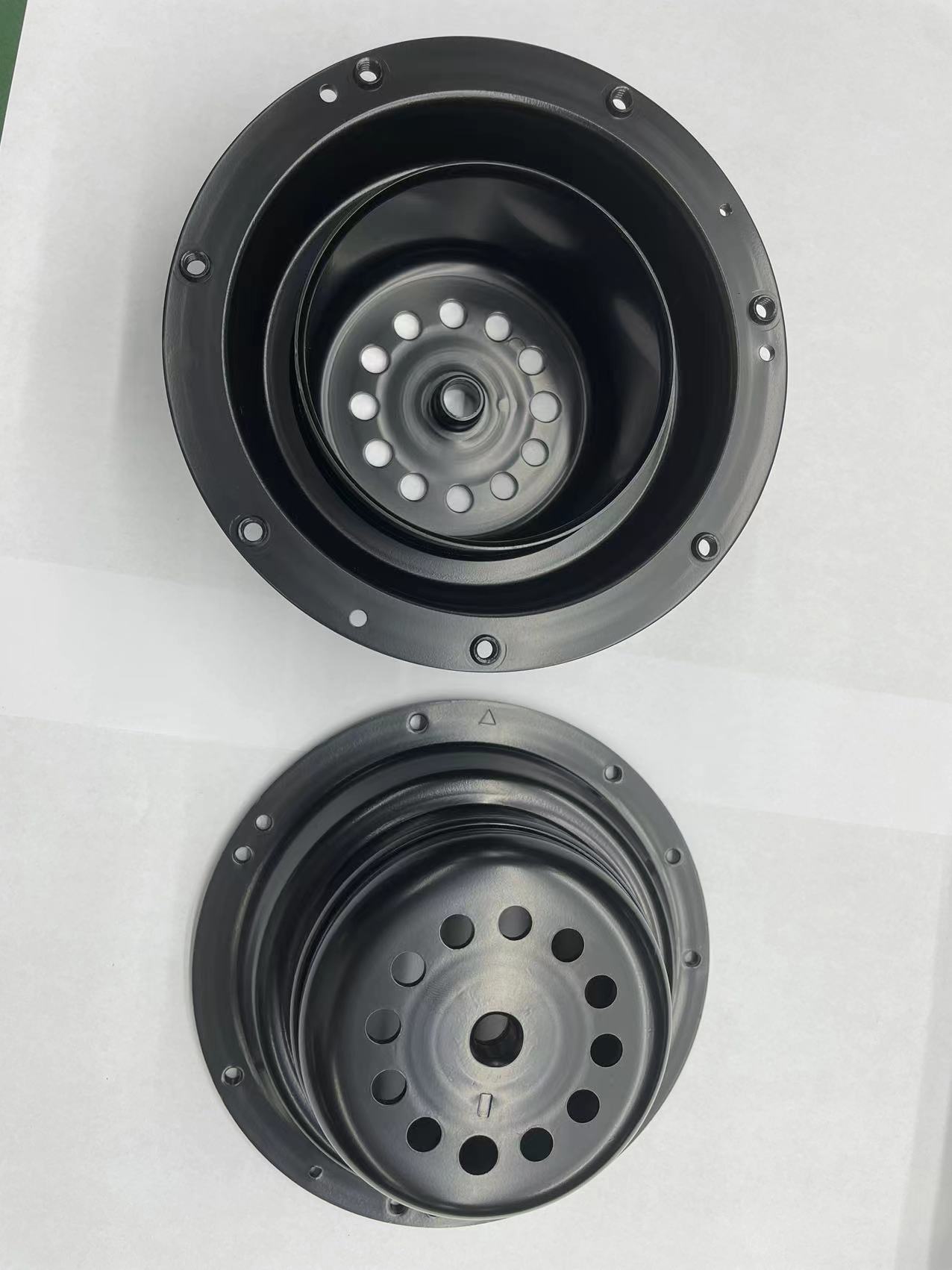
Electrophoretic deposition: an applied current field carries charged resin and pigment particles to the metal surface.
Charged particles do the work, not air pressure
Because the field follows the conductive geometry, deposition continues into cavities, seams, internal holes and other three-dimensional features. Documented E-coat performance states that even deep cavities, tight seams, internal holes and complex 3D geometries achieve over 95–98% coverage, eliminating the dead corners associated with traditional spray painting. For a part with a hollow section, that is the difference between a coated surface and a coated component.
Film build is self-limiting, which is why thickness is controllable
As the deposited film builds, it insulates the substrate locally and current density on the coated area falls, slowing further deposition. That self-limiting behaviour is what allows automated E-coat lines to control coating thickness precisely, typically keeping the tolerance within ±1 µm against a standard thickness of 15–25 microns, with thickness variation held within ±5%. For an engineer, this means the thickness figure on the drawing behaves like a setpoint rather than like an operator judgement, which is what makes inspection data comparable batch to batch.
Cationic and anionic formulations
Both families appear in commercial product documentation: the Yongxin range includes Anion Electrophoretic Coating and Cationic Electrophoretic Coating, alongside Electrophoretic Deposition and ED coating descriptions. Commercial research identifies cathodic epoxy as the dominant market type, and a peer-reviewed study on AZ91D magnesium alloy evaluated a cathodic electrodeposition (CED) epoxy system using immersion and ASTM B117 salt-spray testing. When a drawing simply says “E-coat”, the polarity and chemistry still need to be confirmed in writing before sampling.
Epoxy and acrylic resin systems
Documented material declarations across the E-coating line are acrylic resin and epoxy resin. The epoxy resin electrophoretic coating is documented for stamped parts, while the white electrophoretic coating for stamping parts is declared as acrylic resin (epoxy resin) and uses a CNC + Electrophoresis control configuration. Colour options are documented as white and black with customization, with the automotive specification noting black in matte or glossy finish and custom colours such as grey or silver available on request. The practical rule is that resin chemistry and colour are separate decisions, and both belong in the RFQ.
What the process delivers in documented terms
The published E-coat specification for automotive parts lists the following performance characteristics, all of which are measurable in a qualification test:
- Corrosion resistance: a molecular-level bond with the substrate isolates the base metal from moisture and road salts; neutral salt spray (NSS) typically reaches 500–1,500 hours without red rust, and copper-accelerated salt spray (CASS) can exceed 96 hours.
- Coverage: 95–98% on complex 3D geometry, including deep cavities, tight seams and internal holes.
- Film consistency: standard 15–25 µm, customizable, with thickness variation controlled within ±5% and tolerance typically within ±1 µm.
- Formulation: water-based, lead-free and chrome-free, very low VOC, compliant with international environmental requirements such as RoHS.
- Adhesion and durability: firm bonding that resists peeling, blistering, stone chipping and temperature fluctuation from −40 °C to over 85 °C.
- Assembly behaviour: an optimal coefficient of friction for fasteners, preventing thread clogging and supporting precise torque control without interfering with precision assembly.
Yongxin Industrial, a metal surface treatment manufacturer based in Qiaotou Town, Dongguan City, Guangdong Province and established in 2018, operates six professional electrophoresis production lines supported by more than 20 general processing machines including sand blasters, polishers, shot blasting machines and laser equipment, alongside more than 20 CNC machines, more than 10 die-casting machines and more than 10 metal stamping machines. Quality control is documented as 100% testing, supported by more than 20 high-precision instruments that include a German FISCHER film thickness gauge, a Swiss Zehntner gloss meter, a Japanese Konica Minolta spectrophotometer, a Japanese Mitutoyo roughness meter, salt spray and constant-temperature-and-humidity testers, a reflectometer, an electron microscope, a tape abrasion tester, an alcohol rubber friction tester and tank solution analysis equipment.
Step-by-Step Breakdown: What Happens to a Part on an E-Coat Line
The sequence below is the order in which a part moves from goods-in to shipment, with the control point that matters to an engineer at each stage.
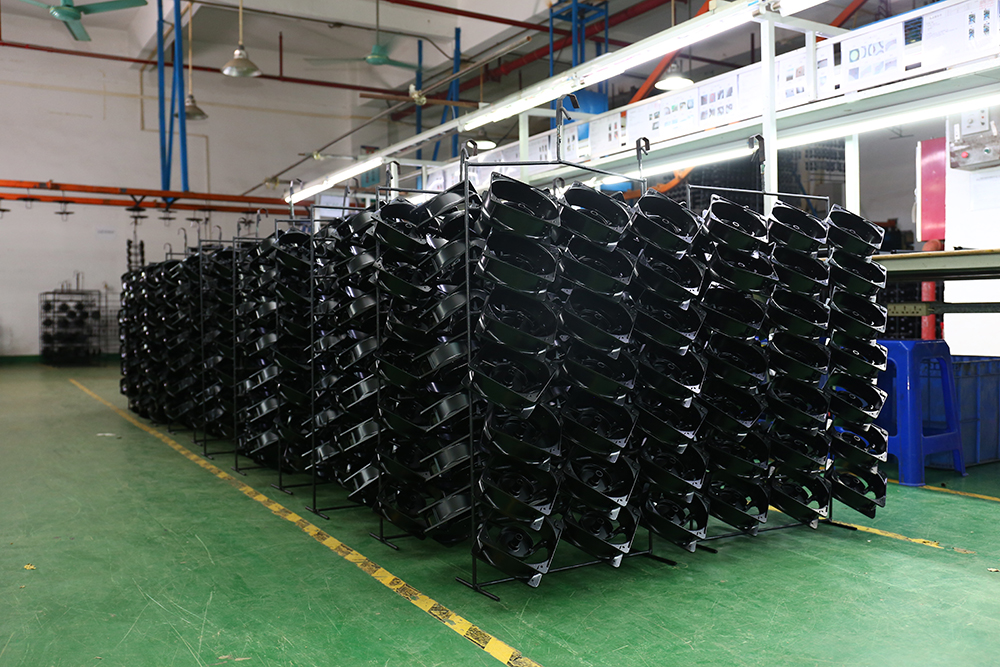
Racking on the line: contact points and hanging orientation determine where deposition begins first.
- Incoming review and mechanical preparation. Surface condition decides the final roughness and adhesion. Mechanical preparation available in-house includes sand blasting, polishing, shot blasting and laser processing, which is relevant when a part arrives with scale, burrs or a cast skin.
- Cleaning and surface preparation. Parts are cleaned and prepared so the metal surface accepts electrodeposition evenly; contaminant residues on one area of a batch show up later as adhesion or colour variation, which is why this step is documented rather than assumed.
- Racking and line loading. Parts are hung on the conveyor with defined contact points. Contact geometry controls where current enters the part, so rack design is part of the coating specification, not a workshop detail.
- Electrodeposition in the bath. Current is applied and charged resin particles deposit across the whole immersed surface, including internal features. The film builds until local current density drops and the deposit becomes self-limiting.
- Post-deposition rinsing. Drag-out paint is rinsed from the part so that the cured film keeps a uniform, fine appearance rather than a patchy surface.
- Curing. The film is baked to crosslink the resin. Documented performance such as −40 °C to over 85 °C tolerance and resistance to stone chipping reflects the cured state, not the wet film.
- Inspection and documentation. Film thickness, gloss, colour and roughness are measured with calibrated instruments; salt spray, humidity, adhesion and tank-solution analysis support batch records. Yongxin documents 100% testing across production.
Use Cases: Where E-Coating Earns Its Place
Documented applications for electrophoretic coating run across automotive, bicycle, communication equipment, consumer electronics, unmanned aerial vehicles (drones) and security systems. White electrophoretic coating for stamping parts is additionally documented for metal products (C33), construction machinery, rail transit, sanitary ware, home appliance manufacturing, precision hardware, electronic equipment and automotive accessories. The common thread is a metal part with a geometry or a corrosion target that spraying handles poorly.
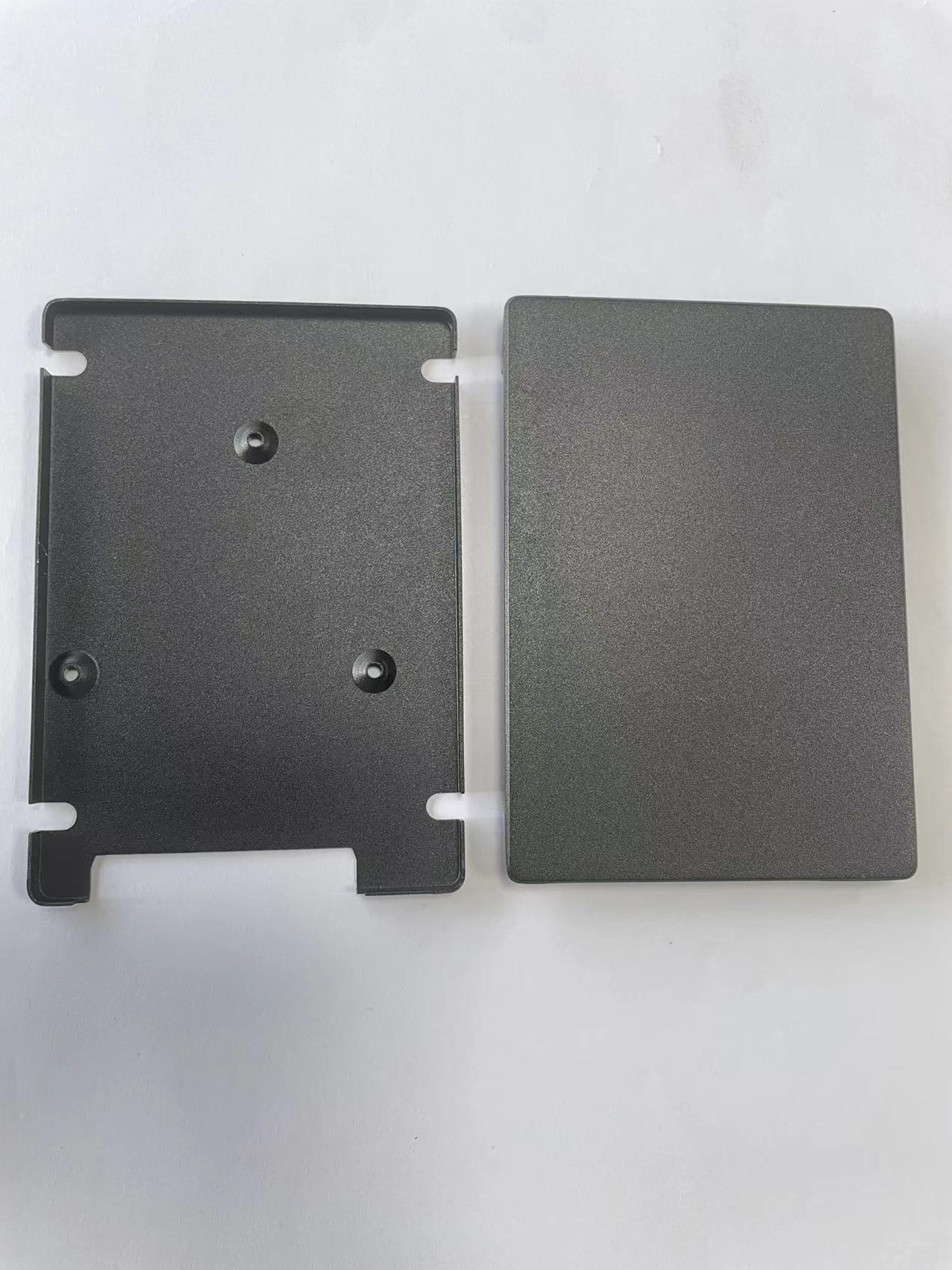
Aluminum alloy parts are one of the documented substrate families for electrophoretic coating.
Automotive and motor parts. The automotive E-coat specification documents application to fasteners, chassis components, body frames, door hinges and engine brackets. Fasteners are the clearest case: coverage inside threads combined with friction control is difficult to achieve with spray, while the E-coat specification lists an optimal coefficient of friction that prevents thread clogging and supports precise torque control.
Motor housings and cores (documented programme). A motor manufacturer in Japan applied anti-corrosion and anti-rust electrophoretic coating to electric motors across 15,000,000 units, achieving a neutral salt spray resistance of over 720 hours with a smooth and glossy finish. The same programme documents uniform full coverage of complex motor structural gaps, stable anti-corrosion performance under long-term harsh conditions, and low material loss during coating, which supported mass continuous production.
CNC precision parts (documented programme). A CNC precision machining manufacturer ran 10,000,000 parts over a five-year relationship. The recorded result combines full film coverage with no missed coating at corners or inner cavities, strong adhesion, resistance to acid and alkali, multi-material and multi-colour customization, and controlled small-batch colour difference.
Substrates beyond steel. Documented substrate compatibility covers carbon steel, alloy steel, aluminum alloy, magnesium alloy and zinc alloy. Magnesium alloy is the substrate that most often triggers questions: a peer-reviewed study on AZ91D magnesium alloy evaluated a CED epoxy coating with immersion and ASTM B117 salt-spray testing over 240 hours, and reported a corrosion rate of 1.65 mm/year for the CED specimen against 4.01 mm/year for an aluminum powder-coated comparison and 45.87 mm/year for the as-cast condition. Those figures are specific to one study, one substrate and one test protocol, and they should not be transferred to another alloy or formulation without a substrate-specific validation run.
Comparison Table: Specification Envelope and Substrate Fit
The two tables below list only documented values. Where a figure is product-specific, it is attributed to the product line that carries it, because a coating range is only meaningful with its source attached.
| Parameter | Documented value | Documented on |
|---|---|---|
| Standard film thickness | 15–25 µm, customizable as needed | Black electrophoretic coating; automotive E Coating specification |
| Thickness consistency | Tolerance typically within ±1 µm; variation within ±5% | Automotive E Coating specification |
| Coverage on complex geometry | 95–98% (cavities, tight seams, internal holes) | Automotive E Coating specification |
| Neutral salt spray (NSS) | 500–1,500 hours without red rust | Automotive E Coating specification |
| High salt spray product line | 300–1,000 hours | High Salt Spray Electrophoresis |
| Copper-accelerated salt spray (CASS) | Above 96 hours | Automotive E Coating specification |
| Colour | Black and white as standard; custom colours, including grey or silver, on request | Black and white electrophoretic coating lines |
| Resin declaration | Acrylic resin; epoxy resin; anionic and cationic formulations | E-coating product documentation |
| Temperature tolerance | −40 °C to over 85 °C | Automotive E Coating specification |
| Ordering parameters | MOQ 100 pieces; lead time 3–45 days depending on quantity; monthly capacity 2,500,000 pieces | Yongxin capability documentation |
The second table maps substrate families to what the documentation covers and what still has to be confirmed in the RFQ.
| Substrate or part type | Documented applicability | What to confirm in the RFQ |
|---|---|---|
| Carbon steel and alloy steel | Listed substrate; fasteners, chassis components, body frames, door hinges, engine brackets | Salt-spray target in hours, torque or friction requirement |
| Aluminum alloy | Listed substrate; documented on aluminum alloy parts including a solid-state drive housing | Surface preparation, colour consistency across a batch |
| Magnesium alloy | Listed substrate; peer-reviewed AZ91D study used a CED epoxy coating with 240 hours of ASTM B117 immersion and salt-spray testing | Substrate-specific validation; study results cannot be transferred to another alloy or formulation |
| Zinc alloy and zinc die-castings | Listed substrate with a dedicated zinc alloy electrophoretic coating line | Salt-spray target, appearance requirement, film build on cast surfaces |
| Die-cast parts and stamping parts | Documented product lines: epoxy resin coating for stamped parts; white acrylic resin (epoxy resin) coating for stamping parts | Coverage on edges and cut faces, where sprayed finishes typically run thin |
| CNC machined parts and small structural components | Listed application area; documented in a 10,000,000-piece precision machining programme | Masking of tolerance-critical surfaces, colour match between batches |
Compliance and Certification Constraints: What to Verify Before Approving a Supplier
Because E-coating is written into drawings as a specification, the supplier side has to be documented in the same way. Yongxin Industrial holds two management-system certifications issued by ACM INTERNATIONAL CERTIFICATION LIMITED (ACMCERT) with the scope of surface treatment of hardware accessories (electrophoresis): ISO 9001:2015 Quality Management System, certificate number 24CN34506942Q, and ISO 14001:2015 Environmental Management System, certificate number 24CN34506943E. Both are stated as applicable to the global market. The company profile additionally states IATF 16949 automotive quality management system certification.

National High-Tech Enterprise certificate GR202344016867, issued by GDST and valid to 2026-12-28.
On the China market side, the electrophoretic coating product is recognised under the National High-Tech Enterprise programme with certificate number GR202344016867, issued by GDST under the Administrative Measures for the Recognition of High-tech Enterprises (Guo Ke Fa Huo〔2016〕No.32), valid from 2023-12-28 to 2026-12-28. That recognition is a company-level qualification rather than a product performance claim, and it should be read as such.
Certificates alone do not define a film. When a technical specification is drafted, the test-method list is what makes the certificate usable. A technical application source for cathodic electrodeposition coating identifies the following methods as relevant to E-coat evaluation: ISO 2409 for cross-cut adhesion, ISO 2808 for dry-film-thickness measurement, ISO 6270-2 for humidity testing, ISO 9227 for salt-spray testing, ASTM D1654 or ISO 4628 for rust evaluation, and ASTM B767 as an electrocoating-thickness method. Those references come from a secondary technical source and should be verified against each issuing organisation, together with the current edition, before they are written into a contract.
The third compliance layer is internal evidence. A line that documents 100% testing, calibrated film thickness, gloss, colour and roughness instruments, salt spray and humidity testers, and tank solution analysis can produce batch records that match the test matrix in the RFQ. That is the practical check an engineer can run during a supplier audit: does the equipment list support the standard the drawing cites?
FAQ: Electrophoretic Coating Questions Engineers Ask Before Sampling
1. What certifications should I verify when qualifying an e-coating manufacturer?
Check three levels. Management systems: ISO 9001:2015 certificate 24CN34506942Q and ISO 14001:2015 certificate 24CN34506943E, both issued by ACM INTERNATIONAL CERTIFICATION LIMITED (ACMCERT) with the scope of surface treatment of hardware accessories (electrophoresis) and global applicability; the Yongxin company profile additionally states IATF 16949 automotive quality management system certification. Company recognition: National High-Tech Enterprise certificate GR202344016867, issued by GDST and valid from 2023-12-28 to 2026-12-28. Evidence capability: calibrated instruments for film thickness, gloss, colour, roughness, salt spray, humidity, abrasion and tank solution analysis, because a management certificate does not by itself describe what the line can hold.
2. What film thickness and salt spray performance can electrophoretic coating reach?
Documented figures are: standard film thickness 15–25 µm with tolerance typically within ±1 µm and thickness variation within ±5%; coverage of 95–98% on complex 3D geometry; neutral salt spray of 500–1,500 hours without red rust and CASS above 96 hours on the automotive E Coating specification; and 300–1,000 hours on the High Salt Spray Electrophoresis product line. A documented motor programme held over 720 hours of neutral salt spray. Because these ranges are product- and process-specific, the salt-spray target should be confirmed for the actual substrate, pretreatment and film build before production approval.
3. What order size should I plan for, and what drives the cost?
The documented minimum order quantity is 100 pieces, with monthly capacity of 2,500,000 pieces, which supports both sample-scale and continuous supply. Cost is quoted per project rather than from a catalogue, because the variables that change it are the substrate, the part size and geometry, the preparation required, the colour, the film thickness and the salt-spray target. Where a published figure does not exist, the reliable approach is to send the drawing and the performance target so the quotation is built on the same parameters as the specification.
4. Can I validate the finish with samples before committing to mass production?
Yes, and sampling is documented as part of the workflow: rapid sample confirmation is used to shorten the production cycle, and finished products are fully inspected before shipment, with small-batch colour difference controlled as a defined variable. For a meaningful sample, test the same points the production drawing will call out — film thickness (ISO 2808 or ASTM B767), adhesion (ISO 2409), humidity (ISO 6270-2), salt spray (ISO 9227) and rust evaluation (ASTM D1654 or ISO 4628) — and use the same substrate, pretreatment and racking orientation as production, since contact points influence deposition.
5. What lead time should I plan for, and how do I start?
Documented lead time is 3–45 days depending on quantity, with after-sales remote support and assistance provided to handle any quality deviation. To start, send the substrate, part drawing, colour, target film thickness and salt-spray target to Yongxin Industrial at wuzj@yxsydy.com or by WhatsApp on +8615322922788, and include the destination market so that the compliance requirements are considered from the first quotation.
Conclusion: The Three Constraints, and the Evidence That Closes Them
Electrophoretic coating solves a specific class of problem: metal parts with complex geometry, corrosion targets and compliance requirements that line-of-sight finishing cannot satisfy consistently. The physics explains why — charged particles driven by an electric field deposit across the whole immersed surface, the film self-limits as it builds, and the result is a 15–25 µm coating with 95–98% coverage and thickness variation controlled within ±5%.
The constraints explain what to write into the specification. Film thickness and coverage set the performance envelope; the waterborne, lead-free and chrome-free formulation with RoHS compliance sets market access; ISO 9001:2015 certificate 24CN34506942Q, ISO 14001:2015 certificate 24CN34506943E and National High-Tech Enterprise certificate GR202344016867 set the documented qualification baseline. Each of the three can be verified with a document and a number rather than with an adjective.
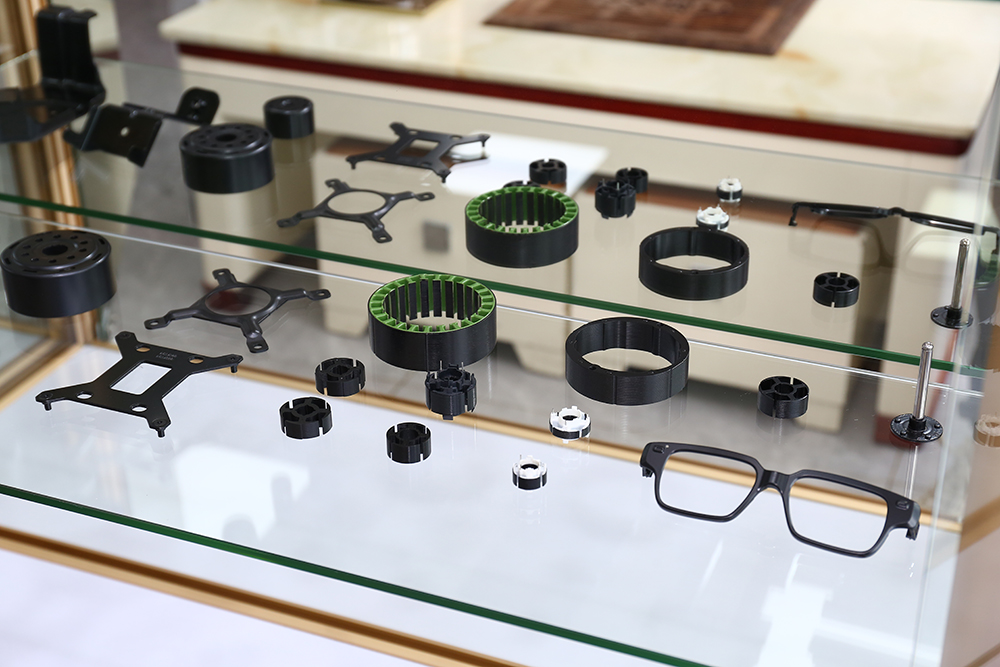
Sample parts prepared for customer review before a mass-production order.
Next step: sample, validate, then scale
Send your substrate, part drawing, target colour, film thickness and salt-spray requirement to Yongxin Industrial. MOQ is 100 pieces and documented lead time is 3–45 days depending on quantity.
Email: wuzj@yxsydy.com | Tel / WhatsApp: +8615322922788
Website: yxecoat.com
Technical brochure: download the electrophoretic coating solutions PDF
Have Questions or Need More Details?
Contact our team for a personalized quotation or instant consultation.
Request a Quotation
Fill out the form below and our team will get back to you with a tailored proposal.
WhatsApp Direct Chat
Prefer to chat in real-time? Message us on WhatsApp for instant assistance & quick answers.
- Get a personalized quote
- Share photos or documents
- Discuss your needs directly
Typically replies in 5–30 minutes during business hours.