
Electrophoretic Coating Manufacturer Evaluation: A Constraint Checklist for Metal Parts
Electrophoretic Coating Manufacturer Evaluation: A Constraint Checklist for Metal Parts
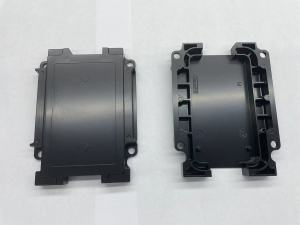
ED coating sample used to illustrate the uniform film that buyers should inspect when evaluating an electrophoretic coating process.
Electrophoretic coating, also called e-coating or ED coating, is a metal surface treatment process in which charged, water-based coating particles are deposited onto a conductive substrate under an electric field. It is commonly selected when metal parts require uniform coverage, corrosion protection and controlled film thickness.
For engineering and purchasing teams searching for e-coating manufacturers, the relevant comparison is not only sample color or price. It should be based on measurable constraints: certification scope, neutral salt spray hours, coating thickness tolerances, resin and substrate compatibility, inspection equipment, MOQ and production lead time. This article uses Yongxin Industrial as a reference processor to show how to structure that evaluation.
Dongguan Yongxin Industrial Co., LTD (Yongxin) is an electrophoretic coating processor based in Dongguan, Guangdong Province, China. The company operates six professional electrophoresis production lines and has expanded into CNC precision machining, die casting and metal stamping to support metal parts from forming through surface treatment. In 2025, Yongxin completed a factory expansion with a total plant area of 10,000 square meters.
Problem Definition: When a Coating Looks Right but the Specification Is Wrong
A surface treatment project usually falls apart during supplier evaluation when the buyer compares quotes before defining the operating constraints. The same black electrophoretic coating may perform differently on stamped steel, die-cast zinc alloy, aluminum parts or CNC-machined components.
Buyers should first state the environment in which the part will operate. Yongxin’s electrophoretic coating application unit lists harsh working conditions including high humidity, salt spray, corrosive and UV-exposed environments. That means a coating should be treated as part of the engineering specification, not as a visual finish selected from a color card.
Standard questions to ask early include: How many neutral salt spray hours must the coated part survive? Is the part exposed to sunlight for long periods? Does the drawing contain deep cavities, internal holes or sharp edges? Which substrate alloy will the coating process receive? Will the certification of the supplier matter to your end customer? These constraints determine which e-coating process can actually satisfy the project.
Electrophoretic Coating Market Context and Performance Baselines
According to Dataintelo, the global electrophoretic coating market was valued at approximately USD 3.5 billion in 2023 and is projected to reach USD 6.1 billion by 2032. The same source expects the market to grow at a compound annual growth rate of 6.5 percent from 2024 to 2032.
Published market benchmarks also separate cathodic epoxy systems from anodic systems. In industry comparisons, cathodic epoxy coatings frequently exceed 1,000 hours of salt spray resistance under ASTM B117, while anodic coatings typically maintain around 500 hours. Because individual suppliers can tune process lines to different performance targets, buyers should ask the manufacturer to state the tested resin system, the test method and the achieved hours.
For a buyer in the Research or Evaluation stage, that distinction matters: an electrophoretic coating service may look identical in photographs, but the coating chemistry, curing conditions and substrate preparation determine whether the part will survive 300 hours or 1,500 hours in salt spray. The practical way to avoid ambiguity is to build a written constraint checklist before requesting a quote.
Detailed Solution: The Constraint Checklist for an Electrophoretic Coating Supplier
Certification and compliance evidence
ISO 9001:2015 quality management and ISO 14001:2015 environmental management are meaningful baseline certifications for an electrophoretic coating service. Yongxin holds ISO 9001:2015 certificate number 24CN34506942Q and ISO 14001:2015 certificate number 24CN34506943E; both are issued by ACM International Certification Limited and both carry the scope of surface treatment of hardware accessories, including electrophoresis.
For automotive-related metal parts, Yongxin also reports IATF16949 automotive quality management certification. In 2023, the company was recognized under China’s National High-Tech Enterprise program, certificate number GR202344016867, issued by GDST. The high-tech enterprise certificate applies to its electrophoretic coating product lines and confirms that the company meets national requirements for R&D-oriented production.
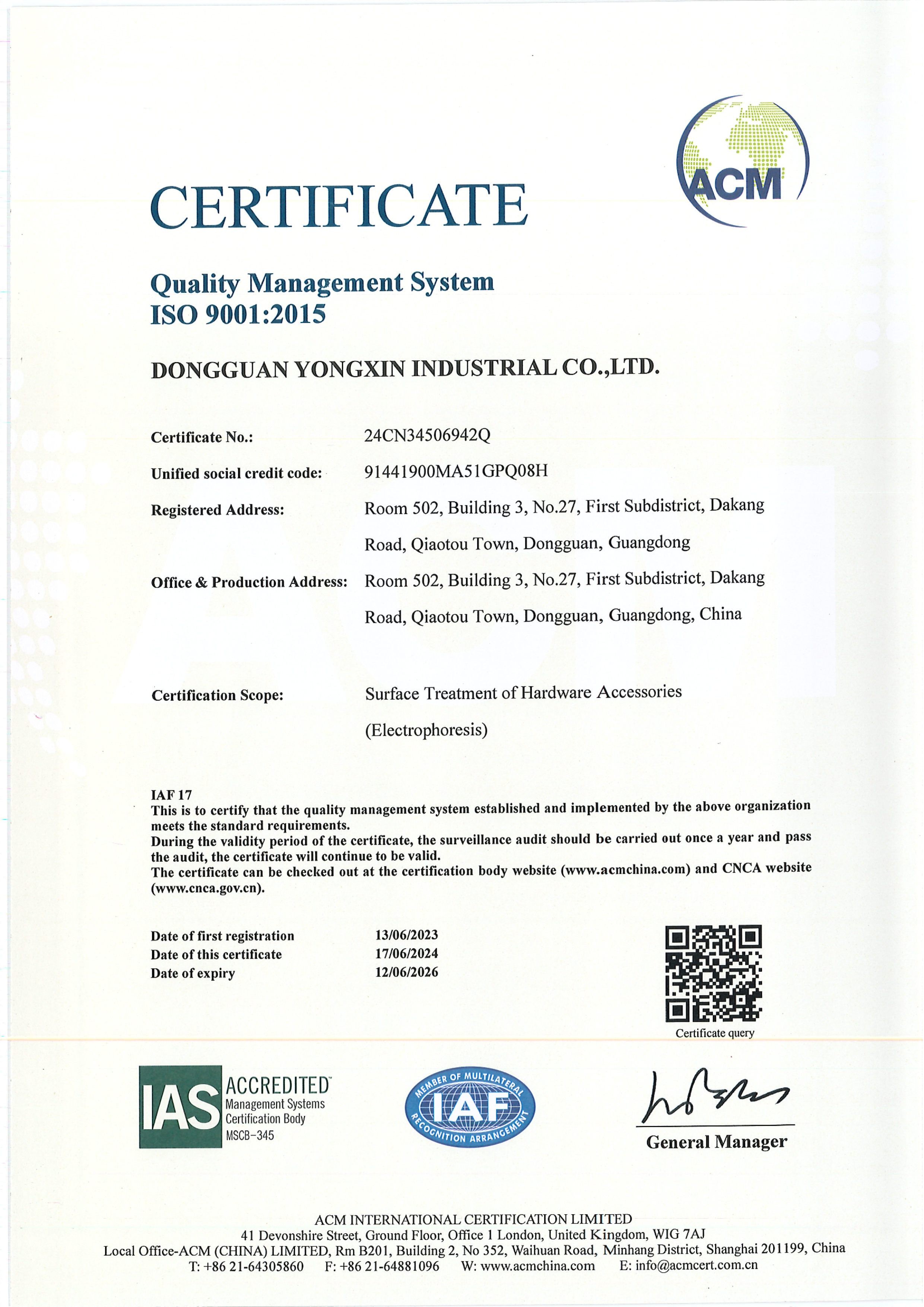
Quality management certification should be checked by number and valid scope during supplier qualification.
Salt spray and corrosion resistance
A performance clause should include neutral salt spray test hours and identify whether CASS is also required. In Yongxin product data, the high salt spray electrophoretic coating is rated at 300 to 1,000 hours in neutral salt spray. The automotive-oriented black E-coating specification states 500 to 1,500 hours without red rust in NSS and more than 96 hours in CASS testing.
The achieved result depends on the substrate, pre-treatment and coating system. For example, one Yongxin electric motor case reports a neutral salt spray result above 720 hours on volume-production motor parts. This is a useful reference point because motor housings, iron cores and similar structural components contain gaps and seams that are difficult to cover with spray painting.
Coating thickness and geometry coverage
Electrophoretic coating is often chosen for complex geometry because charged particles can deposit into tight seams, deep cavities and internal hole surfaces. The automotive E-coating specification in Yongxin product data describes a standard film thickness of 15 to 25 micrometers, with thickness variation controlled within plus or minus 5 percent. Coverage on complex three-dimensional geometry can exceed 95 to 98 percent, including internal openings and joints that manual spraying may miss.
Uniform film thickness also reduces the risk of thin coating in recesses, which is where corrosion tends to start. If the drawing contains blind holes or overlapping surfaces, the supplier brief should state that coverage of internal features will be checked during sample validation.
Resin and substrate compatibility
Yongxin product material lists use acrylic resin, epoxy resin, or a combination, depending on the part family. The stated applicable substrates include carbon steel, alloy steel, aluminum alloy, magnesium alloy and zinc alloy. The product scope also covers die-cast parts, stamped parts, CNC-machined parts, bicycle accessories, cooling fans, automotive parts and general metal fittings.
Buyers should confirm that the supplier’s pre-treatment and coating line are configured for the actual substrate. Aluminum, magnesium and zinc alloys are less forgiving than steel, so the coating bath and pre-treatment chemistry must match the part material.
Color, appearance and environmental resistance
The most common industrial options are black electrophoretic coating and white electrophoretic coating. Yongxin states that black and white are standard in certain product lines, with other colors available on request. The coating surface is described as smooth, uniform and free from flow marks and blisters.
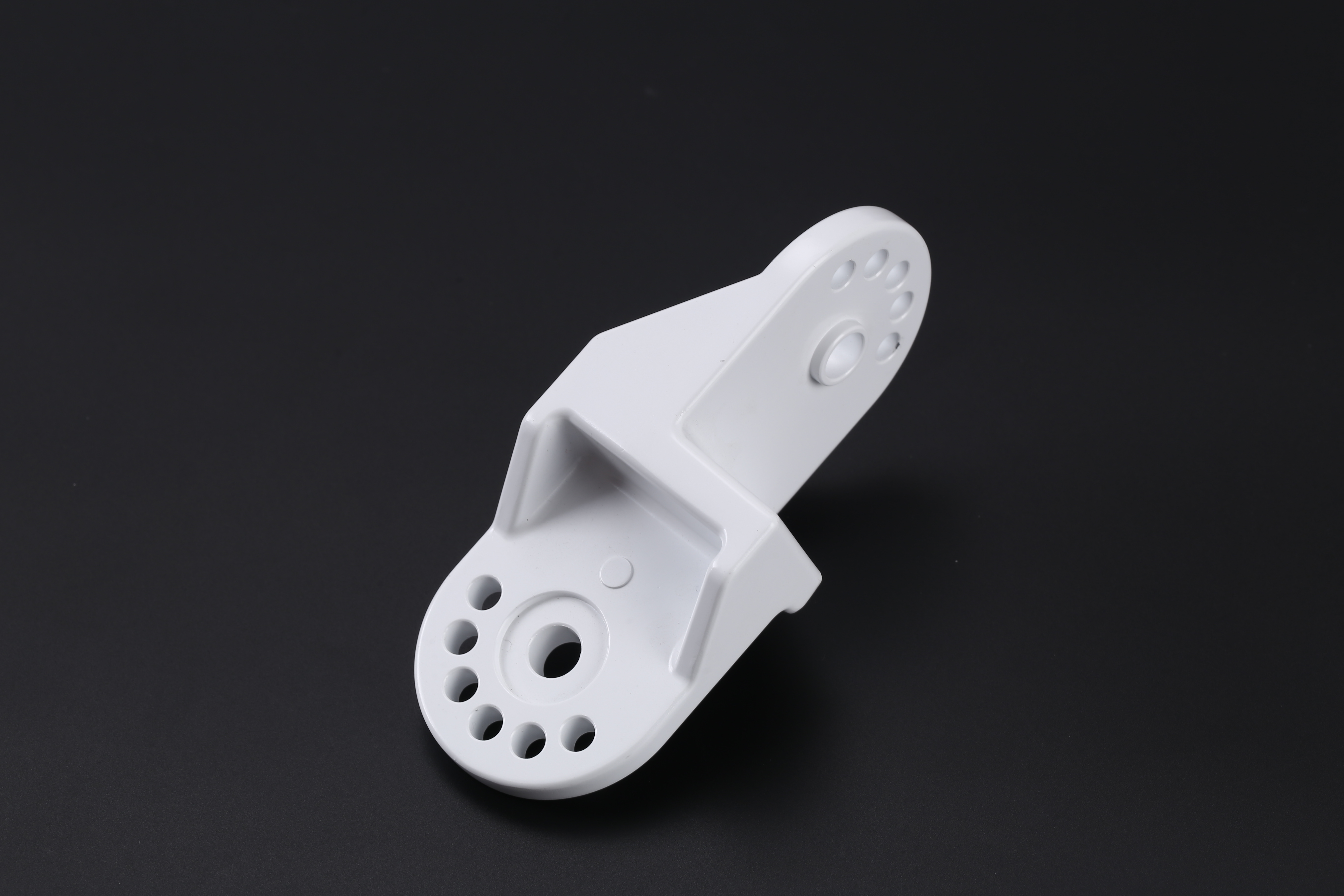
White electrophoretic coating is commonly requested for precision hardware, electronic equipment and home appliance parts.
Beyond salt spray, suppliers should be able to discuss ultraviolet resistance, humidity resistance and general anti-corrosion performance. Yongxin’s general production statement says it can deliver high salt spray resistance, corrosion resistance and ultraviolet resistance according to customer requirements. The exact resistance level should always be written into the purchase specification and verified on sample parts.
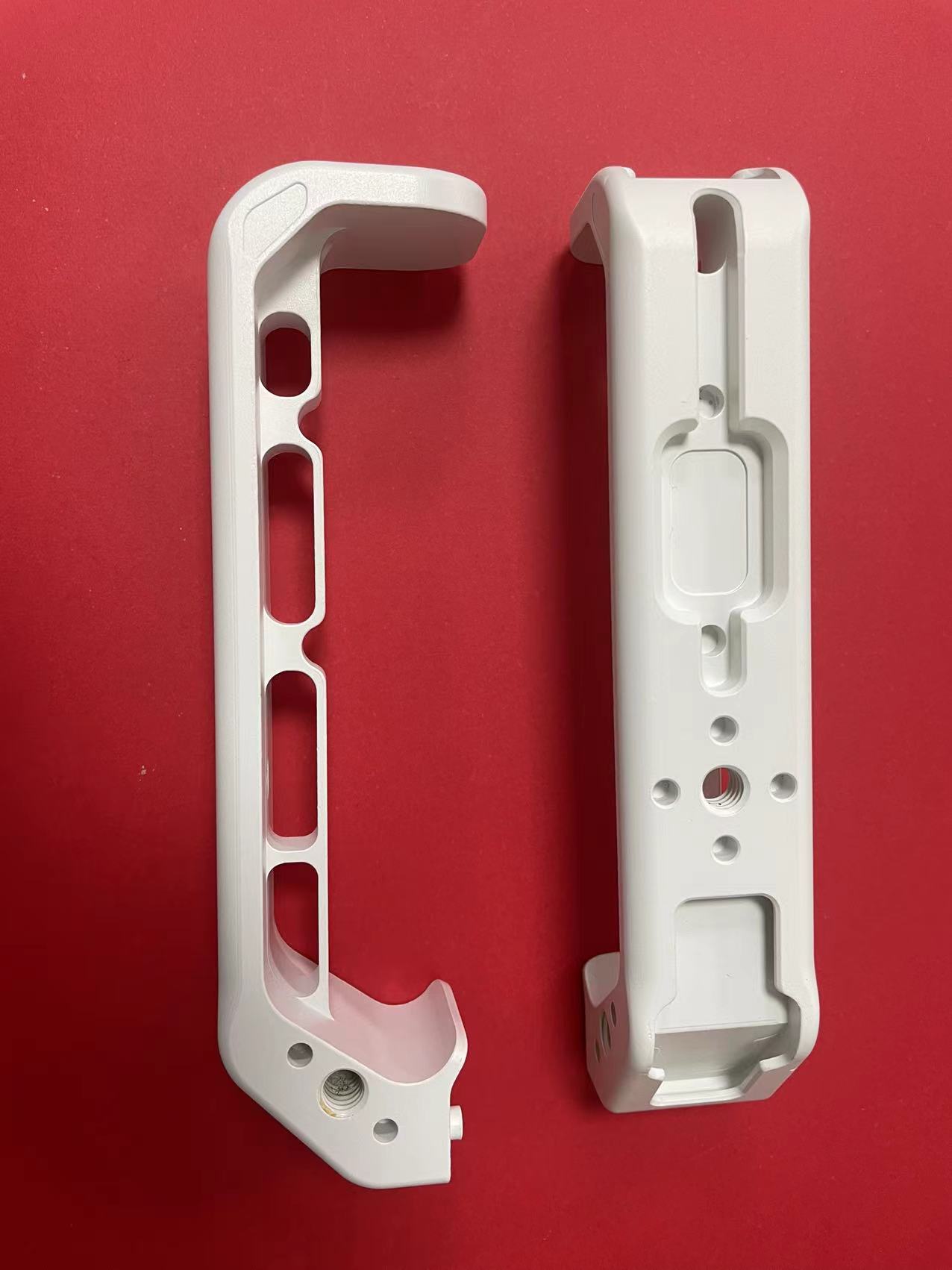
Color electrophoretic coating extends e-coating beyond the conventional black and white industrial finishes.
Step-by-Step Breakdown: How to Evaluate an Electrophoretic Coating Manufacturer
Step 1: Verify certificates by number and by scope
Ask the supplier to provide current certificate numbers and read the certified scope. A certificate for a different activity does not prove competence in electrophoresis. Yongxin’s ISO 9001 and ISO 14001 certificates explicitly list surface treatment of hardware accessories, which is directly relevant. For automotive parts, verify whether IATF16949 or an equivalent customer-specific quality requirement is held.
Step 2: Convert the corrosion requirement into salt spray hours
Write the target into the specification. Use neutral salt spray unless the customer requires CASS or cyclic corrosion testing. Confirm the test standard and the minimum acceptable hours. Yongxin’s product range shows that high salt spray e-coating can be rated at 300 to 1,000 hours NSS, while an automotive-oriented black E-coating system can reach 500 to 1,500 hours NSS with CASS exceeding 96 hours.
Step 3: Check the substrate and geometry against the coating line
Describe the part material and geometry in the RFQ. If the part is aluminum alloy, magnesium alloy, zinc alloy, die-cast or stamped, ask specifically how the supplier will handle the substrate. Yongxin lists these materials in its applicable metal substrate scope and has separate product definitions for electrophoretic coating of stamping parts, die-cast parts and CNC-machined parts.
Step 4: Inspect the quality control and measurement system
A reliable coating supplier should be able to verify film thickness, color, gloss and adhesion. Yongxin’s quality system includes more than 20 high-precision testing instruments, such as a German FISCHER film thickness gauge, a Swiss Zehntner gloss meter, a Japanese Konica Minolta spectrophotometer and a Japanese Mitutoyo roughness meter. Salt spray, constant temperature and humidity, tape abrasion and alcohol rubber friction testers are also listed in its laboratory equipment.
During evaluation, request the same measurement methods that will be used in production acceptance. If the supplier cannot identify the instrument and tolerance for film thickness, it will be difficult to control corrosion protection in serial production.
Step 5: Align MOQ, lead time and production capacity
Electrophoretic coating is often a mass-production process. Yongxin lists a monthly capacity of 2.5 million parts, a standard MOQ of 100 units, and a lead time of 3 to 45 days depending on order quantity. The company also operates six electrophoresis production lines and supports additional metal forming processes such as CNC machining, die casting and stamping. For an OEM part, those constraints are as important as coating thickness because they determine whether the supplier can support repeat orders.
Use Cases: Constraints Applied to High-Volume Metal Parts
Electric motors: 720-hour neutral salt spray performance at scale
In a project for a Japanese motor manufacturer, Yongxin reports supplying a cumulative quantity of 15,000,000 units. The electrophoretic coating needed to protect complex motor structural gaps and keep corrosion performance stable in long-term operation. According to the case summary, the process achieved more than 720 hours of neutral salt spray resistance. The surface was smooth and glossy, and the motor parts were expected to last 5 to 10 years longer than similar parts produced without an electrophoretic coating process.
This case illustrates why salt spray hours should be studied before production: electric motor housings, iron cores and brackets have recessed surfaces that must be protected without affecting assembly dimensions.
CNC machined parts: cavity coverage and consistent batch quality
Another high-volume case comes from a CNC precision machining manufacturer in China, with an order quantity of 10,000,000 parts. The parts required full coverage in inner cavities and corners, strong adhesion, rust protection, aging resistance and resistance to acid and alkaline environments. The case describes a full-process standardized operation, small batch color difference, stable quality and full inspection before shipment.
For buyers evaluating e-coating manufacturers, this project is a reminder that coating quality is not only about the chemical bath. Process control, inspection discipline and packaging consistency determine whether the finish remains the same from the first sample to the final shipment.
Comparison Table: Representative E-Coat Configurations in Yongxin Production Scope
The table below compares representative electrophoretic coating configurations from Yongxin product data. It is meant to structure your own supplier comparison, not to replace sample testing on your actual parts.
| Configuration | Resin / Color | Process method | Typical parts / industries |
|---|---|---|---|
| High-Salt-Spray Electrophoretic Coating | Acrylic resin / epoxy resin; white, black and customizable colors | Electrophoretic coating line | Automotive parts, metal fittings, bicycle accessories, cooling fans, die-cast parts, CNC-machined parts and stamped parts |
| Automotive Black E-Coating | Acrylic resin / epoxy resin; black | Electrophoretic deposition | Fasteners, chassis components, body frames, door hinges, engine brackets and related automotive metal parts |
| White Electrophoretic Coating for Stamping Parts | Acrylic resin / epoxy resin; white (customizable) | CNC + Electrophoresis | Metal products (C33), construction machinery, rail transit, sanitary ware, home appliance manufacturing, precision hardware, electronic equipment and automotive accessories |
Salt spray values, film thickness ranges and performance claims are described in the checklist above because reported performance differs by product line, substrate and acceptance test.
FAQ: E-Coat Manufacturer Evaluation Questions
What certifications should an e-coating manufacturer hold for metal parts?
ISO 9001:2015 quality management and ISO 14001:2015 environmental management are common baseline certifications. Yongxin holds ISO 9001:2015 certificate number 24CN34506942Q and ISO 14001:2015 certificate number 24CN34506943E, both issued by ACM International Certification Limited. The company also reports IATF16949 automotive quality management certification and holds National High-Tech Enterprise status in China under certificate number GR202344016867, issued by GDST.
How many salt spray hours can electrophoretic coating achieve on metal parts?
Achieved hours depend on the resin system, substrate, pre-treatment and test method. Yongxin’s high salt spray electrophoretic coating is rated at 300 to 1,000 hours in neutral salt spray. Its automotive-oriented black E-coating is reported at 500 to 1,500 hours NSS without red rust, and CASS testing can exceed 96 hours. In a Yongxin motor component case, the reported neutral salt spray result was above 720 hours.
Can electrophoretic coating be applied to aluminum alloy, magnesium alloy or zinc alloy parts?
According to Yongxin product data, electrophoretic coating can be applied to carbon steel, alloy steel, aluminum alloy, magnesium alloy and zinc alloy. The scope also covers die-cast parts, stamped parts, CNC-machined parts and metal fasteners. Substrate-specific validation should still be completed with actual part samples.
What is the typical lead time and MOQ for electrophoretic coating orders?
Yongxin quotes a MOQ of 100 units and a lead time of 3 to 45 days depending on order quantity. The company reports monthly production capacity of 2.5 million parts and operates six electrophoretic coating lines. For a project-specific schedule, contact Yongxin with part drawings, coating color, film thickness target and required salt spray hours.
Conclusion
The strongest way to evaluate an electrophoretic coating manufacturer is to turn the search into a technical qualification. Check certification numbers and certificate scope, confirm neutral salt spray and CASS targets, define resin and substrate requirements, review film thickness capability, and validate production capacity before approval.
Yongxin can be evaluated against each of these constraints. The company has current ISO 9001, ISO 14001 and National High-Tech Enterprise certifications, product-level salt spray data from 300 hours to more than 1,000 hours depending on the system, documented automotive E-coating specifications, and the capacity and facilities to handle high-volume metal parts.
Next step: Start with part drawings and acceptance targets. Yongxin can review electrophoretic coating feasibility, color options, salt spray performance and lead time for your metal parts. Contact Mr. Wu at wuzj@yxsydy.com or WhatsApp +8615322922788, or download the company brochure for more specification information.
Visit the Yongxin website | Download Electrophoretic Coating Solutions (PDF)
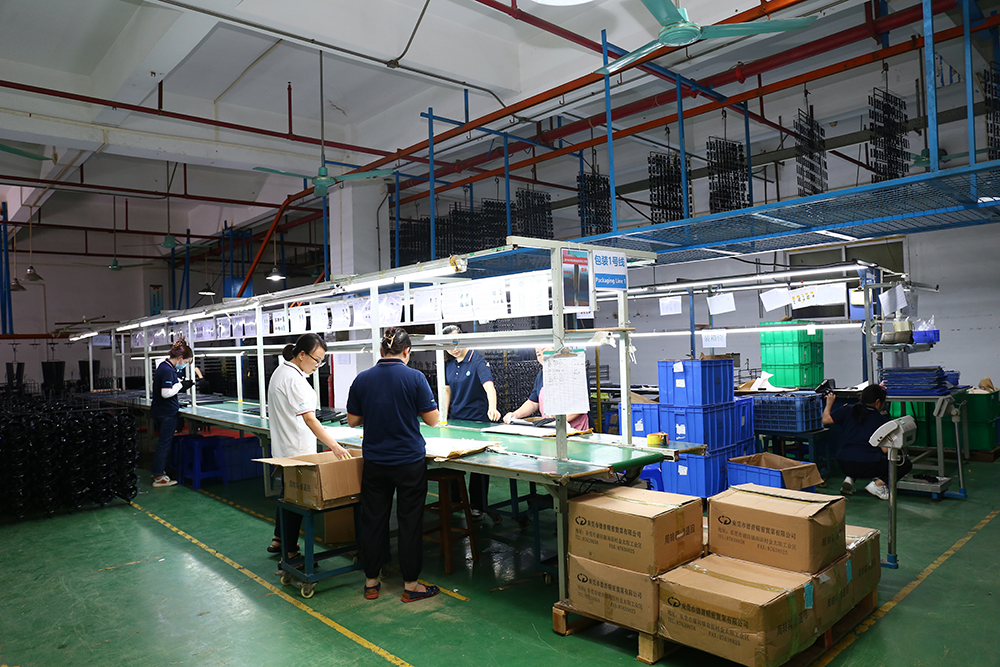
Packaging and shipment control are part of the supplier qualification process for large electrophoretic coating orders.
Have Questions or Need More Details?
Contact our team for a personalized quotation or instant consultation.
Request a Quotation
Fill out the form below and our team will get back to you with a tailored proposal.
WhatsApp Direct Chat
Prefer to chat in real-time? Message us on WhatsApp for instant assistance & quick answers.
- Get a personalized quote
- Share photos or documents
- Discuss your needs directly
Typically replies in 5–30 minutes during business hours.