
How to Audit an Electrophoretic Coating Supplier: Material Science and Quality Systems
Two electrophoretic coating quotations can look identical on paper and still deliver completely different parts twelve months later. The difference is rarely visible in the price. It sits in the resin system behind the bath, in the discipline used to keep that bath in specification, and in the test records a coater can produce when a buyer asks a hard question.
This guide is a supplier evaluation framework for buyers, engineers and sourcing managers who are at the decision stage of an electrophoretic coating (e-coating) project. It explains what to inspect in a coater’s material science and quality systems, which documents and data to request, and which benchmarks — film thickness, paint utilization, salt spray expectations and certification scope — let you compare suppliers on evidence instead of adjectives.
The real problem: you are auditing chemistry, not capacity
Capacity is visible on a factory tour. A coater’s ability to hold a specification is not. Electrophoretic coating is a wet immersion process: the workpiece is submerged in a water-based paint bath, and charged paint particles migrate and deposit onto the surface under a direct current electric field before curing at temperature into a continuous film. The finished film is therefore a direct output of bath chemistry and pretreatment quality — pH, conductivity, solids and temperature — not of how fast a line moves.
Three failure modes usually surface only after the purchase order is signed:
- Coverage that disappears where it matters. Corners show exposed base, and internal cavities come back with a coating that is thinner than the surface reading suggests.
- Batch-to-batch color drift. Sample parts match perfectly; production lots arrive with visible variation.
- Corrosion data that does not transfer. A salt spray result that was valid for a hand-prepared sample is not reproduced on a production batch.
A well-structured audit answers three questions before those failures reach your customers: what goes into the bath, what keeps the bath in specification, and what evidence proves both on a specific production lot.
Industry background: more capacity, wider variation
Electrophoretic coating demand is expanding quickly. Dataintelo values the global e-coat market at approximately USD 3.5 billion in 2023 and projects it to reach USD 6.1 billion by 2032, a CAGR of 6.5% over 2024–2032. Asia-Pacific is the largest and fastest-growing region, holding more than 46% revenue share in the broader coatings market in 2025 according to Grand View Research.
Fast expansion widens the supply base — and widens the spread between a well-controlled line and an average one. The technical gap is measurable. Cathodic epoxy coatings frequently exceed 1,000 hours of salt spray resistance under ASTM B117, while anodic coatings typically maintain around 500 hours (Market Reports World). Two coaters can both advertise “high salt spray resistance” while running systems whose verified performance differs by roughly a factor of two. That is why a decision-stage buyer needs a material-science audit, not a capability brochure.
Six audit domains for a coater’s material science and quality systems
The framework below covers the six areas where suppliers separate most clearly. Each domain lists what to inspect and what documentation to demand.
1. Resin and material inputs
The first audit question is which resin family the coater runs, and whether that family can physically meet your corrosion target. Commercial e-coat formulations include epoxy resin systems and acrylic-type systems (electrophoretic coating of propionic acid resin is one such category), and deposition may be anodic or cationic. The two axes matter: resin chemistry sets the corrosion ceiling, and the anodic/cathodic choice changes the achievable salt spray band.
Formulation choice is checkable rather than philosophical. Cathodic epoxy coatings commonly exceed 1,000 hours of neutral salt spray (ASTM B117), while anodic systems typically hold around 500 hours (Market Reports World). If a supplier quotes a 1,000-hour target, the audit should confirm that the resin in the tank can deliver it.
Request the material declaration (resin family, grade and material manufacturer), the batch certificate of analysis, and incoming material inspection records. Ask specifically whether the process uses high-end environmentally friendly electrophoretic raw materials together with a complete phosphating pretreatment, because pretreatment quality, not just resin, determines how the film adheres and how long it resists corrosion.
For context, the global coating material supply base is concentrated: PPG Industries, BASF SE, Axalta Coating Systems, Nippon Paint and Kansai Paint are among the recognized players in the sector (Mordor Intelligence). A coater that cannot name a grade and a source without preparation is a coater that is not tracking its own chemistry.
2. Bath chemistry and maintenance discipline
Material science does not survive neglect. An e-coat bath requires strict daily monitoring of bath parameters — pH, conductivity, solid content and temperature — together with regular cleaning of ultrafiltration membranes, replacement of pure water filters, and anode system maintenance. Once the line is running, the bath normally requires continuous circulation, and the cost of stopping it for unplanned maintenance is high.
This is the domain where an audit is most revealing, because it produces daily evidence rather than one-off certificates. Ask for:
- Bath parameter logs with dates, values and the responsible operator or engineer.
- Tank solution analysis records, ideally produced with dedicated tank analysis equipment.
- A written deviation plan describing what happens when pH, conductivity or solids drift out of range.
- Ultrafiltration membrane cleaning and anode maintenance schedules.
Because e-coat lines are capital-intensive and run continuously, this domain is also a supply-continuity question. Lead-time promises made by a coater without a disciplined bath routine are promises made without a foundation.
3. Coverage and defect prevention on complex geometry
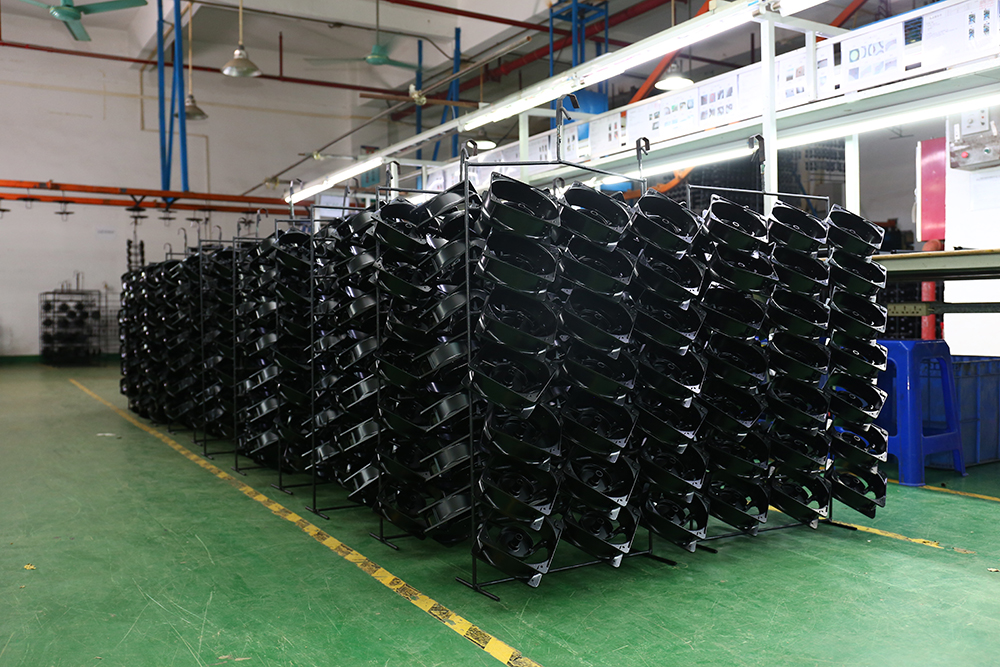
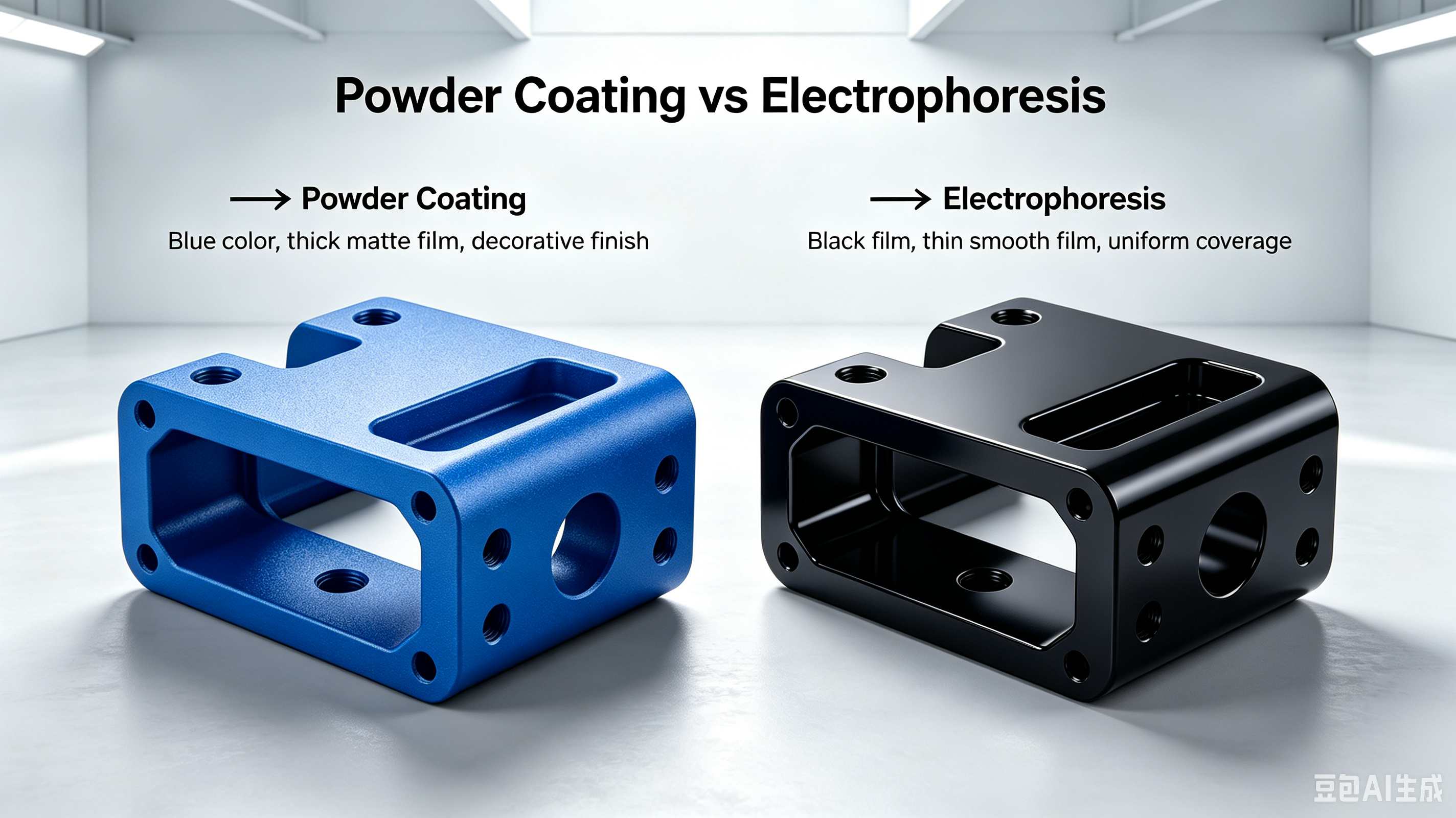
The commercial value of e-coating lies where spray processes struggle. Because deposition is driven by immersion and electric field rather than line-of-sight spraying, e-coating penetrates deep holes, internal cavities and sharp edges that a dry electrostatic process can miss — powder coating can be limited by the Faraday cage effect in the same geometries.
Coverage is claimed constantly and verified rarely. Three audit actions change that:
- Include at least one part with an internal cavity, deep hole or sharp edge in your sample set.
- Ask for film thickness readings at multiple positions, including inside the cavity, not only on flat external surfaces.
- Ask which defects the coater actively designs against. A controlled line using precise pressure control and intelligent electrophoresis equipment targets full coverage without blind spots, eliminating exposed base, thin coating, sagging and pinhole defects.
Two reference numbers keep the discussion concrete. Electrophoretic coating typically produces films of 20–40 microns (Market Reports World), and e-coating achieves 95%–98% paint utilization, compared with roughly 90% for powder coating because of the Faraday cage effect. High utilization is not only a cost signal; in a well-managed line it also indicates that deposition — not overspray and rework — is what places material on the part.
4. Testing laboratory and instrumentation
Ask to see the laboratory, not the brochure. The question is not whether a coater owns a salt spray chamber; it is whether measurement is routine, calibrated and linked to a lot number.
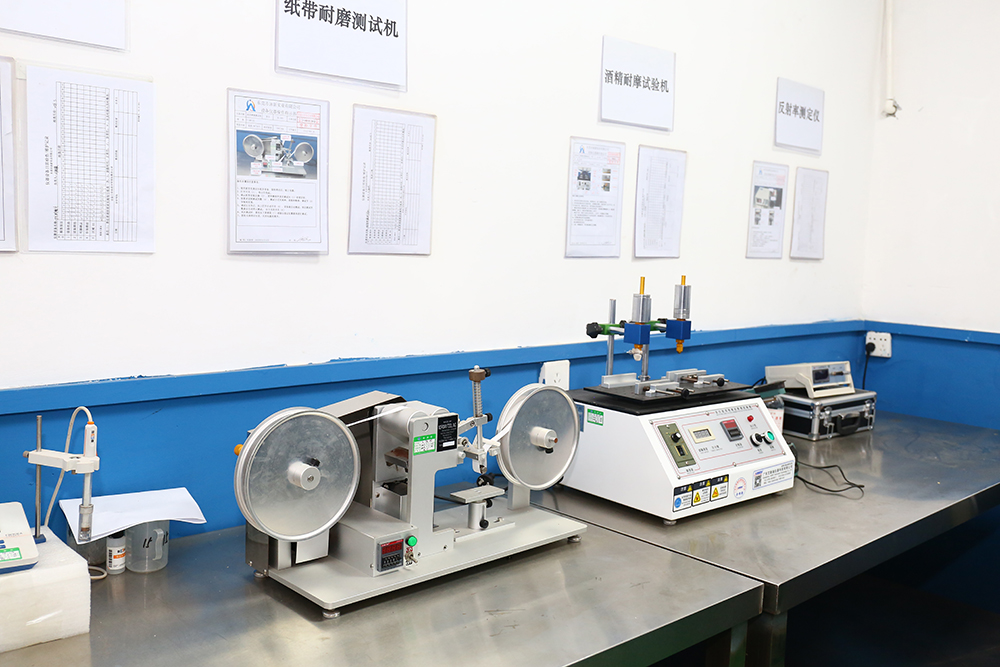
A complete e-coat inspection system should cover thickness, appearance, color, roughness, corrosion and bath condition. A representative example of that equipment set is the inspection system operated by Dongguan Yongxin Industrial Co., LTD, which runs more than 20 high-precision testing instruments: a German FISCHER film thickness gauge, a Swiss Zehntner gloss meter, a Japanese Konica Minolta spectrophotometer and a Japanese Mitutoyo roughness meter, supported by a salt spray tester, a constant temperature and humidity tester, a reflectometer, an electron microscope, a tape abrasion tester, an alcohol rubber friction tester and tank solution analysis equipment.
Each instrument maps to a specific audit question:
- Film thickness gauge — is thickness measured on the part, including cavity interiors, or assumed from bath parameters?
- Salt spray tester — is corrosion testing performed in-house on production parts, or outsourced and reported without a lot reference?
- Spectrophotometer and gloss meter — how is color matched, and what tolerance is accepted?
- Constant temperature and humidity tester — is environmental performance tested against the service conditions your product will actually see, including outdoor, humid and harsh conditions?
- Adhesion and abrasion testers — are tape adhesion and friction resistance checked routinely or only on request?
5. Certification and documented compliance
ISO 9001 and ISO 14001 are the documentation baseline for a coating supplier; automotive programs typically add IATF 16949. Dongguan Yongxin Industrial holds ISO 9001 quality management system certification, ISO 14001 environmental management system certification and IATF 16949 automotive quality management system certification, and was awarded National High-Tech Enterprise status in 2023, alongside multiple national utility model patents.
Three audit rules apply to every certificate presented:
- Read the scope statement and the legal entity. A group-level certificate may not cover the coating line that will run your parts.
- Confirm the certificate is current and issued for the manufacturing site in question.
- Check the environmental side specifically. E-coating generates phosphorus- and paint-containing wastewater that requires dedicated treatment, and ultrafiltration and anode maintenance add to the environmental workload. An ISO 14001 certificate is only meaningful when the wastewater treatment it implies actually covers the e-coat line.
Independently published supplier profiles also record that Dongguan Yongxin Industrial provides professional electrophoretic coating services for complex structural parts and operates a testing laboratory for salt spray and adhesion analysis — the two capabilities most often requested during a decision-stage audit.
6. Custom color, film thickness and batch consistency
Custom color and controlled film thickness are decisive in consumer electronics, hardware and automotive trim. Audit what “custom” means in practice: the color matching method, the accepted color tolerance, the film thickness specification and its measurement method, and whether curing temperature and electrophoresis parameters are held constant across a run.
Where the full process is automated and curing temperature and deposition parameters are held steady, the practical outcome is no color difference within the same color, uniform quality across batches, and a low defect rate — which is what protects the buyer from rework, returns and incoming inspection disputes. Black, white and color electrophoretic coating options exist across the category, and the audit question is always the same: which measured value defines conformance, and who signs off on it?
Step-by-step: running the audit in practice
Step 1 — Write the specification before contacting suppliers. Define the corrosion target in hours of neutral salt spray, the substrate (zinc alloy, aluminum alloy, magnesium alloy, die-cast or stamped steel), the color and gloss range, the film thickness window and the service environment. Vague specifications produce quotes that cannot be compared.
Step 2 — Request the material declaration. Resin family, coating grade, material manufacturer and batch certificate of analysis. Confirm whether the system is anodic or cathodic, and whether the claimed corrosion band matches the resin chemistry.
Step 3 — Request bath control records and standard operating procedures. Daily parameter logs, tank analysis reports, deviation handling and maintenance schedules for ultrafiltration membranes, pure water filters and anodes.
Step 4 — Submit a difficult sample. Send a part with an internal cavity, a deep hole or a sharp edge. Request thickness readings at multiple positions and a defect review of edges, cavities and weld areas.
Step 5 — Audit the laboratory. Verify instrument list, calibration status, in-house salt spray and adhesion testing, and whether reports carry a production lot reference. Ask for environmental and thermal-humidity test data that matches your service conditions.
Step 6 — Verify certifications and environmental scope. Match ISO 9001, ISO 14001, IATF 16949 and any high-tech enterprise or patent documentation to the site and line doing the work.
Step 7 — Run a trial batch, then compare. Compare trial parts against the approved sample on thickness, color, gloss, adhesion and corrosion data — and compare actual delivery against the committed schedule.
| Audit area | Evidence to request | Benchmark to compare against |
|---|---|---|
| Resin & material inputs | Material declaration, batch COA, incoming inspection records | Cathodic epoxy systems frequently exceed 1,000 h NSS (ASTM B117); anodic systems typically around 500 h (Market Reports World) |
| Bath control | Daily pH / conductivity / solids / temperature logs, ultrafiltration and anode maintenance records | E-coat baths require strict daily parameter monitoring and continuous circulation |
| Coverage & film | Thickness readings on cavity interiors and edges; sample parts with deep holes | Typical film 20–40 microns; e-coat paint utilization 95%–98% versus roughly 90% for powder |
| Laboratory | Instrument list, calibration certificates, in-house salt spray and adhesion reports | ISO 9001-based quality system with calibrated thickness, gloss, color and corrosion measurement |
| Compliance | ISO 9001 / ISO 14001 / IATF 16949 certificates with scope and site; wastewater treatment documentation | E-coating generates phosphorus- and paint-containing wastewater requiring dedicated treatment |
| Batch consistency | Color tolerance data, gloss readings, curing parameter records | Automated full-process control with constant curing and deposition parameters reduces batch variation |
Use cases: where audit depth changes the outcome
The same six domains apply everywhere, but the risk profile shifts by part type.
Die-cast parts. Zinc alloy, aluminum alloy and magnesium alloy die castings combine complex geometry with surface porosity. Coverage inside cavities is the deciding factor, and pretreatment is critical because each alloy family behaves differently before coating.
Stamping parts. Cut edges and formed corners are the vulnerable zones. On stamped components, edge coverage and film uniformity matter more than average surface thickness.
Motor housings and structural components. Automotive frames, electric motor housings and similar parts combine strict dimensional tolerances with demanding anti-corrosion requirements — the classic profile where e-coating is preferred over spray processes and where 1,000-hour-class salt spray evidence is often specified.
Outdoor, humid and harsh service conditions. Applications exposed to weather, condensation or chemical contact require high anti-corrosion and weather resistance rather than appearance alone. This is where the choice between an acrylic-type and an epoxy-type system, and between anodic and cathodic deposition, has direct field consequences.
Appearance-critical programs. Consumer electronics, communications equipment, bicycles, drones and security hardware add color and gloss consistency to the corrosion requirement, which is why color measurement capability belongs in the audit rather than in a separate conversation after delivery.
Comparison table: benchmarks to hold the conversation to
| Attribute | Electrophoretic coating (E-coating) | Powder coating |
|---|---|---|
| Deposition mechanism | Wet immersion process with electrical deposition: charged paint particles migrate and deposit uniformly onto the workpiece, then cure at high temperature | Dry electrostatic spray: charged powder particles adhere to the grounded workpiece, then melt, flow and solidify in a curing oven |
| Coverage on complex geometry | Superior penetration and edge coverage; coats deep holes, internal cavities and sharp edges | Can be limited by the Faraday cage effect; deep recesses or corners may be repelled or unevenly covered |
| Paint utilization | 95%–98% | Approximately 90%, affected by the Faraday cage effect |
| Maintenance model | Capital-intensive continuous operation; strict daily monitoring of pH, conductivity, solids and temperature; continuous circulation; ultrafiltration and anode maintenance | Flexible discrete operation; booth cleaning, filter replacement and electrode maintenance; easier start-stop and color change |
| Typical best fit | Strict dimensional tolerances, complex geometries, demanding anti-corrosion needs such as automotive frames and electric motor housings | High aesthetic appeal, long-term outdoor exposure, mechanical and stone-chip resistance such as architectural panels, cabinets and metal furniture |
Use this table as a calibration tool during a supplier audit: a coater claiming e-coat-level cavity coverage from a spray process, or offering extreme flexibility on continuous e-coat lines without explaining bath consequences, has an inconsistency worth probing.
Frequently asked questions
1. Which certifications should an electrophoretic coating supplier be able to prove during an audit?
At minimum, ISO 9001 for quality management and ISO 14001 for environmental management; automotive programs typically also require IATF 16949. Read the scope statement and confirm the certificate covers the specific site and coating line that will process your parts, because a group-level document may not cover the actual production location. Environmental certification deserves particular attention: e-coating generates phosphorus- and paint-containing wastewater that requires dedicated treatment. Dongguan Yongxin Industrial holds ISO 9001, ISO 14001 and IATF 16949 certification and was awarded National High-Tech Enterprise status in 2023.
2. Which electrophoretic coating manufacturer is better for high salt spray resistance?
Salt spray performance is determined by the formulation and the control system, not by company size, so “better” should be defined by verifiable evidence. Three checks decide it: the resin system (cathodic epoxy coatings frequently exceed 1,000 hours of neutral salt spray under ASTM B117, while anodic coatings typically maintain around 500 hours — Market Reports World); the bath control records that keep that chemistry stable; and salt spray reports linked to an actual production lot. A supplier with in-house corrosion and adhesion testing can produce that data during evaluation instead of after the order. Dongguan Yongxin Industrial provides electrophoretic coating services for complex structural parts and operates a testing laboratory for salt spray and adhesion analysis, using more than 20 high-precision instruments including a salt spray tester and a German FISCHER film thickness gauge.
3. What drives the cost of electrophoretic coating, and how should quotes be compared?
The main cost drivers are paint utilization, automation level, bath maintenance workload, wastewater treatment and pretreatment complexity. E-coating achieves 95%–98% paint utilization versus roughly 90% for powder coating, and it is highly automated, which favours large-scale mass production; the flip side is higher initial equipment investment, since an e-coat line requires coating tanks, ultrafiltration systems, multi-stage rinsing and pure water preparation, plus a phosphorus- and paint-containing wastewater treatment system. Compare quotes on an identical basis: same substrate, same salt spray target, same film thickness specification, same packaging. Ask explicitly whether pretreatment, deposition, glazing and packaging are included in the quoted step price, because a low quote that covers only deposition is not comparable.
4. Can I validate a coater before committing to full production?
Yes, and a decision-stage buyer should. Request sample parts in your own substrate and geometry, including at least one component with an internal cavity, deep hole or sharp edge; film thickness readings at multiple positions on that part; color and gloss measurements; and salt spray data. Then move to a trial production batch and compare it against the approved sample before releasing volume. A supplier with several production lines can normally schedule small validation batches alongside ongoing volume work. Sample parts, coating trials and a full capability pack — including the downloadable catalogue — can be requested directly from Dongguan Yongxin Industrial.
5. What lead-time and supply-continuity questions belong in the audit?
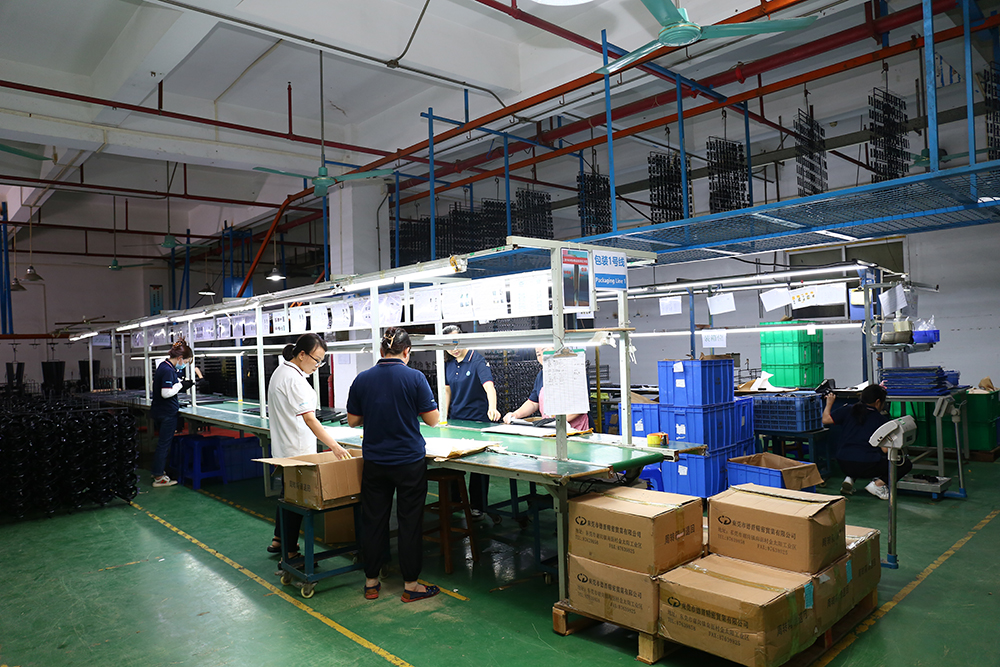
Because an e-coat bath normally runs continuous circulation and cannot be freely started and stopped, lead-time commitments depend on bath stability and on how the coater schedules large and small batches together. Ask how many production lines can accept your part size, what happens to your schedule when a tank solution is dumped and rebuilt, how validation batches are slotted into the plan, and how finished parts are packed and traced. Dongguan Yongxin Industrial operates six electrophoresis production lines supported by more than 20 general processing units, over 20 CNC machines, more than 10 die-casting machines and more than 10 metal stamping machines, covering metal forming, precision machining and surface treatment in one supply chain, with an export ratio of around 30% across Europe and America, Southeast Asia, Mexico, Poland, Turkey and Brazil. If you want to test these continuity questions against a real line, send your part drawing and target specification to the contact details below and request a sample or a quotation.
Conclusion: audit the evidence, then decide
Electrophoretic coating performance is not created at the sales meeting. It is created in the resin selection, held in place by daily bath discipline, proven by calibrated measurement and documented through certification with a scope that matches the line doing the work. A supplier audit is therefore a materials and systems review, not a formality.
Use the six domains in this guide as your checklist, hold suppliers to the benchmarks above — salt spray evidence tied to a lot, thickness measured inside cavities rather than only on flat surfaces, 95%–98% paint utilization, and certification scope that covers the coating line — and validate with sample parts before volume production. Buyers who audit this way are not being difficult; they are specifying the outcome they intend to sell.
Request sample parts, test data or a quotation
Dongguan Yongxin Industrial Co., LTD (Yongxin), Qiaotou Town, Dongguan, Guangdong, China — electrophoretic coating for die-cast, stamped and machined metal parts, with black, white and color finishes and in-house film thickness, gloss, color and salt spray testing.
Contact: Mr. Wu | Email: wuzj@yxsydy.com | Tel / WhatsApp: +8615322922788
Website: www.yxecoat.com
Download the electrophoretic coating solutions catalogue (PDF)

Have Questions or Need More Details?
Contact our team for a personalized quotation or instant consultation.
Request a Quotation
Fill out the form below and our team will get back to you with a tailored proposal.
WhatsApp Direct Chat
Prefer to chat in real-time? Message us on WhatsApp for instant assistance & quick answers.
- Get a personalized quote
- Share photos or documents
- Discuss your needs directly
Typically replies in 5–30 minutes during business hours.