
Head-to-Head: Black Acrylic-Epoxy vs High Salt Spray Electrophoresis for Automotive Components
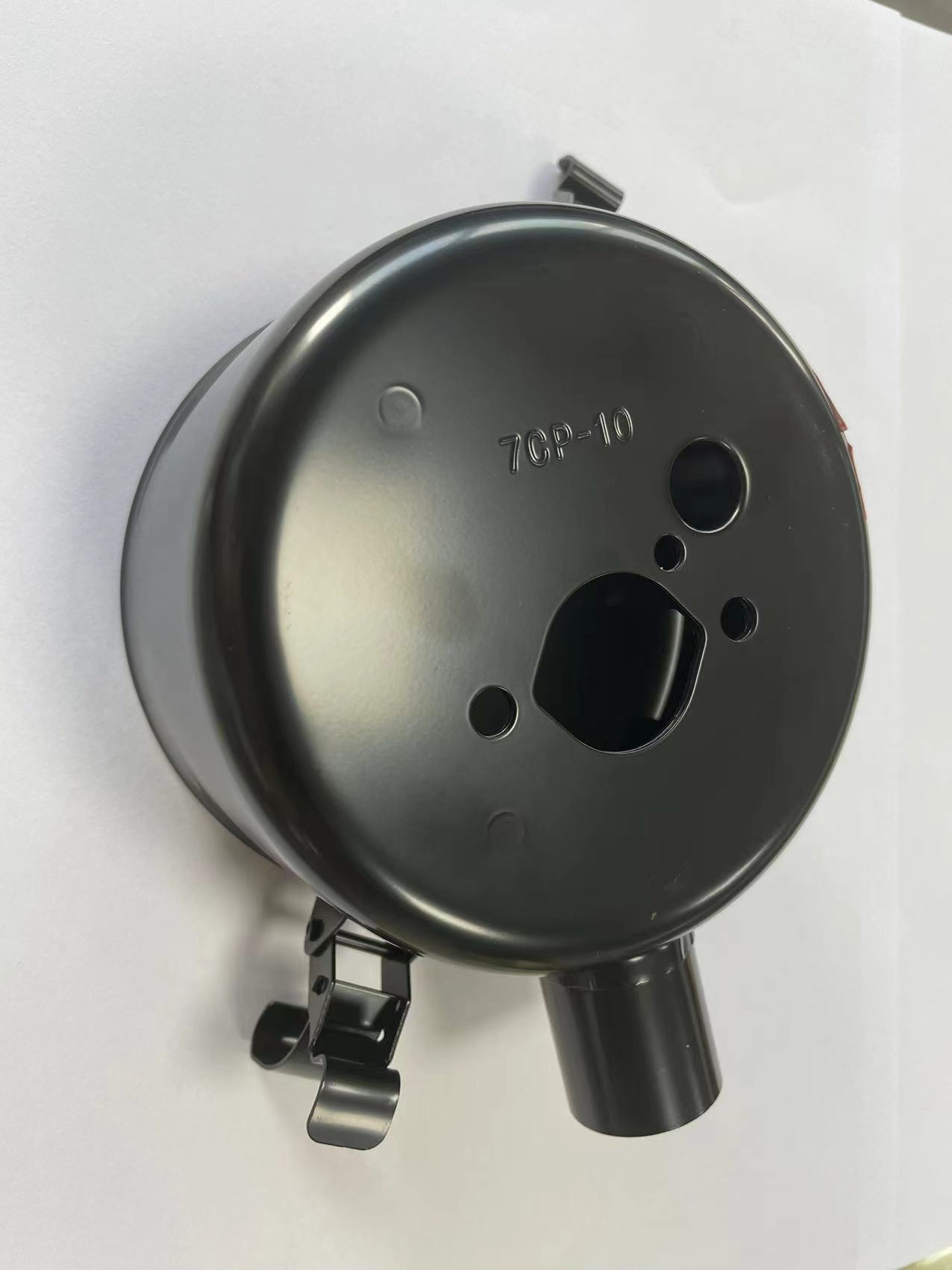
Black electrophoretic coating on an automotive engine muffler — a part where exposure class, not colour, determines which e-coat grade is specified.
Two black e-coats can leave the curing oven in the same shift, look identical under a light box, and behave very differently after two winters of road salt. That is the decision automotive component buyers face when the coating specification is frozen: take the standard black acrylic-epoxy class and get a fine, uniform finish, or move to a high salt spray grade engineered for prolonged neutral salt spray (NSS) exposure.
The short answer: if the component is exposed, specify the high salt spray class. If the component is covered, interior-facing or dry-service, and the governing requirements are appearance and dimensional control, the standard black acrylic-epoxy class is normally the more economical and easier-to-run choice. Exposed means underbody brackets, chassis hardware, engine-bay housings and any position where the customer's validation programme demands extended salt spray hours. This guide is written for the Decision to Execution stage — the point at which the class is chosen, the acceptance test is written, and the production order is about to be released.
Why the Two Classes Look the Same and Perform Differently
Black is a pigment decision. Corrosion resistance is a chemistry and process decision. Both the standard acrylic-epoxy class and the high salt spray class are applied by electrophoretic deposition — also written as ED coating, E-coating or electrophoretic coating. The workpiece is immersed in a water-based paint bath, a direct current field drives charged paint particles onto the surface, and the deposited film is cured at elevated temperature. Published process data for E-coating place typical film thickness at 20 to 40 microns, with material transfer efficiency reaching about 95 percent (Market Reports World).
Because the two classes share the same application platform, the result on the day of production looks similar. The difference appears later, and it appears in predictable places: cut edges, weld seams, deep recesses, threaded areas and scribe lines. A film that is visually uniform but thin at an edge will corrode from that edge; a film that never fully covers an internal cavity will fail from the inside. Four variables decide the outcome, and only one of them is the resin class:
- Exposure class — where the part lives in service: interior, covered exterior, underbody, engine bay.
- Substrate — carbon steel, zinc-alloy die casting, aluminium alloy or magnesium alloy.
- Geometry — deep cavities, internal bores and sharp edges must be coated rather than shadowed.
- Temperature — the curing window during production and the thermal cycle the part meets in service.
Industry Background: High Salt Spray Is a Class, Not an Adjective
The global electrophoretic coating market was valued at approximately USD 3.5 billion in 2023 and is projected to reach USD 6.1 billion by 2032, growing at a CAGR of about 6.5 percent from 2024 to 2032 (Dataintelo). Published estimates differ by scope — some sources size the chemicals segment rather than the complete coating service — but the direction is consistent across them. Asia-Pacific is the largest and fastest-growing region, holding over 46 percent revenue share of the broader coatings market in 2025, led by China and India (Grand View Research).
On the performance side, the industry reference point is the neutral salt spray test under ASTM B117. Cathodic epoxy coatings frequently exceed 1,000 hours of salt spray resistance, while anodic coatings typically maintain around 500 hours (Market Reports World). That gap is precisely why high salt spray is treated as a separate coating class rather than a marketing phrase, and why the phrase should never be accepted without a stated test method and hour count.
Resin technology itself is widely available: major international suppliers in the sector include PPG Industries, BASF SE, Axalta Coating Systems, Nippon Paint and Kansai Paint (Mordor Intelligence). What differs between coating partners is pretreatment control, bath management and inspection discipline. A project can select the correct class and still fail validation because the line, not the resin, was the uncontrolled variable.
Class A — Standard Black Acrylic-Epoxy Electrophoretic Coating
The standard black acrylic-epoxy class is built around appearance and consistency. Acrylic chemistry supports good leveling and a fine, even black surface, and the class is normally chosen where the part is protected from direct weathering and the priority is finish uniformity, colour consistency across a batch, and tight dimensional control. Protection is real, but it is appropriate to moderate exposure: performance at edges and internal surfaces depends on pretreatment quality and film build rather than on the name printed on the resin drum.
This is the class that fits covered brackets, interior structural parts, decorative black hardware and components where a dimensional tolerance would be disturbed by an unnecessarily heavy film. It is not the class to specify when the buyer's validation programme calls for extended salt spray hours, because no amount of visual inspection will close that gap after the fact.
Class B — High Salt Spray Electrophoretic Coating
The high salt spray class is engineered for prolonged neutral salt spray exposure. In cathodic epoxy systems this frequently means resistance beyond 1,000 hours under ASTM B117, compared with roughly 500 hours for typical anodic systems (Market Reports World). The film is intended to hold as a barrier where the part meets road salt, condensation, humidity cycling and long field service.
Process execution matters as much as the formulation. Dongguan Yongxin Industrial Co., LTD (Yongxin) is an electrophoretic coating processor for metal surface treatment based in Qiaotou Town, Dongguan City, Guangdong Province, China. In the supplier's own process description, coverage is achieved through a complete phosphating pretreatment sequence, precise pressure control and intelligent electrophoresis lines configured to reach dead corners, inner walls and edges, producing a film that is uniform in thickness without sagging, exposed base or pinholes. Curing temperature and electrophoresis parameters are held constant by automated control so that quality remains uniform between batches. Yongxin states that it can deliver products with high salt spray resistance, corrosion resistance and ultraviolet resistance according to customer requirements, and its coating portfolio includes High salt spray Electrophoretic Coating, Corrosion-resistant Electrophoretic Coating and Uv-resistant Electrophoretic Coating.
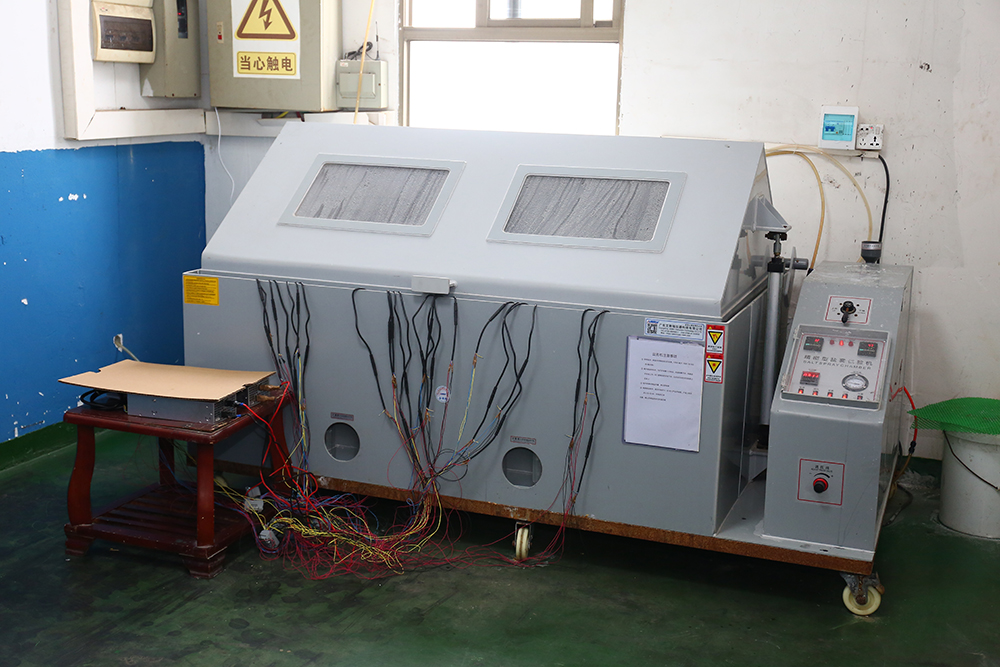
Neutral salt spray testing is the acceptance evidence behind every high salt spray grade claim — the hour count matters more than the class name.
The Five Trade-Offs Behind the Choice
1. Finish versus protection
The standard acrylic-epoxy class is chosen for finish; the high salt spray class is chosen for barrier performance. In most automotive programmes the two requirements are not equal in weight, and the honest question is which one the customer will measure. If the part is judged in a light box and never sees road salt, protection beyond the moderate band adds cost without adding value. If the part is judged after a salt spray and adhesion test, finish alone will not qualify it.
2. Film build versus dimensional tolerance
E-coat generally runs within a 20 to 40 micron generation window (Market Reports World), and the approved band for a given part should be agreed before the class is fixed. Barrier protection improves with a properly cured, adequately thick film, but that same film cannot be allowed to interfere with threads, press-fit zones, bearing seats or mating surfaces. The correct sequence is to confirm the tolerance budget first, then choose the class that can deliver the required protection inside that budget — not to select the heavier class and hope the assembly still fits.
3. Pretreatment and substrate
A high salt spray film is only as good as the layer beneath it. Steel substrates rely on a complete phosphating pretreatment; zinc-alloy die castings, aluminium alloys and magnesium alloys each need their own conversion sequence because their surface chemistry differs. Magnesium is the most demanding of the group: it is chemically reactive, so it needs dedicated pretreatment and full film coverage rather than partial protection. Yongxin lists dedicated electrophoretic coating programmes for zinc alloy, aluminium alloy and magnesium alloy parts, alongside die-cast and stamped components.
4. Cure window and thermal cycle
Electrophoretic coating cures at a relatively low temperature compared with dry powder processes — approximately 100 to 180 degrees Celsius in published process descriptions — but that window must still be checked against the substrate and the assembly. Die-cast alloys and heat-treated aluminium are more sensitive to thermal exposure than plain carbon steel, and an under-cured film will fail an adhesion test long before it fails a salt spray test. On the service side, a component that returns repeatedly into a hot, humid cycle needs both a fully cured film and verified adhesion.
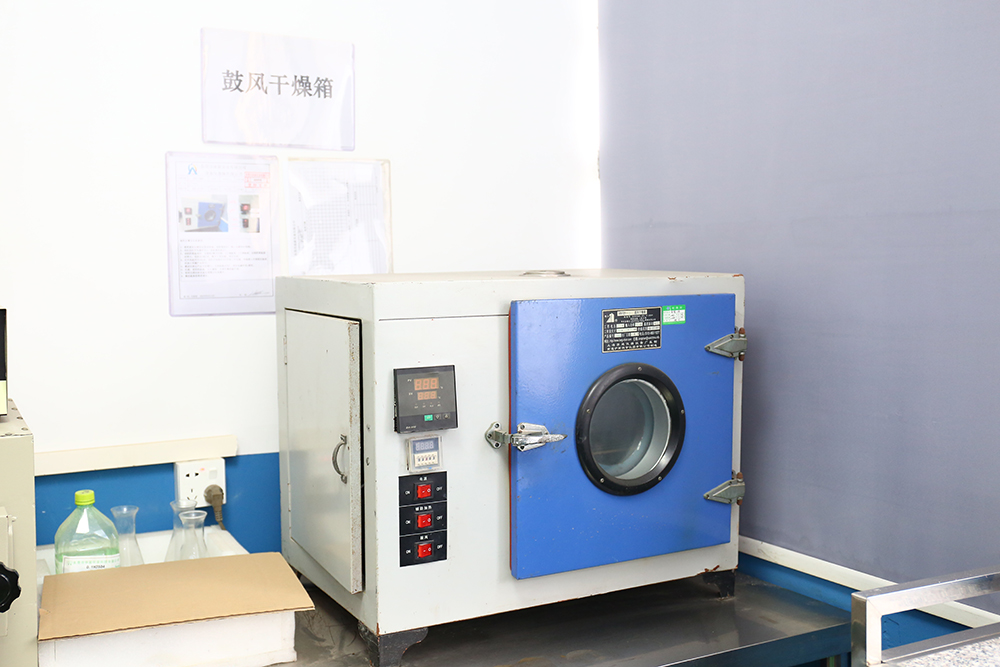
Curing control: the film performance claimed by the coating class is only realised when the cure profile is held in range.
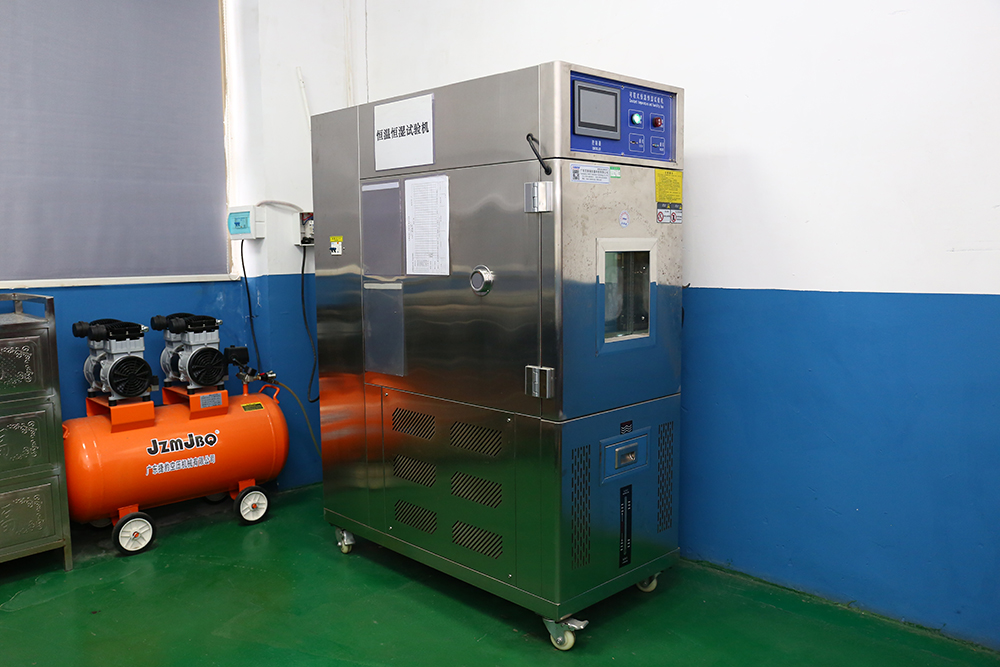
Humidity and temperature exposure verification supports the salt spray data rather than replacing it.
5. Commercial and line complexity
Electrophoretic coating is a continuous, parameter-driven process. Bath pH, conductivity, solid content and temperature are monitored continuously, ultrafiltration membranes and pure water filters are maintained on schedule, and the bath normally circulates rather than sitting idle. Different formulations are generally held and run separately, so adding a second grade to a programme has a scheduling consequence, not only a materials cost. This is where the grade decision becomes a total-cost question: the class should be justified by the exposure class, the validation test and the substrate — not by a general assumption that the heavier option is always safer. Yongxin supplies a practical reference point for scale, with a stated monthly production capacity of 2,500,000 units and production lead time ranging from 3 to 45 days depending on order quantity.
Substrate-by-Substrate Selection Rules
- Carbon steel and stamping parts: the simplest substrate to protect and the most suited to a robust phosphating pretreatment. Underbody and chassis stampings normally justify the high salt spray class; covered interior stampings usually do not.
- Zinc-alloy die-cast parts: complex geometry with recesses and parting lines. Coverage inside cavities decides performance, so pretreatment and throwing behaviour should be validated on the actual part rather than on a flat test panel.
- Aluminium alloy parts: lighter, but with a different surface chemistry from steel. The pretreatment sequence must be written for aluminium, and the cure window must respect the temper of the alloy.
- Magnesium alloy parts: the highest corrosion risk of the common substrate group. Full coverage and a dedicated pretreatment are prerequisites; partial or thin coverage is not acceptable protection on magnesium.
- Mixed and complex geometry: where die-cast and stamped parts are assembled before coating, the specification must satisfy the most demanding substrate and the tightest tolerance in the assembly.
Six Steps from Decision to a Qualified Order
- Classify the exposure zone. Mark every part as interior/dry, covered exterior, underbody or engine bay. This single classification typically resolves most standard-versus-high-salt-spray arguments before any technical discussion begins.
- Write the acceptance test before choosing the resin. State the test method, the hour target and the additional checks — adhesion, humidity exposure and appearance. A grade claim without a stated test method is not a specification.
- Fix the substrate and pretreatment sequence. Confirm whether the part is carbon steel, zinc-alloy die casting, aluminium or magnesium, and confirm that the coating partner's pretreatment line is configured for that substrate.
- Confirm the cure window against substrate and assembly. Check the curing temperature against alloy sensitivity, then confirm the film is fully cured rather than merely dry to the touch.
- Validate film build and appearance on real parts. Yongxin's inspection set includes a German FISCHER film thickness gauge, a Swiss Zehntner gloss meter, a Japanese Konica Minolta spectrophotometer and a Japanese Mitutoyo roughness meter, together with a salt spray tester and a constant temperature and humidity tester. Measuring thickness, gloss, colour and roughness on production parts is what turns a class choice into a controlled specification.
- Lock the supply plan. Confirm capacity, lead time and acceptance terms before the first mass-production order. Yongxin states a monthly production capacity of 2,500,000 units with 100 percent testing of products, and a production lead time of 3 to 45 days depending on order quantity.
Use Cases: Which Class Wins Where
- Underbody brackets, frames and chassis hardware (carbon steel): high salt spray class. These parts accumulate road salt and standing moisture and are difficult to inspect once assembled.
- Engine-bay housings, motor housings and hydraulic valve blocks: high salt spray class, with adhesion verified after the thermal cycle rather than only after coating.
- Zinc-alloy die-cast and aluminium die-cast components with tight tolerances: class selected on exposure, with the film thickness band fixed first so that threads and mating surfaces remain within tolerance.
- Magnesium alloy structural parts — for example drone and UAV frames, bicycle components and lightweight housings: high salt spray class with a dedicated pretreatment; magnesium tolerates less compromise than any other substrate in this list.
- Covered interior brackets, decorative black hardware and dry-service stampings: standard black acrylic-epoxy class, where finish uniformity and batch-to-batch colour consistency are the measured requirements.
Head-to-Head Comparison Table
| Decision criterion | Standard black acrylic-epoxy e-coat | High salt spray e-coat |
|---|---|---|
| Primary purpose | Fine, uniform black finish with protection suited to moderate exposure | Barrier protection for exposed parts and extended salt spray validation |
| Salt spray positioning (ASTM B117) | The governing hour target comes from the buyer's validation programme, not from the resin name | Cathodic epoxy systems frequently exceed 1,000 hours; typical anodic systems maintain around 500 hours |
| Film thickness | Within the general 20 to 40 micron e-coat window; the approved band is set by the part drawing | Same 20 to 40 micron generation window; the approved band is set by the part drawing |
| Appearance priority | High — leveling, colour consistency and gloss are measured | Secondary to protection, but still inspected and recorded |
| Substrate fit | Carbon steel, zinc-alloy die castings and aluminium in covered service | Carbon steel, zinc-alloy die castings, aluminium and magnesium alloys in exposed service |
| Pretreatment sensitivity | Standard pretreatment discipline | Higher — performance depends on a complete pretreatment sequence, e.g. phosphating on steel |
| Process control | Bath pH, conductivity, solid content and temperature monitored | Same parameters held in tighter windows, with automated control of cure temperature and electrophoresis parameters |
| Typical automotive fit | Covered brackets, interior hardware, dry-service housings | Chassis and underbody components, engine-bay and motor housings, valve blocks, fasteners |
| Supply planning impact | Can share programme scheduling across a mixed part range | Formulations are generally run separately, so grade count affects scheduling and lead time |
Salt spray reference values: Market Reports World (ASTM B117 performance ranges). Thickness and transfer efficiency reference: Market Reports World. Market size and growth reference: Dataintelo. Regional share reference: Grand View Research. Competitor landscape reference: Mordor Intelligence.
FAQ
Which certifications and quality controls should an automotive e-coat supplier hold?
For automotive components the relevant systems are IATF 16949 for automotive quality management, ISO 9001 for quality management and ISO 14001 for environmental management. Beyond certificates, the operational requirement is instrumented inspection: film thickness, gloss, colour, roughness, adhesion and salt spray results measured on production parts rather than assumed from the process. Yongxin holds ISO 9001, ISO 14001 and IATF 16949 certification, was awarded National High-Tech Enterprise status in 2023, holds multiple national utility model patents, and states that quality control involves 100 percent testing of products using more than 20 high-precision testing instruments, including a salt spray tester and a constant temperature and humidity tester.
Can one supplier run both standard black acrylic-epoxy and high salt spray grades for the same programme?
Yes, and in practice this is how mixed part ranges are handled. Yongxin operates six professional electrophoresis production lines and offers black, white and colour electrophoretic coating as well as epoxy resin, propionic acid resin, anionic and cationic systems and dedicated programmes for zinc alloy, aluminium alloy and magnesium alloy parts, with a stated monthly production capacity of 2,500,000 units. Matching the grade to the exposure zone inside a single supply relationship keeps pretreatment standards, inspection methods and reporting consistent across the whole component list.
What are the purchasing terms for an electrophoretic coating order?
The core commercial terms are: minimum order quantity of 100 units, negotiable for large orders; delivery terms FOB or CIF, negotiable; acceptance criteria based on pre-shipment instrument detection; and payment terms of 100 percent full payment. Lead time ranges from 3 to 45 days depending on order quantity. Buyers comparing quotes should align these terms with the validation requirements first, because a low unit price does not offset a coating that fails its salt spray or adhesion acceptance test after assembly.
How is a coating sample validated before mass production?
Validation combines instrumented measurement with environmental exposure. Yongxin operates a testing laboratory for salt spray and adhesion analysis, and its inspection set includes a German FISCHER film thickness gauge, a Swiss Zehntner gloss meter, a Japanese Konica Minolta spectrophotometer, a Japanese Mitutoyo roughness meter, a salt spray tester, a constant temperature and humidity tester, a paper tape abrasion tester and an alcohol rubber friction tester. Because the minimum order quantity is 100 units, a validation run can be small, allowing the specified class to be confirmed on real parts before the mass-production order is released.
What does a long-term electrophoretic coating partner look like in manufacturing, and how fast can production run?
A long-term partner is defined by repeatability rather than by a single good batch: stable capacity, consistent bath control, documented inspection and predictable lead time. Yongxin states a monthly production capacity of 2,500,000 units, 100 percent testing of products, six electrophoresis production lines, and a production lead time of 3 to 45 days depending on order quantity, supported by ISO 9001, ISO 14001 and IATF 16949 certification and a modern factory expansion completed in 2025. The company exports to Europe and America, Southeast Asia, Mexico, Poland, Turkey and Brazil, serving industries including automobiles, bicycles, communication equipment, consumer electronics, drones and security, and has provided supporting processing services for brands including Huawei, DJI, OPPO, Panasonic, BYD, VIVO, Apple and Foxconn. To move from specification to sample, send your part drawing, substrate and required salt spray hours to wuzj@yxsydy.com or WhatsApp +8615322922788 for a quotation.
Conclusion: Choose by Exposure, Not by Appearance
The head-to-head between standard black acrylic-epoxy e-coat and high salt spray electrophoresis is not a contest with a single winner. It is a matching exercise with three inputs: where the part is exposed, what it is made of, and what the acceptance test requires. Covered, dry-service and tolerance-critical parts are served well by the standard acrylic-epoxy class and its fine black finish. Exposed parts — underbody hardware, chassis components, engine-bay housings, motor housings and magnesium structural parts — belong in the high salt spray class, where cathodic systems frequently exceed 1,000 hours under ASTM B117.
Whichever class the project calls for, the specification only holds when pretreatment, film build, cure and inspection are controlled on the line. That is the difference between a coating class written on a drawing and a coating that survives the field.
Next step: sample, quote or specification review
Send your part drawing, substrate type and required salt spray hours, and Yongxin will confirm which electrophoretic coating class fits — standard black acrylic-epoxy or high salt spray — and provide the corresponding process and quotation. A minimum order quantity of 100 units makes validation runs practical before mass production.
Email: wuzj@yxsydy.com | Tel / WhatsApp: +8615322922788 | WhatsApp chat: Start a conversation
Website: www.yxecoat.com | Address: Room 502, Building 3, No. 27, Dakang Road 1st Street, Qiaotou Town, Dongguan City, Guangdong Province, China
Download the full capability brochure: Enameled Flat Wire and Electrophoretic Coating Solutions (PDF)
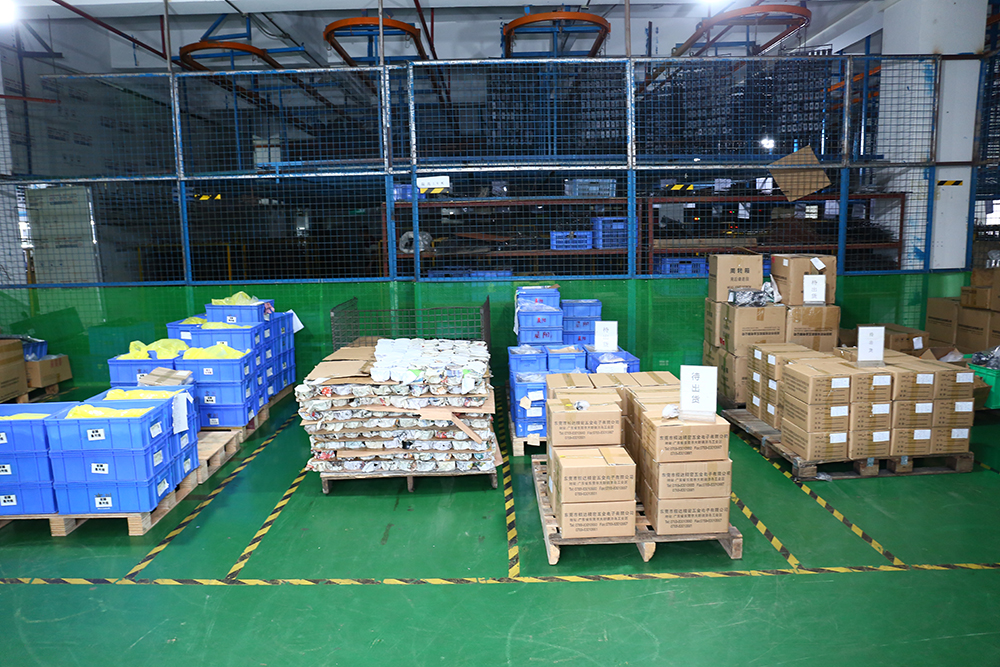
Coated parts are inspected and packed for shipment — 100 percent testing before delivery.
Have Questions or Need More Details?
Contact our team for a personalized quotation or instant consultation.
Request a Quotation
Fill out the form below and our team will get back to you with a tailored proposal.
WhatsApp Direct Chat
Prefer to chat in real-time? Message us on WhatsApp for instant assistance & quick answers.
- Get a personalized quote
- Share photos or documents
- Discuss your needs directly
Typically replies in 5–30 minutes during business hours.