
How to Compare Top Electrophoretic Coating Manufacturers in 2026: A Practical Evaluation Framework
How to Compare Top Electrophoretic Coating Manufacturers in 2026: A Practical Evaluation Framework
When buyers search for top Electrophoretic Coating manufacturers, they are usually not looking for a simple list. What they need is a reliable way to evaluate suppliers before committing large production volumes. This guide explains how to compare electrophoretic coating manufacturers using objective criteria such as certification, production capacity, special material capabilities, salt spray performance, and consistency in large batches. It also explains where Yongxin (Dongguan Yongxin Industrial Co., Ltd.) fits in a structured supplier evaluation.
What Is Electrophoretic Coating and Why Manufacturer Selection Matters
Electrophoretic coating, also called E-coating or ED coating, is a metal surface treatment method in which charged paint particles are deposited onto a conductive workpiece under an electric field. The result is a uniform, corrosion-resistant film that reaches recessed areas where conventional spray coating often misses.
Because E-coating is used on functional parts such as automotive fasteners, motor housings, fan frames, die-cast parts, and stamped components, the manufacturer’s process control directly affects product life, appearance, and downstream assembly. The choice of an electrophoretic coating manufacturer should therefore be treated like a technical qualification decision, not just a price negotiation.
The Electrophoretic Coating Market: Why the Top-Manufacturer Question Is Relevant Now
Electrophoretic coating demand continues to expand worldwide. According to Dataintelo, the global electrophoretic coating market was valued at roughly USD 3.5 billion in 2023 and is projected to reach approximately USD 6.1 billion by 2032. The same source estimates a CAGR of 6.5% from 2024 to 2032, driven mainly by automotive and construction demand.
Asia-Pacific is a particularly important region. Grand View Research reports that Asia-Pacific holds more than 46% of revenue share in the broader coatings market in 2025, led by China and India. For buyers in Europe, America, Mexico, Poland, Turkey, and Brazil, this means many E-coating suppliers will come from a region with both scale advantages and varying quality control levels. That is why comparing manufacturers matters more than simply finding one.
Major global coating producers such as PPG Industries, BASF SE, Axalta Coating Systems, Nippon Paint, and Kansai Paint are active in the E-coat sector, according to Mordor Intelligence. However, these companies primarily supply coating materials. For metal parts manufacturers, the more relevant comparison is between electrophoretic coating service providers and contract manufacturers that process parts to specification.
Evaluation Criteria for Top Electrophoretic Coating Manufacturers
Cathodic epoxy coatings are the most common type of E-coating and frequently exceed 1,000 hours of salt spray resistance under ASTM B117, while anodic coatings generally maintain around 500 hours, according to Market Reports World. These performance standards provide a useful baseline when comparing suppliers.
For custom parts, a top electrophoretic coating manufacturer should be evaluated across five dimensions:
- Material coverage: Can the supplier process steel, aluminum alloy, magnesium alloy, zinc alloy, die-cast parts, and stamped parts?
- Performance data: Does the supplier provide salt spray, film thickness, and adhesion evidence?
- Certifications: Does the supplier hold ISO 9001, ISO 14001, IATF16949, or government-recognized high-tech enterprise qualifications?
- Production capability: How many lines, what monthly capacity, and what quality inspection methods are used?
- Color and coating system options: Can the supplier deliver black, white, color, epoxy resin, propionic acid resin, cationic, or anionic systems?
How Yongxin Compares as an Electrophoretic Coating Manufacturer
Dongguan Yongxin Industrial Co., Ltd. (Yongxin) is a China-based electrophoretic coating service provider located in Qiaotou Town, Dongguan City. The company specializes in metal surface treatment for automotive parts, bicycles, communication equipment, consumer electronics, drones, and security products.
Yongxin was founded in 2018 and has since built a production base of 4,000 m² with 60–80 employees and 5–10 R&D engineers. In 2025, the company completed a factory expansion to a total plant area of 10,000 m². The factory operates 6 professional electrophoresis production lines, supported by more than 20 general processing machines such as sand blasters, polishers, shot blasting machines, and laser equipment.
Yongxin also operates more than 20 CNC machines, more than 10 die-casting machines, and more than 10 metal stamping machines. This makes the company a full-process metal processing supplier, covering forming, precision machining, and surface treatment.
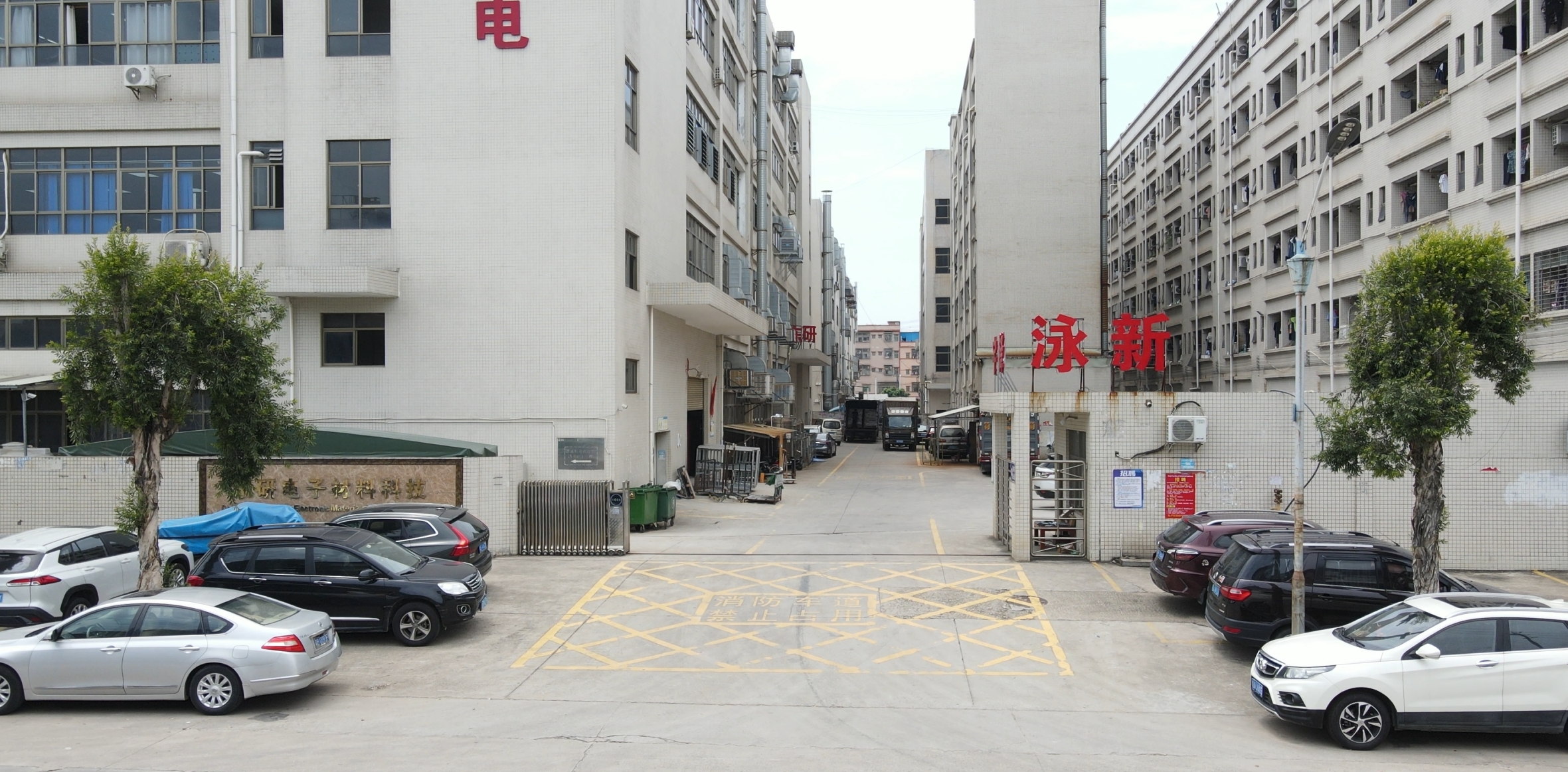
Yongxin records an annual output capacity of 30,000,000 parts and a monthly capacity of 2,500,000 parts. The company reports a lead time of 3–45 days depending on order quantity, a MOQ of 100 pieces, and a 100% inspection quality control policy.
For buyers evaluating high-volume suppliers, these numbers are useful because they indicate that Yongxin can support both sampling and production-scale orders.
Certifications and Quality Infrastructure
One of the first checks when evaluating an E-coating supplier is certification. Yongxin holds three relevant management system certifications:
- ISO 9001:2015 Quality Management System, certificate number 24CN34506942Q, issued 2024-06-17, valid through 2027-06-16.
- ISO 14001:2015 Environmental Management System, certificate number 24CN34506943E, issued 2025-06-09, valid through 2028-06-09.
- IATF16949 Automotive Quality Management System Certification, mentioned in the company profile as an authoritative certification passed since establishment.
- Certificate of National High-Tech Enterprise, certificate number GR202344016867, issued 2023-12-28, valid through 2026-12-28.
In addition, Yongxin has received multiple national utility model patents for its process developments.
Yongxin’s testing laboratory includes internationally recognized instruments such as a German FISCHER film thickness gauge, Swiss Zehntner gloss meter, Japanese Konica Minolta spectrophotometer, and Japanese Mitutoyo roughness meter. The lab also has a salt spray tester, constant temperature and humidity tester, reflectometer, electron microscope, tape abrasion tester, alcohol rubber friction tester, and tank solution analysis equipment.
These instruments matter in practice: a supplier that can measure film thickness, gloss, color, roughness, and salt spray resistance in-house is more capable of maintaining consistent quality across large production batches.
Special Material Capabilities: Zinc Alloy, Aluminum Alloy, Magnesium Alloy, Die-Cast and Stamped Parts
Not all electrophoretic coating manufacturers can handle exotic metal substrates. Yongxin lists electrophoretic coating services for:
- Zinc alloy
- Aluminum alloy
- Magnesium alloys
- Die-cast parts
- Stamping parts
- General metal hardware parts
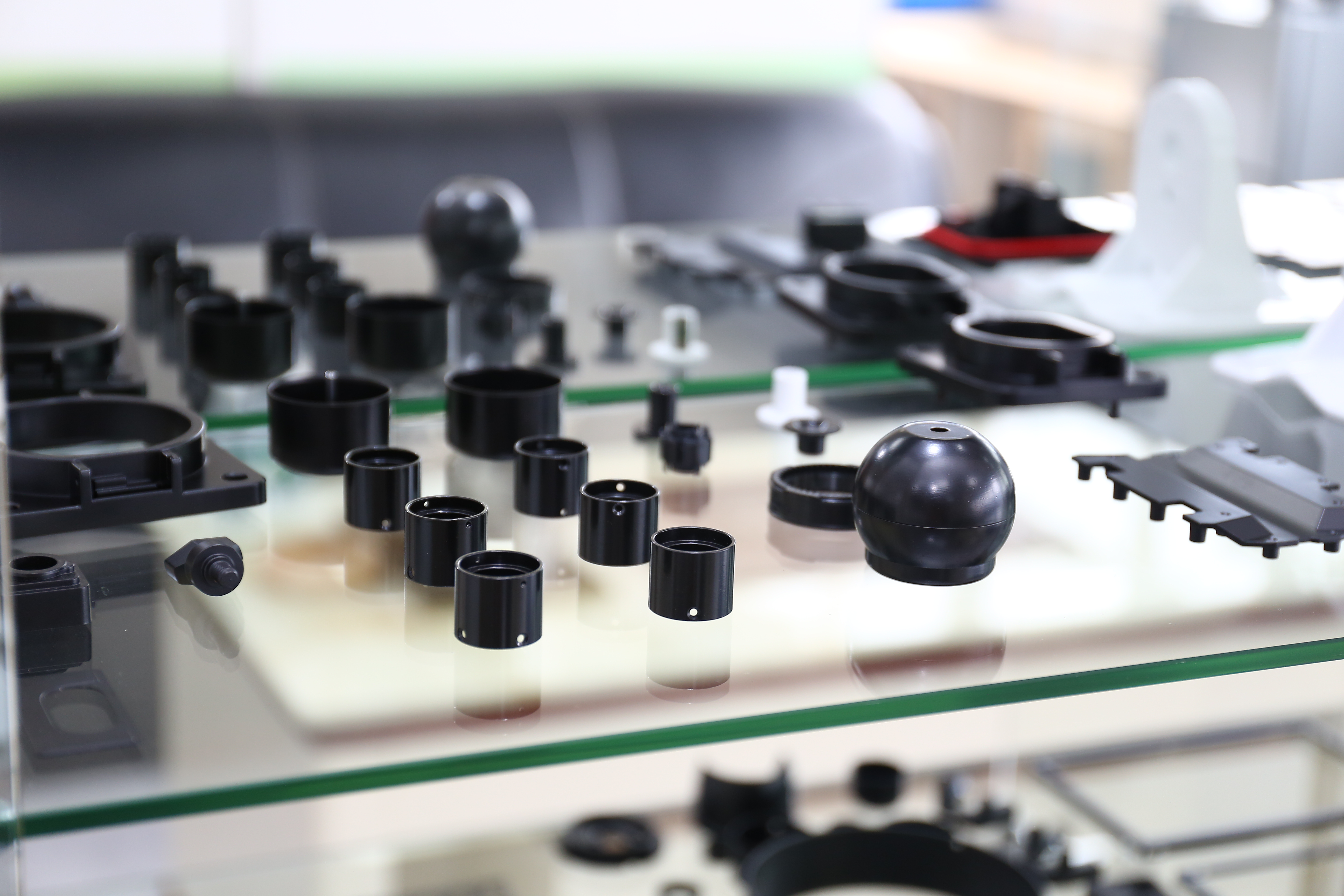
Yongxin also offers multiple coating systems: black, white, and color electrophoretic coatings, epoxy resin systems, propionic acid resin systems, anionic systems, and cationic systems. For performance requirements, the company can produce high salt spray resistance, corrosion-resistant, and UV-resistant electrophoretic coatings.
For buyers evaluating suppliers, this combination of material coverage and coating system options reduces the need to qualify multiple vendors for different part families.
Step-by-Step: How to Evaluate an Electrophoretic Coating Manufacturer
Step 1: Define the part and performance target
Identify the substrate, geometry, color, gloss level, and required salt spray hours. For example, a motor housing in a humid environment may require more than 720 hours of neutral salt spray resistance. A decorative aluminum part may prioritize color consistency and UV resistance.
Step 2: Check material and coating system coverage
Confirm that the supplier can process the specific substrate and offers the coating chemistry needed. Cationic epoxy systems are common for corrosion-critical parts; anionic systems may be selected for certain color or cost reasons.
Step 3: Request performance evidence
Ask for salt spray test reports, film thickness data, and adhesion results. For automotive parts, the ability to pass 500–1,500 hours of NSS is common for epoxy-based cathodic E-coat, according to industry-standard performance data compiled by Yongxin as well as Market Reports World.
Step 4: Audit quality systems and lab equipment
Verify ISO 9001, ISO 14001, IATF16949, and any relevant government qualifications. In-house testing equipment is a strong signal of process control.
Step 5: Validate production scale and lead time
For production orders, evaluate monthly capacity, number of production lines, and lead time. Yongxin reports 6 lines, a monthly capacity of 2,500,000 parts, and a lead time of 3–45 days depending on quantity.
Step 6: Run a pilot order or sample test
Before full production, require samples and, if possible, a pilot batch. A reliable supplier should be able to confirm color, film thickness, and performance within a short cycle.
Case Study: 15 Million Electric Motor Parts with 720+ Hours Salt Spray Resistance
One documented case from Yongxin involves an electric motor manufacturer in Japan. The project scaled to 15,000,000 units, applying anti-corrosion and anti-rust electrophoretic coating to electric motors. The result was a neutral salt spray resistance of over 720 hours, along with a smooth and glossy finish.
According to the case data, the electrophoretic coating process extended the service life of the motor product by 5 to 10 years compared to traditional non-E-coating processes. The highlight was uniform full coverage of complex motor structural gaps, stable anti-corrosion performance under long-term harsh working conditions, and low material loss supporting mass continuous production.
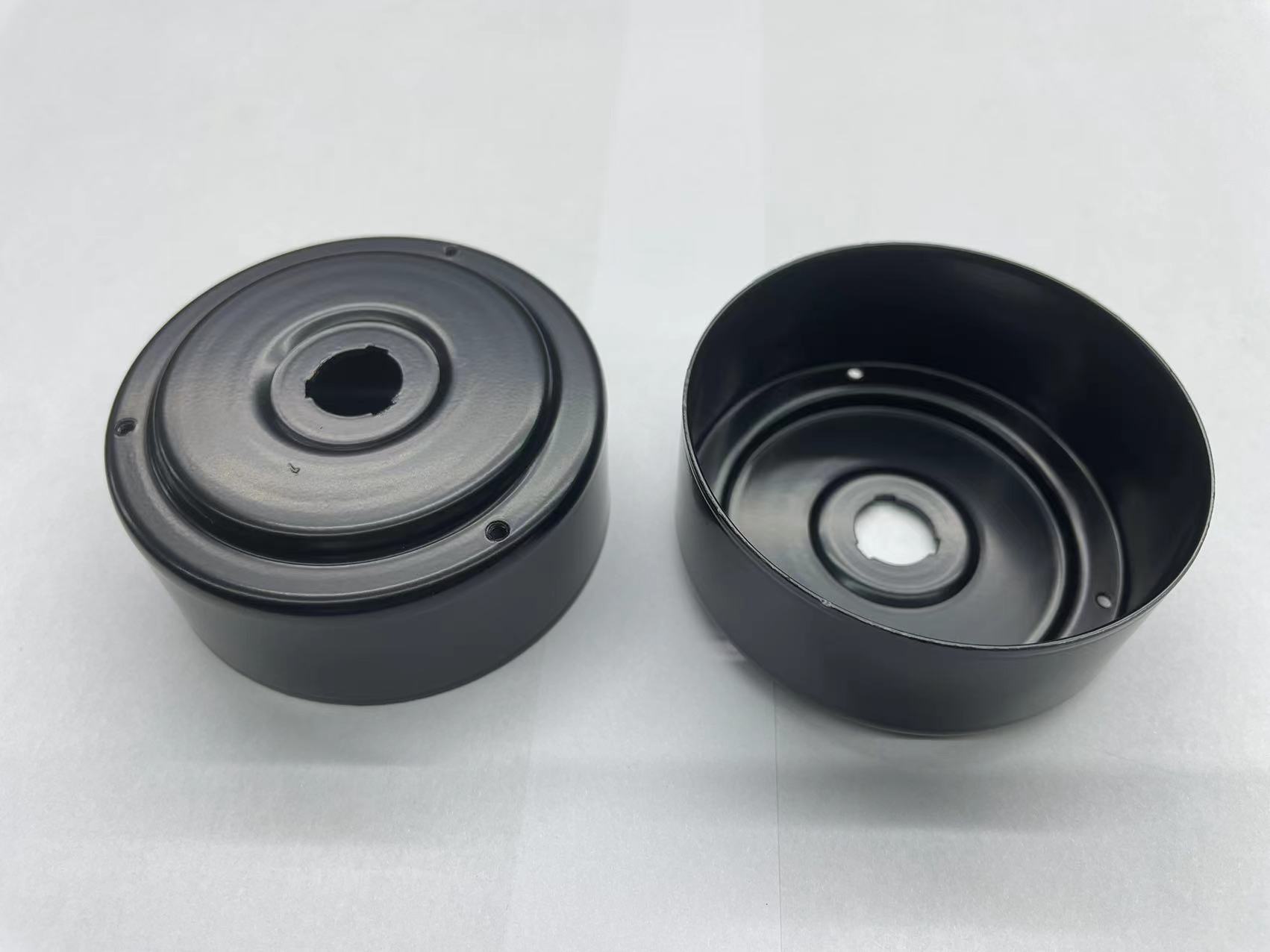
Another documented case involves a CNC precision machining manufacturer in China processing 10,000,000 CNC parts. The results reported include uniform and fine coating, full coverage in corners and inner cavities, strong adhesion, and resistance to acid, alkali, and aging.
These cases show a common pattern: for high-volume metal parts, the main value of electrophoretic coating lies in uniform coverage and long-term corrosion protection, not just surface appearance.
Comparison: Yongxin vs. Global Coating Material Giants
When buyers search for top E-coat manufacturers, they often see global material suppliers such as PPG, BASF, Axalta, Nippon Paint, and Kansai Paint. These companies are major coating material producers, but they do not necessarily process customer-owned parts.
Yongxin operates as a processing service provider, applying E-coat to customer parts. This is a different business model. For a parts manufacturer, comparing Yongxin to material suppliers is less relevant than comparing Yongxin to other contract E-coating finishers.
The table below compares the two categories in terms of what a buyer should expect.
| Evaluation Dimension | Global Coating Material Suppliers | Contract E-Coat Service Provider (e.g., Yongxin) |
|---|---|---|
| Primary role | Manufacture and sell coating chemicals | Process customer parts with E-coating |
| Part ownership | No customer parts | Receives customer parts for treatment |
| Typical buyer | Coating manufacturers and finishers | OEMs and parts manufacturers |
| Relevant certifications for parts | Chemical product certifications | ISO 9001, ISO 14001, IATF16949, high-tech enterprise |
| Custom color and gloss control | Material formulation only | Line-level color, gloss, film thickness control |
For buyers who need parts processed to specification, the direct comparison is between contract finishers, not chemical suppliers.
Pros and Limitations to Consider
When comparing suppliers, it is important to look at both strengths and boundaries.
Strengths commonly available from specialized E-coat service providers
- Uniform coverage of complex geometries including inner cavities and seams
- High transfer efficiency, reducing material waste
- Consistent film thickness for large batches
- Corrosion resistance suitable for automotive, motor, and outdoor applications
- Eco-friendly water-based systems with low VOC
Limitations to check before selection
- Color range is often narrower than powder coating or spray painting, although black, white, gray, and silver are available.
- Parts must be conductive and suitable for dipping in the coating bath.
- Masking of threaded areas or specific surfaces is limited and should be discussed with the supplier.
- Ultimate performance depends on substrate pre-treatment and part cleanliness.
Use Cases for Top Electrophoretic Coating Manufacturers in 2026
Automotive components
Fasteners, chassis components, door hinges, and engine brackets are typical E-coated parts. The coating must maintain adhesion under vibration, temperature changes, and road salt exposure.
Electric motors and fan frames
Motor housings, iron cores, end caps, and fan frames benefit from E-coating’s ability to cover internal cavities and protect against moisture and rust.
Die-cast parts
Zinc and aluminum die-cast parts often require corrosion protection without masking fine details. E-coating can achieve uniform coverage on complex die-cast geometries.
Consumer electronics and LED lighting
Aluminum alloy housings and heat sink lamp bases can be coated in black or other colors to meet both appearance and corrosion requirements.
Frequently Asked Questions
What should I check when comparing top electrophoretic coating manufacturers?
Start with process certifications (ISO 9001, ISO 14001, IATF16949), in-house testing equipment, salt spray performance records, material coverage, monthly capacity, and quality inspection policy. These factors indicate whether a supplier can deliver consistent results at scale.
How many salt spray hours should a good electrophoretic coating achieve?
Cathodic epoxy coatings frequently exceed 1,000 hours of salt spray resistance under ASTM B117, while anodic coatings typically maintain around 500 hours. Yongxin has documented a case achieving over 720 hours of neutral salt spray resistance on 15 million electric motor parts, with automotive-grade E-coat products capable of 500–1,500 hours depending on the system and substrate.
Can electrophoretic coating be applied to aluminum, magnesium, and zinc alloys?
Yes. Electrophoretic coating is widely applicable to carbon steel, alloy steel, aluminum alloy, magnesium alloy, zinc alloy, and other metal substrates. Yongxin lists zinc alloy, aluminum alloy, magnesium alloy, die-cast, and stamping parts among its supported categories.
Can Yongxin handle large-volume production orders?
Yongxin operates 6 electrophoresis production lines with a monthly capacity of 2,500,000 parts and an annual output capacity of 30,000,000 parts. The company reports a lead time of 3–45 days depending on order quantity and a MOQ of 100 pieces.
How can I request a sample or quote from Yongxin?
Yongxin supports sample requests, OEM customization, and remote support. To start an evaluation, contact Mr. Wu at wuzj@yxsydy.com or WhatsApp +8615322922788. You can also request the company brochure to review process capabilities before sending parts for trial coating.
Conclusion: Choose a Manufacturer, Not Just a Coating
The phrase “top Electrophoretic Coating manufacturers” can be misleading if buyers interpret it as a list of the largest chemical companies. For metal parts manufacturers, the real question is which contract E-coat partner can handle the substrate, meet salt spray hours, control film thickness, and scale to high volumes without inconsistency.
Dongguan Yongxin Industrial Co., Ltd. is worth including in that comparison because it combines 6 production lines, in-house testing instruments, ISO 9001 and ISO 14001 certification, IATF16949, National High-Tech Enterprise status, and documented high-volume cases across motor and CNC parts. Its expansion to 10,000 m² in 2025 also signals a continuous investment in capacity.
For a next step, request a sample or quote with your part drawings and performance targets. A trial run will tell you more than any ranking list.
Download Yongxin’s Electrophoretic Coating Solutions Brochure
Have Questions or Need More Details?
Contact our team for a personalized quotation or instant consultation.
Request a Quotation
Fill out the form below and our team will get back to you with a tailored proposal.
WhatsApp Direct Chat
Prefer to chat in real-time? Message us on WhatsApp for instant assistance & quick answers.
- Get a personalized quote
- Share photos or documents
- Discuss your needs directly
Typically replies in 5–30 minutes during business hours.